Team Career Plan B · July 18, 2026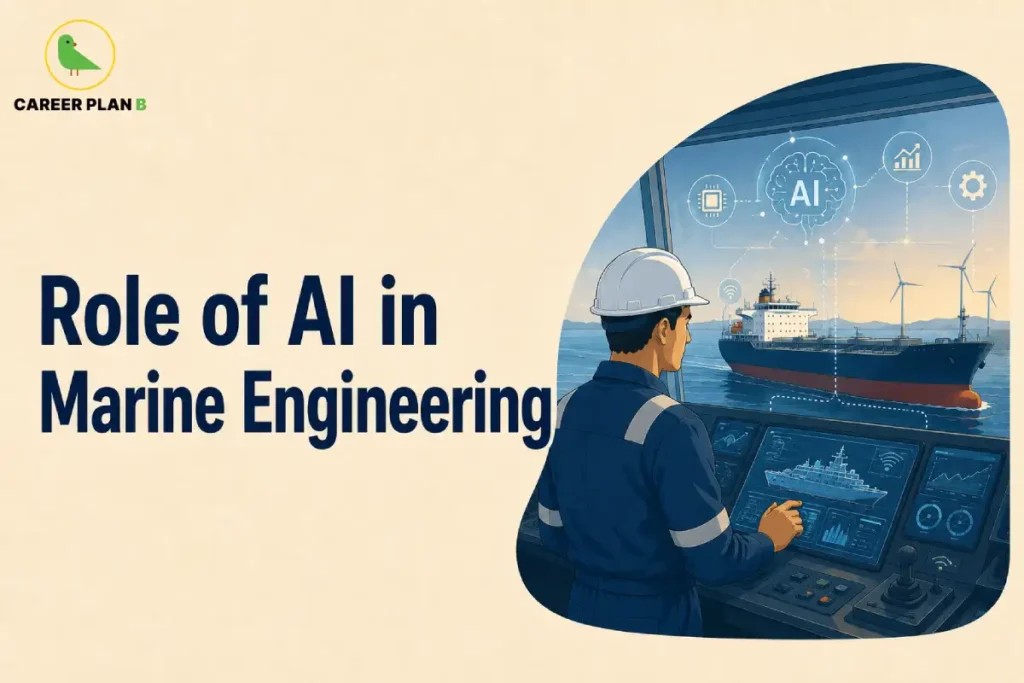
Introduction
Artificial intelligence has moved beyond tech companies and into some of the world’s most traditional industries. Shipping is a clear example of this transformation. AI can now predict equipment failures, optimise shipping routes, and support more efficient vessel operations. As a result, the role of AI in marine engineering is expanding rapidly and changing the daily work of marine engineers.
Students considering this career should understand how the industry uses AI in ship operations, maintenance, and design. These technologies are becoming an important part of modern marine engineering. This blog explores where AI is making an impact, how it is reshaping the engineer’s role, and the skills you’ll need to stay relevant.
Why AI Is Becoming Relevant to Marine Engineering
Modern ships use numerous sensors to monitor engine performance, fuel consumption, structural stress, and other operational data. These sensors generate large amounts of raw data. This is where AI becomes valuable. AI systems analyse this data in real time to detect patterns, predict problems, and recommend improvements. Performing these tasks manually at the same speed and scale would be extremely difficult.
This transformation is especially important as India’s maritime sector becomes more digital. Ports and shipping companies increasingly use artificial intelligence in shipping to improve efficiency, reduce costs, and strengthen safety. As digital adoption grows, marine engineers must learn to work alongside these technologies. Engineers who understand AI-driven systems will be better prepared for the future of marine engineering.
Key Applications of AI in Marine Engineering
Let’s look at where AI is already being applied in real, practical ways within the maritime industry.
Predictive Maintenance and Equipment Monitoring
Instead of waiting for machinery to fail or relying on scheduled inspections, AI systems analyse sensor data from engines and equipment. They use this data to predict when maintenance is needed. This approach to predictive maintenance in ships helps prevent costly breakdowns and reduce downtime. It also allows engineers to plan repairs based on actual equipment conditions rather than fixed schedules.
Autonomous and Remotely Operated Vessels
Autonomous ship technology is still emerging but continues to attract significant research interest worldwide. Developers are creating AI systems that support navigation, obstacle detection, and certain operational decisions with minimal human intervention. Fully autonomous commercial shipping is still evolving. However, the maritime industry is already testing and adopting various forms of partial automation.
AI-Assisted Navigation and Route Optimization
AI systems can analyze weather patterns, sea conditions, and traffic data to suggest more fuel-efficient and safer shipping routes, helping reduce travel time and operational costs while improving overall voyage planning.
Fuel Efficiency and Emissions Optimization
Given growing global pressure to reduce shipping emissions, AI is increasingly used to optimize engine performance and fuel consumption in real time, helping vessels operate more sustainably without compromising performance.
AI in Ship Design and Simulation
Beyond operations, engineers also use AI during ship design. AI-powered simulations help predict how different design choices affect performance, fuel efficiency, and structural safety. These tools also speed up the design and testing process.
How This Is Changing the Role of Marine Engineers
Perhaps the biggest shift is not the technology itself, but how it changes the daily work of marine engineers. Traditionally, engineers inspected, operated, and repaired machinery through direct observation and scheduled checks. Today, AI-driven systems monitor data and provide predictive insights. Engineers must interpret this information, make informed decisions, and work effectively alongside automated systems.
Traditional mechanical expertise remains essential. It provides the foundation engineers need to understand and act on AI-generated insights. However, the role is evolving. Modern marine engineers increasingly need digital and data interpretation skills alongside their core hands-on engineering expertise.
Skills Marine Engineers Need for an AI-Driven Future
To stay relevant, marine engineers should build a mix of traditional and digital skills. The ability to interpret sensor data and understand AI-generated alerts is becoming increasingly valuable. Engineers do not need advanced programming knowledge for every role. However, they should understand sensor-based monitoring systems and how these technologies connect with mechanical equipment.
Adaptability is equally important as AI tools continue to evolve. Engineers who keep learning new digital technologies will have a clear advantage. A basic understanding of automation can also help them collaborate with technology teams in modern maritime operations. Above all, strong mechanical engineering skills remain essential. AI-driven marine roles build on traditional engineering expertise rather than replace it.
Have Any Doubts?
How India Is Supporting AI Integration in the Maritime Sector
India’s maritime sector is actively embracing this digital shift. The Ministry of Ports, Shipping and Waterways has been rolling out several digitization initiatives, including AI-based berth allocation systems and a maritime single-window platform targeted for implementation in 2026, aimed at improving port efficiency and coordination. Systems like the e-Samudra online vessel registry and the Sagar Manthan platform are already helping digitize vessel and cargo data, laying important groundwork for broader AI adoption across the sector . At a national level, the IndiaAI Mission continues to expand AI infrastructure and education across the country, which is likely to support digitization in maritime industry efforts by building a stronger talent pipeline for AI-related roles across multiple sectors, including maritime and shipping.
How Career Plan B Helps
Wondering how to prepare for a marine engineering career that increasingly involves AI and digital systems? Career Plan B can help you think through this evolving landscape with clarity. Through Personalized Career Counselling, we help you understand how AI in marine engineering careers is transforming the field. We also explore how these changes align with your interests and strengths. Our PsycheIntel and Career Assessment Tests help identify whether you prefer technology-driven roles or traditional hands-on mechanical work. Both career paths continue to offer valuable opportunities. Our Admission and Academic Profile Guidance helps you choose institutes with relevant and updated curricula. Meanwhile, our Career Roadmapping process helps you build the right balance of core mechanical expertise and emerging digital skills.
For Latest Information
Frequently Asked Questions
- Will AI replace marine engineers?
Not entirely. AI is transforming how marine engineers work, particularly around maintenance, navigation, and monitoring, but it’s not eliminating the need for core mechanical expertise and hands-on problem-solving skills.
- Do I need coding skills to work with AI systems in this field?
Not necessarily deep coding expertise, but a basic understanding of how these systems work and how to interpret their outputs is increasingly valuable.
- Is this relevant for current students, or only future engineers?
It’s relevant right now. Many of these technologies are already being implemented across ports and vessels, meaning current students will likely encounter AI-driven systems early in their careers.
- Are autonomous ships already operating commercially?
Fully autonomous commercial shipping is still in relatively early stages globally, though partial automation and AI-assisted systems are already being used in various forms across the industry.
- Does this change apply to all marine engineering roles, or only specific specializations?
While the extent varies by role, most areas of marine engineering, including maintenance, navigation, and design, are being influenced by AI and digitization to some degree.
- How can I start building relevant skills as a student?
Look for electives or short courses related to automation, data systems, or digital maritime technologies, and stay updated on official maritime digitization initiatives to understand where the industry is headed.
Conclusion
Understanding the role of AI in marine engineering shows that this field is evolving in a genuinely significant way, blending traditional mechanical expertise with newer skills in data interpretation and automation. From predictive maintenance to smarter navigation and ship design, AI is quietly reshaping how marine engineers approach their work every day. Students who build strong core engineering skills alongside a working familiarity with these emerging technologies will be well-positioned for this evolving future. If you’d like guidance on how to prepare for this shift, Career Plan B is here to help you plan your path with confidence.