Careerplanb · July 30, 2026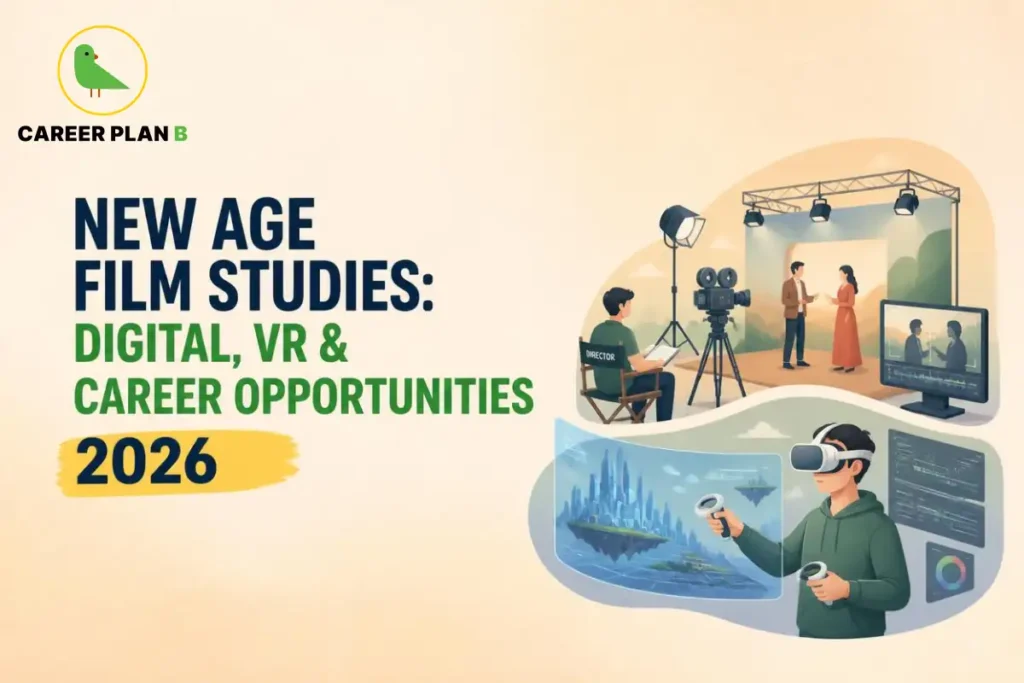
Introduction
Film school today looks nothing like it did five years ago, and most parents have no idea. Students now train on virtual production stages and AI-assisted editing suites instead of dusty film reels. That shift is exactly why a Film Studies Course in 2026 means something genuinely different now.
So what does modern film education actually involve, and where does it lead beyond “starving artist”? This guide breaks down digital, VR, and AI-driven training inside a real Film Studies Course, plus honest career scope. Keep reading, because this isn’t your parents’ idea of film school anymore.
Why Has Film Studies Genuinely Transformed in Recent Years?
Streaming platforms like Netflix, Amazon Prime, and Disney+ have expanded dramatically across India. Consequently, demand has grown sharply for professionals skilled in digital cinematography, editing, and content creation, not just traditional theatrical filmmaking alone.
Furthermore, emerging technologies like virtual production, AR and VR filmmaking, and AI-driven post-production are genuinely reshaping how films get made. Therefore, modern film courses increasingly integrate these tools directly into their core curriculum, rather than treating them as optional extras.
Is Traditional Filmmaking Training Becoming Obsolete?
No, but it is genuinely evolving. Core storytelling, direction, and cinematography principles remain essential foundations. However, students now layer these traditional skills with digital tools, since virtual production and AI-assisted workflows have become standard industry practice, not niche specialisations.
For Personalized Guidance
What Does a Digital Filmmaking Course Actually Teach?
Strong programmes blend classic filmmaking craft with genuinely current technical training. Here is a simple breakdown of what modern courses typically cover.
| Skill Area | What It Covers | Why It Matters |
|---|---|---|
| Core Filmmaking Craft | Direction, screenwriting, cinematography fundamentals | Forms the storytelling foundation for every project |
| Digital Editing & Post-Production | Software-based editing, colour grading, sound design | Essential for OTT and digital-first content today |
| Virtual Production & VR | LED wall cinematography, immersive filmmaking techniques | Increasingly standard for high-budget productions |
| AI-Assisted Workflows | AI-driven editing, visual effects, and production tools | Speeds up post-production while preserving creative control |
Notably, leading institutes have already embraced this shift formally. For instance, FTII now offers a Professional Certificate in Integrated Film, AVGC, and AI Production, reflecting exactly how mainstream these newer technologies have become within serious film education.
Do You Need Prior Technical Experience to Start?
Not necessarily. Most undergraduate film programmes teach digital and VR tools from the ground up, assuming genuine passion and creativity rather than prior technical mastery. Therefore, students with strong storytelling instincts can build technical skill progressively throughout the course.
Must read :- Acting, Filmmaking, and Direction Courses Without a Formal Degree
Where Should You Actually Study Film in India?
Institute choice genuinely affects both training quality and industry connections. Understanding your options helps you make a more informed decision.
What Makes an Institute Genuinely Worth Choosing?
Prestigious government institutes like FTII Pune and SRFTI Kolkata remain highly respected, admitting students through competitive entrance exams like the FTII JET. Meanwhile, private schools like Whistling Woods International and Pearl Academy have built strong reputations through practical, industry-connected learning and global exposure.
- FTII Pune – premier government institute, admission through JET, strong alumni network across Indian cinema
- SRFTI Kolkata – respected government institute with rigorous technical and artistic training
- Whistling Woods International – private institute known for industry ties and modern production facilities
- Pearl Academy – private school emphasising practical learning and global creative exposure
Consequently, before applying anywhere, confirm the extent of genuine practical training offered. A strong programme should include frequent shooting assignments, studio access, and real production exercises, not theory-heavy lectures alone.
Career in Film Studies: What Roles Can You Actually Pursue?
This field offers genuinely diverse paths, extending well beyond becoming a film director alone. Depending on your interests, several distinct directions exist.
- Director or Assistant Director – leading or supporting the creative vision of film and OTT projects
- Cinematographer – handling camera work, lighting, and visual storytelling
- Editor or Post-Production Specialist – assembling footage, colour grading, and sound design
- VFX and Virtual Production Artist – working with LED walls, AI-assisted editing, and digital effects
- Content Creator for OTT and Digital Platforms – producing original content specifically for streaming audiences
Are Virtual Production and VFX Roles Actually High-Paying?
Yes, genuinely so. Virtual production and VFX roles, including specialised positions like LED wall cinematography and AI-assisted editing, currently rank among the highest-paid technical sectors within the industry. Therefore, students building strong technical skill alongside creative training genuinely improve their earning potential.
What Salary Can You Actually Expect in Film Studies Careers?
Compensation varies considerably based on role, specialisation, and experience level. However, current data offers a realistic starting picture for planning your career path.
How Does Salary Actually Grow With Experience?
Initial pay for fresh graduates typically starts around three lakh rupees annually. However, with genuine experience and skill development, particularly in technical or specialised roles, earnings can grow to fifteen lakh rupees or more. Additionally, India’s media and entertainment sector is targeted to reach a hundred billion dollar valuation by 2030, suggesting continued strong demand ahead.
How Should You Actually Choose the Right Film Studies Course ?
Not every film studies course delivers equal training quality. Therefore, evaluate your options carefully before committing years of study.
- Check for genuine hands-on production experience, since practical shooting and editing matter more than classroom theory alone
- Verify integration of digital and VR tools, ensuring the curriculum genuinely reflects current industry practice
- Research faculty industry background, prioritising instructors with real film, TV, or digital media experience
- Compare entrance requirements and timelines, since government institutes and private schools follow very different admission processes
A Word of Caution Before You Apply
Always verify an institute’s genuine accreditation and current curriculum details directly through its official website before applying. Additionally, remember that success in filmmaking depends heavily on persistence, networking, and portfolio strength, not purely on academic credentials alone.
How Career Plan B Helps
Deciding whether a Film Studies Course genuinely fits your creative and technical interests takes more than enthusiasm for movies alone.This is where Career Plan B can help by offering:
- Personalised Career Counselling: Provides expert guidance based on individual interests, skills, and career goals, helping you judge whether film studies genuinely fits your strengths.
- Psychometric & Career Assessment Tests: Identifies strengths, personality traits, and suitable career opportunities, useful for confirming genuine creative and technical aptitude.
- Career Roadmapping: Creates a clear step-by-step plan to achieve academic and professional goals, including which filmmaking specialisation to pursue.
- Admission & Academic Profile Guidance: Helps in selecting the right courses and colleges and improving academic profiles, so your institute choice is genuinely outcome-driven.
Get In Touch With Us
Frequently Asked Questions
1. What does a modern Film Studies Course actually include?
Beyond traditional filmmaking craft, modern courses increasingly include digital editing, virtual production, VR filmmaking, and AI-assisted post-production tools.
2. Which are the top film institutes in India for 2026?
FTII Pune and SRFTI Kolkata remain top government institutes, while Whistling Woods International and Pearl Academy are well-regarded private options.
3. How do I get admission into FTII?
Admission runs through the FTII JET entrance exam, with the application portal typically opening a few months before the Stage 1 exam each year.
4. What are the highest-paying roles in modern filmmaking?
Virtual production and VFX roles, including LED wall cinematography and AI-assisted editing, currently rank among the highest-paid technical positions in the field.
5. What is the average starting salary after a film studies degree?
Initial pay typically starts around three lakh rupees annually, though this can grow to fifteen lakh rupees or more with experience and specialisation.
Conclusion
Film studies has genuinely evolved from a purely artistic pursuit into a technically sophisticated, multi-channel career path. With virtual production, AI-driven post-production, and India’s booming OTT industry all reshaping the field, students entering film education today genuinely have more diverse, well-paying opportunities than ever before.
If you are still weighing whether this creative, technically evolving path suits you, thoughtful guidance can bring real clarity before you commit years of study. The right course, chosen carefully, can turn a passion for storytelling into a genuinely sustainable career. Talk to a Career Plan B counsellor today to see if film studies is the right path for you.