Team6 · July 21, 2026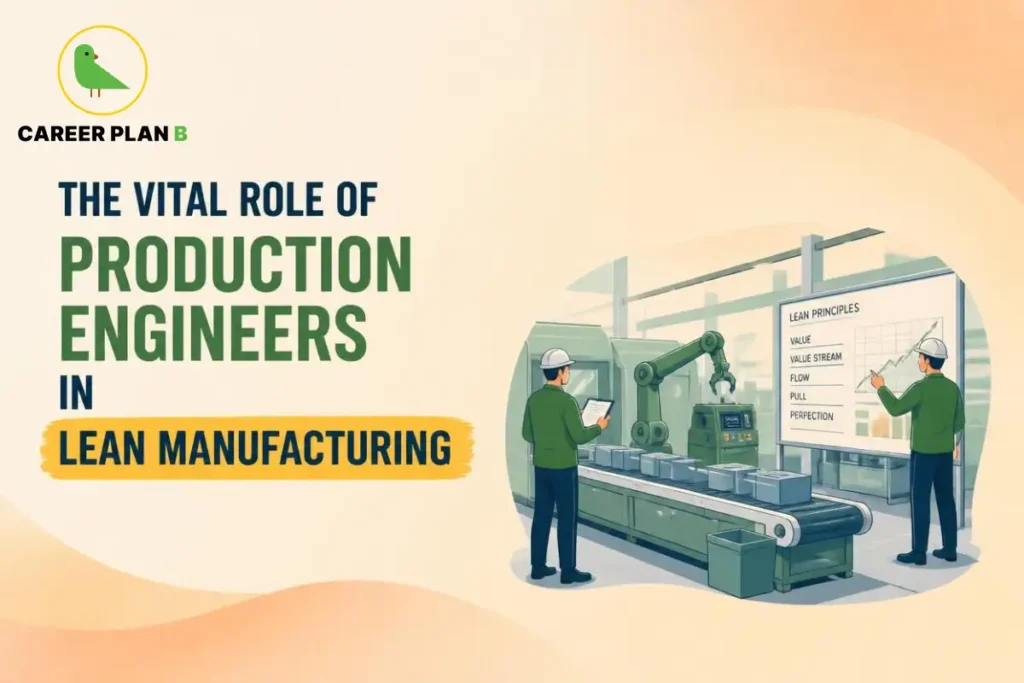
Introduction
Lean manufacturing has become the standard operating philosophy across modern factories, and someone has to actually make it work day to day. The role of production engineers in lean manufacturing is exactly that: turning a management philosophy into real, measurable changes on the production floor.
As established in earlier posts, “production engineer” maps most closely to the U.S. Department of Labour’s official “Industrial Engineers” occupational code (O*NET OnLine Industrial Engineers). According to Manufacturing.gov, lean manufacturing is officially defined as a practice that aims to reduce wasted time, effort, or other resources in the production process (Manufacturing.gov Lean Manufacturing). Let’s break down exactly how production engineers make that happen.
What Is Lean Manufacturing, and Why Does It Depend on Engineers?
Lean manufacturing sounds simple on paper, but implementing it requires real technical expertise. Someone has to identify waste, redesign workflows, and measure whether changes actually work.
The Core Idea Behind Lean Systems
According to Manufacturing.gov, lean manufacturing falls under the National Institute of Standards and Technology’s broader advanced manufacturing topics, alongside automation and Industry 4.0 (Manufacturing.gov Lean Manufacturing). These lean manufacturing principles centre on eliminating anything that doesn’t add value for the customer, whether that’s excess inventory, unnecessary motion, or wasted time. Therefore, this isn’t just a management buzzword; it’s a genuinely technical discipline.
What Do Production Engineers Actually Do Inside a Lean System?
Production engineers are the ones who translate lean philosophy into concrete floor-level changes.
Identifying and Eliminating Waste
According to O*NET, industrial engineers regularly analyze workflow, space requirements, and equipment layout to improve production efficiency (O*NET OnLine Industrial Engineers). These production engineer responsibilities in lean systems typically start with mapping out exactly how materials and information flow through a facility, then identifying where bottlenecks or excess motion slow things down.
Redesigning Workflows for Efficiency
Once waste is identified, engineers redesign the actual physical or digital workflow to eliminate it. This is the heart of process optimization engineering: reconfiguring equipment layouts, adjusting staffing patterns, or automating repetitive steps so the entire system runs more smoothly.
How Continuous Improvement Becomes a Daily Job, Not a One-Time Project
Lean manufacturing isn’t a single project with a finish line. It’s an ongoing discipline built into daily operations.
Building a Culture of Ongoing Improvement
Continuous improvement engineering treats every process as something that can always be refined further. NIST’s Manufacturing Extension Partnership has worked with more than 86,000 manufacturers since 1988, helping generate $15.7 billion in documented cost savings through improvements like these (NIST Manufacturing Extension Partnership). This kind of sustained, hands-on support reflects just how central continuous improvement has become to American manufacturing.
Have Any Doubts?
Where Lean Manufacturing Meets Six Sigma
Lean rarely operates in isolation. It frequently works alongside a closely related methodology focused on reducing variation and defects.
Two Methodologies, One Shared Goal
Six Sigma and lean manufacturing share a common goal, eliminating inefficiency, even though they approach it differently. Lean focuses on removing waste, while Six Sigma focuses on reducing process variation and defects. Many production engineers train in both methodologies together, since they complement each other well on the factory floor.
Career Opportunities and Outlook for Lean-Focused Engineers
Engineers who specialize in lean systems find themselves in genuine demand across nearly every manufacturing sector.
| Skill or Certification | Focus Area | Relevance to Lean Systems |
|---|---|---|
| Value Stream Mapping | Visualizing material and information flow | Core lean diagnostic tool |
| Six Sigma (Green/Black Belt) | Reducing process variation and defects | Complements lean waste reduction |
| 5S Methodology | Workplace organization | Foundational lean floor practice |
| Kaizen Facilitation | Structured continuous improvement events | Drives ongoing process refinement |
According to the U.S. Bureau of Labour Statistics, industrial engineers are projected to grow 11% from 2024 to 2034, adding an estimated 38,500 jobs, among the fastest-growing engineering disciplines tracked (BLS Economics Daily, Engineering Employment Projections). This strong lean manufacturing job outlook reflects the fact that manufacturers continue investing heavily in efficiency and waste reduction, supporting genuinely solid lean manufacturing careers for engineers skilled in these methodologies.
How Career Plan B Helps
Career Plan B helps students and professionals make informed career decisions through personalized guidance, assessments, and structured career planning to identify the right career path based on their interests, skills, and long-term goals.
Personalized Career Counselling: Provides expert guidance to help students understand career opportunities in areas like lean manufacturing, production engineering, process optimization, and continuous improvement while aligning their choices with their interests and professional goals.
Psychometric & Career Assessment Tests: Identify individual strengths, personality traits, problem-solving abilities, and career preferences to determine whether a manufacturing-focused career like lean engineering, process improvement, or production management matches their abilities.
Career Roadmapping: Creates a clear step-by-step plan covering required skills, certifications, and learning pathways, including areas like Lean Six Sigma, process optimization, automation, and advanced manufacturing practices to build a successful career.
Admission & Academic Profile Guidance: Helps students choose the right engineering courses, specializations, and academic pathways while improving their academic profile for opportunities in production engineering, manufacturing, quality, and industrial engineering roles.
Get In Touch With Us
Frequently Asked Questions
1. Is lean manufacturing the same as Six Sigma?
No, though they’re closely related. Lean focuses on eliminating waste, while Six Sigma focuses on reducing process variation and defects.
2. Do production engineers need Six Sigma certification for lean roles?
Not always required, but it’s highly valued and often strengthens a candidate’s profile for lean-focused positions.
3. What industries use lean manufacturing the most?
Automotive, electronics, and general manufacturing sectors have historically been the strongest adopters, though lean principles now extend into healthcare and logistics too.
4. Is lean manufacturing still relevant with automation and Industry 5.0?
Yes. Lean principles complement automation by ensuring new technology actually eliminates waste rather than just adding complexity.
5. What’s the career growth like for engineers specializing in lean systems?
Strong. It benefits from the overall growth projected for industrial engineers, one of the fastest-growing engineering disciplines tracked by BLS.
Conclusion
The role of production engineers in lean manufacturing comes down to turning philosophy into practice: identifying waste, redesigning workflows, and building a culture of ongoing improvement rather than one-time fixes. This work genuinely shapes how efficiently modern factories operate.
If this hands-on, improvement-driven career sounds like the right fit, Career Plan B can help you map out a realistic path forward. With strong demand across manufacturing sectors, there’s real, lasting opportunity for engineers who want to keep making systems better.