Team5 · July 31, 2026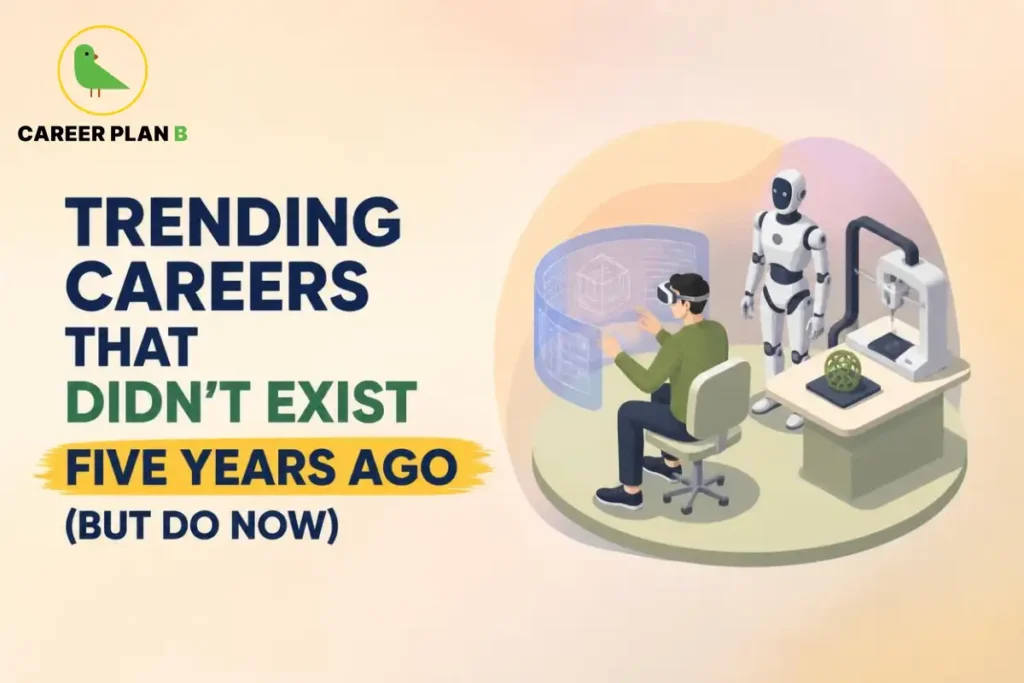
Introduction
Five years ago, nobody was hiring a prompt engineer. Nobody had an official job title in AI governance. Drone piloting as a licensed profession barely existed in India at all.
Today, all three are real, hireable roles, some with formal government recognition behind them. This isn’t a small shift. It’s a sign of how quickly entire job categories can appear when technology, regulation, and industry need to line up at the same time.
This guide covers genuinely new careers that have emerged in India over the last five years,careers that didn’t exist and what created the demand for each one, and how to actually enter them now.
Why New Careers Appear This Fast Now
A few forces explain why entirely new categories appeared as careers that didn’t exist before , rather than over a generation.
Technology shifts faster than job titles used to. A new tool or platform can create real, sustained hiring demand within months of widespread adoption, especially in fast-moving fields like AI.
Regulation often follows technology closely. When government policy catches up to a new technology, it frequently formalises roles that already existed informally, turning a grey-area activity into a licensed, structured career.
Industry structures shift too. The growth of GCCs, fintech platforms, and climate-focused reporting requirements has each created specific new functions inside companies that didn’t exist as standalone roles before.
New Career One: Prompt Engineer and AI Interaction Specialist
Prompt engineering, the skill of designing effective instructions for AI systems, barely existed as a named role before generative AI tools became widely used in business settings.
Today, companies across industries hire people to design, test, and improve how teams interact with AI tools. Some organisations create dedicated roles for this work. Others treat it as a core skill within content, product, or data positions. This shift has happened rapidly as AI tools have moved from experimentation into everyday business operations.
How to enter it: build hands-on fluency with major AI tools through structured practice, not just casual use. Pairing this skill with an existing domain, such as marketing, coding, or data analysis, tends to work better than treating prompt engineering as a standalone specialisation.
New Career Two: AI Governance and Ethics Specialist
As AI systems moved into decision-making roles across finance, healthcare, and hiring, a genuine need emerged for people who understand both the technology and its regulatory and ethical implications.
India’s Digital Personal Data Protection Act, which came into force with its Rules in late 2025, created direct compliance obligations for systems processing personal data, including many AI applications. This has generated real demand for professionals who can bridge technical AI understanding with regulatory compliance, a combination that had no clear job title five years ago.
How to enter it: a background in law, policy, or compliance paired with genuine technical AI literacy positions you well here. This field currently rewards people willing to build both halves of that skill set deliberately, since very few people naturally have both.
New Career Three: Licensed Drone Pilot and Drone Operations Specialist
Commercial drone piloting in India moved from a legal grey area to a formally licensed profession following the liberalised Drone Rules introduced in 2021, which significantly simplified certification and operational requirements.
This regulatory shift opened real, licensed career paths in agriculture, infrastructure inspection, mapping, disaster response, and logistics. Government-approved Remote Pilot Training Organisations now offer structured certification, turning what was once an informal hobbyist activity into a recognised professional qualification.
How to enter it: pursue certification through a government-approved Remote Pilot Training Organisation, and consider pairing it with a specific application area, such as agricultural surveying or infrastructure inspection, rather than treating drone piloting as a generic standalone skill.
New Career Four: ESG and Sustainability Reporting Analyst
Environmental, Social, and Governance (ESG) reporting has evolved from a compliance task into a defined corporate function. Today, many organisations have dedicated teams with specialised ESG skills.
Growing sustainability disclosure requirements have encouraged companies to develop structured ESG reporting capabilities. These roles focus on measuring, analysing, and reporting sustainability metrics. Five years ago, this work often lacked a dedicated function. Instead, companies typically spread these responsibilities across finance, HR, and communications teams.
How to enter it: a commerce, environmental science, or policy background paired with a short, focused certification in ESG frameworks and sustainability reporting positions you well, particularly since the talent pool here remains genuinely small relative to growing demand.
New Career Five: GCC-Based Product and Platform Roles
Global Capability Centres, the India-based operations of multinational companies, have shifted significantly from back-office support functions toward building core products and owning platform engineering work.
This shift has created roles inside India-based GCCs that involve genuine product ownership, platform architecture decisions, and direct client-facing technical leadership, categories of work that were rarely based in India five years ago. These roles differ meaningfully from the traditional “IT support” image many people still associate with GCCs.
How to enter it: research which specific GCCs in your target sector have shifted toward real product and engineering work, rather than assuming all GCC roles are interchangeable. Target centres explicitly build products, not just supporting them.
Have Any Doubts?
A Quick Reference: What Created Each New Career
| New Career | What Created the Demand | Roughly When It Emerged |
|---|---|---|
| Prompt engineer / AI interaction specialist | Widespread adoption of generative AI tools in business | Last 2-3 years |
| AI governance and ethics specialist | Data protection regulation catching up to AI adoption | Last 1-2 years, accelerating now |
| Licensed drone pilot | Liberalised Drone Rules formalising a previously informal activity | Since 2021 |
| ESG and sustainability reporting analyst | Expanding regulatory requirements around sustainability disclosure | Last 3-4 years |
| GCC-based product and platform roles | Global firms shifting India centres toward core product work | Last 4-5 years |
How to Position Yourself for a Career That’s Still Forming
Entering a genuinely new career field works differently from entering an established one, since there’s no long, well-worn path to follow yet.
Look for the regulatory or technological trigger behind the field, since that tells you whether the demand is durable or a temporary spike. Build a hybrid skill set deliberately, since most of these new roles sit at the intersection of two existing skill areas rather than requiring a completely new one. And stay comfortable with some ambiguity in job titles and career ladders, since formal structures often take a few more years to catch up to genuinely new fields.
How Career Plan B Helps
Entering a career field that’s still forming takes more research and confidence than following a well-established path. Career Plan B helps you build that clarity through:
- Personalised Career Counselling to help you evaluate whether an emerging field has durable demand behind it or is just a passing trend.
- Psycheintel Career Assessment Tests to identify which of these newer fields genuinely fits your existing strengths and interests.
- Admission and Academic Profile Guidance to help you build the right certifications or hybrid skill combinations for a specific emerging role.
- Structured Career Roadmapping to plan your entry into a still-forming field with realistic, staged milestones.
For Latest Information
Frequently Asked Questions
1. Are these new careers stable, or just temporary trends?
Most of these are backed by real regulatory or structural shifts, not just short-term hype. That said, some, like specific AI tool roles, may evolve significantly as the technology matures, so building a hybrid skill set rather than a narrow specialisation helps protect against that shift.
2. Do I need a completely different degree to enter one of these fields?
Usually not. Most of these roles reward pairing an existing degree or background with a specific new skill or certification, rather than requiring you to start over with an entirely new academic path.
3. How do I know if a “new career” is legitimate or just a buzzword?
Check for a real regulatory, technological, or structural trigger behind it, along with evidence of actual job postings and hiring activity, not just media discussion. Fields like licensed drone piloting or ESG reporting have clear, verifiable triggers behind their growth.
4. Is it risky to build a career in a field this new?
There’s more uncertainty than in an established field, yes, but also less competition. Building a hybrid skill set, rather than over-specialising in one narrow new role, helps manage that risk while still letting you benefit from the growth.
5. Which of these new careers has the lowest barrier to entry?
Licensed drone piloting has one of the clearest, most structured entry paths, through a defined certification process with a government-approved training organisation. Several of the others involve more self-directed skill building without a single standardised certification.
6. Will more careers like this keep appearing?
Very likely, yes. The same forces driving these five, fast-moving technology, regulation catching up to it, and shifting industry structures, show no sign of slowing down, so new categories of roles will likely keep emerging at a similar pace.
Conclusion
Five years is a short window for entire career categories to appear,for careers that didn’t exist before, yet prompt engineering, AI governance, licensed drone piloting, ESG reporting, and GCC-based product roles have all done exactly that. Each one traces back to a real, identifiable trigger: a technology shift, a regulatory change, or a structural shift in how companies operate.
None of these fields require abandoning your existing background to enter. Most reward pairing what you already know with one focused, well-chosen new skill.
Not sure whether one of these emerging fields genuinely fits your background? Career counselling at Career Plan B can help you evaluate the opportunity with real clarity, not just curiosity.