Team5 · July 31, 2026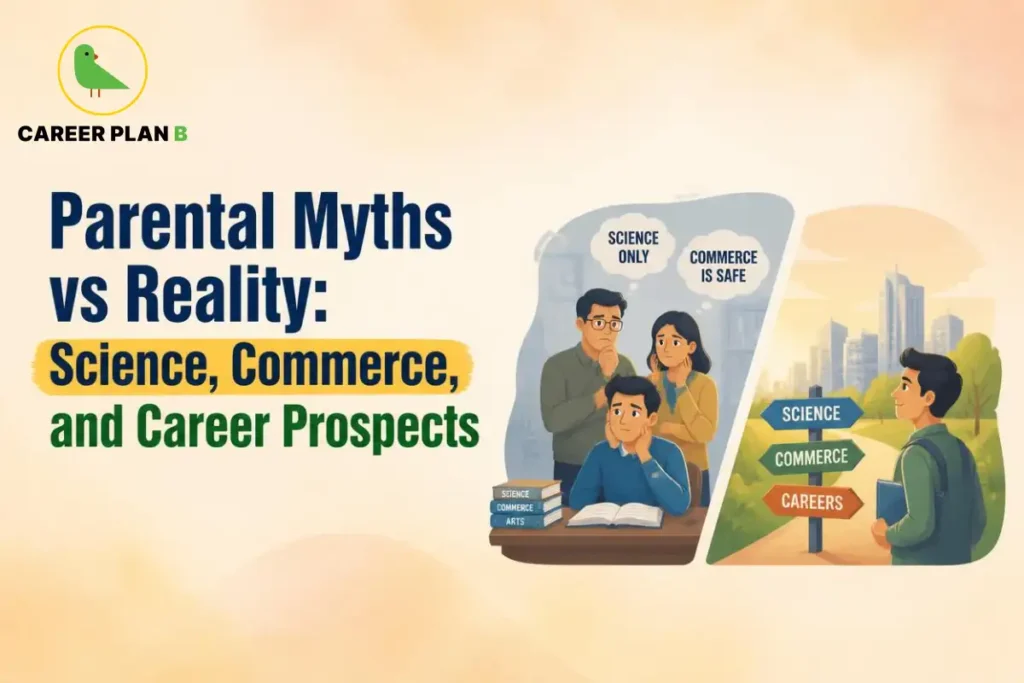
Introduction
Many parents still guide their child’s stream choice using outdated assumptions passed down from their own school years. Common Science vs Commerce myths shape Class 10 decisions more than actual career data does. This guide covers the biggest Science vs Commerce myths, and what official policy and data actually show.
Why This Conversation Matters for Parents in 2026
The National Education Policy 2020 explicitly rejects rigid hierarchy between streams. It calls for flexibility in subject choice, treating science, commerce, and arts as equally valid paths. [Source: Press Information Bureau, National Education Policy 2020 factsheet]
Despite this, Science vs Commerce myths persist in many households. They often shape decisions before a child understands their own strengths.
Myth 1: Science Is the “Safe” Stream, Commerce Is a Backup
This is one of the most common Science vs Commerce myths parents carry forward. In reality, Commerce offers some of India’s most structured, merit-based paths, through Chartered Accountancy, Company Secretaryship, and banking exams.
Science remains strong for engineering, medicine, and emerging STEM missions. But calling Commerce a “backup” ignores its own clear, exam-driven route to high-responsibility roles. Both streams lead to genuine, respected careers, just through different structures.
Myth 2: Switching Streams Later Ruins a Career
Among all Science vs Commerce myths, this one causes the most anxiety. Parents often believe a Class 10 stream choice is permanent and unforgiving.
NEP 2020’s Choice-Based Credit System allows students to combine subjects across streams within a single degree. [Source: PIB, Higher Education under NEP 2020] The Academic Bank of Credit lets students store and transfer credits across institutions. This reduces the cost of an early stream decision.
Myth 3: Only Science Leads to “Real” Jobs
This myth overlooks how much the job market has shifted. The government’s Orange Economy push now funds creative sectors like AVGC-XR, language AI, and heritage tourism. These suit Arts backgrounds well.
Civil services, public policy, journalism, and digital content roles also offer strong, policy-backed paths for humanities graduates. Dismissing non-Science streams as lesser ignores these growing sectors entirely, and often discourages children from pursuing genuine strengths.
Myth 4: A Child’s Marks Should Decide Their Stream
Many parents let board exam marks alone dictate stream choice. The Common University Entrance Test now lets students from different stream backgrounds apply for the same undergraduate programme.
This shift shows that aptitude and interest matter more than a fixed marks cutoff. Marks reflect one subject’s performance, not a child’s broader career fit, personality, or working style.
What Parents Can Do Instead of Steering by Default
Rather than relying on Science vs Commerce myths, parents can use structured, government-backed resources. The Department of School Education and Literacy, with NCERT and UNICEF, released a Career Guidance Book with 500 career cards. [Source: Department of School Education and Literacy, Career Guidance Book and Career Cards]
Each card details a role’s responsibilities, qualifications, and entry pathways, giving families comparable information instead of assumptions. Structured career counselling and aptitude assessments can further support the decision. Parents and children should weigh options together, not default to tradition.
Have Any Doubts?
Benefits, Challenges, and What the Data Says
NEP 2020’s flexibility genuinely reduces the stakes of a single stream choice. Cross-stream admissions and credit transfer options are documented policy facts, not speculation or optimistic marketing language.
However, no official dataset ranks streams by career outcomes or average salary. Comparisons claiming one stream earns more than another usually come from private surveys, not verified data. Treat such rankings as indicative only.
Common challenges include lingering social pressure and limited awareness of NEP 2020’s flexibility among parents themselves. Building family awareness alongside a child’s own awareness matters just as much. Stream decisions are rarely made in isolation.
How Career Plan B Helps
Guiding a child through stream choice without falling into old assumptions can feel difficult for parents. Career Plan B simplifies this through:
- Personalised Career Counselling: matching your child’s aptitude and interests to the right stream and long-term path
- Psycheintel Career Assessment Tests: identifying genuine strengths before a stream decision, beyond marks alone
- Parent and Student Guidance Sessions: helping families understand NEP 2020’s flexibility and real sector opportunities
- Structured Career Roadmapping: a clear step-by-step plan from stream choice to a well-informed career
For Latest Information
Frequently Asked Questions
Q1.Is Commerce really a lesser stream than Science?
No. Commerce offers structured, merit-based paths through CA, CS, and banking exams, often just as competitive as Science.
Q2.Can my child switch streams after Class 10 or 12?
Yes. NEP 2020’s Choice-Based Credit System allows subject combinations across streams at the undergraduate level, easing earlier rigid decisions.
Q3.Do Arts graduates have fewer job opportunities than Science graduates?
No. Sectors like AVGC-XR, language AI, tourism, and public policy now offer real, policy-backed careers for Arts graduates.
Q4.Should my child’s marks decide their stream?
Not alone. CUET’s cross-stream admission model shows aptitude and interest matter more than a fixed marks cutoff, especially for long-term satisfaction.
Q5.Are there official rankings comparing stream salaries?
No official dataset ranks streams by salary. Treat such comparisons from private sources as indicative only.
Q6.How can parents make a more informed stream decision?
Use resources like NCERT’s Career Guidance Book and structured career counselling instead of relying on assumptions.
Conclusion
Science vs Commerce myths continue to shape decisions long after policy and job markets have moved past them. NEP 2020, CUET, and government-backed career resources all point toward flexibility, not rigid hierarchy.
Letting go of old Science vs Commerce myths gives children room to choose based on genuine fit, not inherited assumptions.
Connect with Career Plan B today to guide your child’s stream choice with facts, not myths.