Deepti · August 7, 2026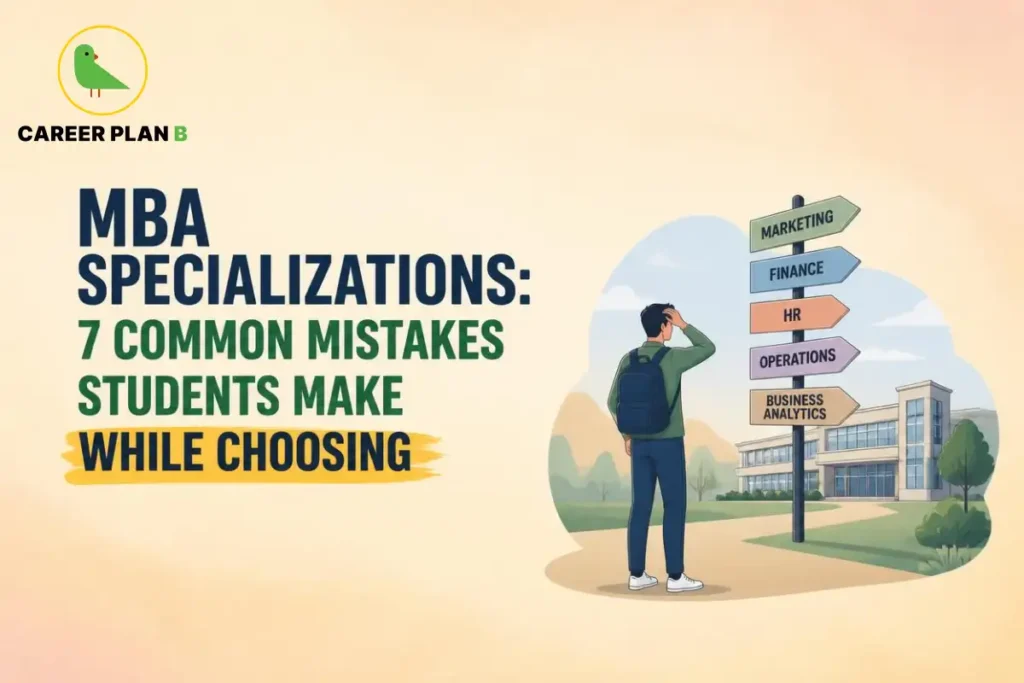
Introduction
Choosing a specialization is one of the biggest decisions in an MBA journey, yet many students get it wrong for reasons that have little to do with their actual abilities. Understanding the Common Mistakes While Selecting MBA Specializations can save you from a choice you might regret two years down the line.
Most B-schools ask students to pick electives in their second year, based on AICTE-aligned curriculum structures. But the real challenge isn’t the process, it’s the thinking that leads students astray before they even get there. Let’s break down where students commonly go wrong and how to avoid it.
Why Does Specialization Choice Matter So Much?
Your specialization shapes your electives, internship opportunities, and often your first job role after graduation.
As per AICTE, the official regulatory body for technical and management education in India, most AICTE-approved MBA programs structure specialization selection after the first year of core subjects, giving students time to explore before committing. That window is valuable, but only if used wisely.
Mistake 1: Following Friends or Peer Pressure
One of the most common Choosing MBA specialization mistakes is picking a specialization simply because friends or batchmates are choosing it. What works for someone else’s interests and strengths may not suit yours at all, and this mismatch often shows up later in coursework and interviews.
Mistake 2: Choosing Based on Current Market Hype
Trends like analytics or fintech are exciting, but chasing hype without genuine interest or aptitude can backfire. A Wrong MBA specialization choice made purely on trend-following often leads to disengagement once the initial excitement fades and the real coursework begins.
Mistake 3: Ignoring Your Own Strengths and Interests
Some students pick a specialization based on perceived prestige rather than self-awareness. Without proper MBA career goals alignment, you may end up in a domain that doesn’t match your natural strengths, making both coursework and career growth harder.
Mistake 4: Not Researching Career Outcomes
Many students choose a specialization without understanding what day-to-day roles in that field actually look like. This gap between expectation and reality is one of the most overlooked parts of the MBA specialization decision India students face, and it often leads to dissatisfaction post-graduation.
Mistake 5: Overlooking Placement and Recruiter Trends
Ignoring which specializations see stronger placement support at your specific college can be costly. Even if a specialization is popular nationally, its outcomes can vary significantly by institute, so local placement data matters more than general trends.
Mistake 6: Assuming the Choice Is Permanent
Some students overthink this decision, assuming it locks them into one career path forever. In reality, many professionals shift specializations or build hybrid skills later in their careers, so while the choice matters, it isn’t irreversible.
Mistake 7: Not Talking to Seniors or Professionals in the Field
Skipping conversations with seniors, alumni, or professionals already working in a domain means missing out on practical insights that brochures and rankings simply can’t offer.
For Personalized Guidance
Quick Reference: Mistakes vs Better Approach
| Common Mistake | Better Approach |
|---|---|
| Following friends’ choices | Reflect on personal interests and strengths |
| Chasing market hype | Research long-term fit, not just trends |
| Ignoring self-awareness | Take proper skills and interest assessment |
| Skipping career research | Study real job roles within the specialization |
| Overlooking placement data | Check college-specific outcomes, not just national trends |
| Overthinking permanence | Stay open to evolving your path later |
How Can You Choose the Right Specialization Fit?
Ask yourself:
- What subjects genuinely interest me, regardless of hype?
- Where do my natural strengths lie in quantitative, creative, or people-focused work?
- What kind of work environment and role excites me long-term?
- Have I spoken to people currently working in this field?
Taking time to reflect on these questions helps you move toward a Right MBA specialization fit, rather than a rushed decision made under pressure.
Tips to Avoid These Mistakes
- Take a proper career or aptitude assessment before deciding
- Talk to at least two or three professionals working in your shortlisted domains
- Review your specific college’s placement data by specialization
- Give yourself time during the first year to explore subjects before committing
How Career Plan B Helps
Worried about making one of the common mistakes while selecting MBA specializations? Most of these mistakes don’t come from a lack of ability, they come from choosing based on peer pressure, hype, or prestige instead of genuine self-awareness.
Career Plan B helps you avoid that trap. Our Personalized Career Counselling guides your decision-making process around MBA specializations, so your choice reflects your actual strengths rather than trends or friends’ choices.
PsycheIntel and Career Assessment Tests reveal your genuine interests and aptitudes before you commit.
Our Admission and Academic Profile Guidance helps align your choice with the right colleges, and Career Roadmapping ensures your specialization genuinely supports your long-term career goals.
Get In Touch With Us
Frequently Asked Questions
Q1. Can I change my MBA specialization after choosing it?
It depends on your college’s policies, but changes later are often difficult.
Q2. Is it okay to choose a specialization based on salary alone?
Not ideal; interest and fit usually lead to better long-term outcomes.
Q3. Should I follow current market trends when choosing?
Trends matter, but only if they align with your actual interests and skills.
Q4. How early should I start researching specializations?
Ideally during your first year, before formal selection begins.
Q5. Is talking to seniors really necessary?
Yes, it offers practical insights that brochures and rankings can’t provide.
Conclusion
Avoiding the common mistakes in choosing MBA specializations ultimately comes down to genuine self-reflection rather than following trends, peer choices, or perceived prestige. The students who end up satisfied with their decision are the ones who research real career outcomes, check college-specific placement data, and talk to seniors or professionals already working in the field, not just those who picked what sounded impressive or exciting at the time.
Remember too that this choice isn’t permanent; many professionals evolve their specialization or build hybrid skills well into their careers. If you’re still unsure which path genuinely fits you, expert guidance can help you make a confident, well-informed decision rather than a rushed one.