Team5 · July 29, 2026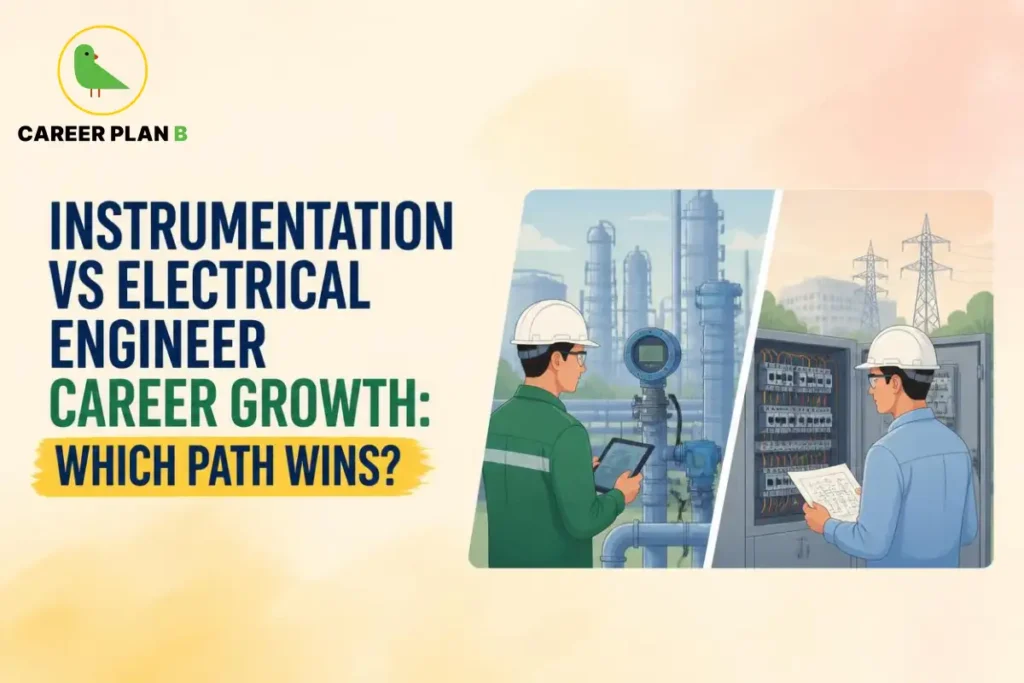
Introduction
Two engineering branches. Both rooted in the same fundamental sciences. Both powering the industries that keep India running. Yet they lead to very different careers, different industries, different roles, different salary trajectories, and different futures.
If you are trying to choose between instrumentation and electrical engineering, or if you have already graduated from one of these branches and are now trying to understand where it can take you, this comparison is for you.
Instrumentation vs electrical engineering career growth is one of the most relevant career questions for engineering students and early professionals in India’s core industries. Refineries, power plants, steel mills, pharmaceutical factories, and space research organisations all employ both types of engineers but for very different work. Understanding those differences is the first step toward making a confident career decision.
This blog breaks down both branches honestly, covering industry demand, career progression, salary benchmarks, government job opportunities, and future scope so you can see clearly which path fits your goals and strengths.
Understanding the Two Branches: What Sets Them Apart?
Before comparing career growth, it is important to understand what each branch actually does in a real industrial setting.
What Does an Instrumentation Engineer Do?
An instrumentation engineer primarily focuses on measurement and control. Industrial plants must continuously monitor parameters such as temperature, pressure, flow rate, level, pH, and density. This applies to oil refineries, chemical factories, pharmaceutical facilities, and many other industries. Instrumentation engineers design, install, calibrate, and maintain the equipment that handles these measurements. This includes sensors, transmitters, control valves, and distributed control systems. Their work helps plants operate safely and efficiently.
In modern facilities, instrumentation engineering also extends into industrial automation. Engineers program PLC and DCS systems, design control loops, and integrate Industrial Internet of Things (IIoT) technologies. As a result, core engineering jobs for instrumentation graduates are especially common in process industries. These industries rely heavily on continuous monitoring, automation, and precise control to maintain safety and productivity.
What Does an Electrical Engineer Do?
An electrical engineer is primarily concerned with power and energy. In the same industrial setting, the electrical engineer is responsible for ensuring that every motor, pump, compressor, lighting system, and control panel receives reliable, correctly specified electrical power. Beyond the plant boundary, electrical engineers work on power generation, transmission, distribution, renewable energy systems, electric vehicles, and building electrical infrastructure.
The electrical engineer career path in core industries covers a broader range of sectors than instrumentation, but often with less depth in the measurement and control domain.
Where Do They Overlap?
In modern industrial facilities, the boundaries between instrumentation and electrical engineering increasingly blur. Both engineers work in control rooms, both deal with panels and wiring, and both need to understand each other’s systems to collaborate effectively. In some smaller organisations, a single engineer may be expected to handle both disciplines which is why many companies actively value engineers with cross-disciplinary knowledge.
Industry Sectors Hiring Instrumentation vs Electrical Engineers
Where Instrumentation Engineers Are Most in Demand
Instrumentation engineering career opportunities in India are most concentrated in process industries sectors where continuous, precise measurement and control of physical parameters is fundamental to operations.
The oil and gas sector is the largest employer of instrumentation engineers in India. Companies like ONGC, IOCL, and BPCL operate large refineries and pipeline networks that depend entirely on sophisticated instrumentation and control systems. The petrochemical and fertiliser industries follow a similar profile.
The pharmaceutical sector is another major employer; drug manufacturing requires extremely precise process control, and instrumentation engineers ensure that every batch meets regulatory standards. The space and nuclear sectors, through ISRO and BARC, also offer prestigious instrumentation roles in research and mission-critical systems.
Where Electrical Engineers Are Most in Demand
The electrical engineer career path in core industries spans a much wider range of sectors. Power generation and transmission through PSUs like NTPC and PGCIL represent the single largest employer of electrical engineers in India. Construction, real estate, and infrastructure projects employ electrical design and site engineers at scale. The rapidly growing EV and renewable energy sectors are creating thousands of new electrical engineering roles every year.
Manufacturing from automobile plants to consumer electronics factories employs electrical engineers for drives, motors, panel design, and power distribution. The defence sector, through organisations like DRDO and BEL, also hires electrical engineers for electronics and power systems work.
Sectors That Hire Both
Several heavy industries hire both instrumentation and electrical engineers as complementary teams. Steel plants, cement factories, paper mills, and large chemical complexes all need electrical engineers for power infrastructure and instrumentation engineers for process control. Indian Railways and metro rail projects hire both disciplines for traction power systems and signalling infrastructure, respectively. The nuclear power sector, through NPCIL, is another area where both branches work side by side.
Career Growth Comparison Roles, Titles, and Progression
Instrumentation Engineer Career Progression
Entry-level instrumentation engineers typically start as Instrumentation Trainee Engineers or Junior Engineers, working on installation, calibration, and maintenance of field instruments. Within three to five years, they typically move into roles like Instrument Engineer or Control Systems Engineer, taking ownership of DCS and PLC programming, loop tuning, and commissioning. At the senior level, roles like Lead Instrumentation Engineer, Automation Manager, or Head of Instrumentation carry significant project responsibility and team leadership.
Career growth for instrumentation engineers in India in the oil and gas and petrochemical sectors tends to be structured and well-defined, with clear competency frameworks and progression timelines. The relatively smaller pool of qualified instrumentation engineers compared to electrical engineers means that skilled professionals often advance faster and face less competition at the mid and senior levels.
Electrical Engineer Career Progression
Electrical engineers follow a similarly structured progression from Graduate Engineer Trainee or Junior Engineer to Senior Engineer, Lead Engineer, and eventually Chief Engineer or Engineering Manager. The breadth of the electrical engineering field means that career paths can diverge significantly depending on the sector chosen. An electrical engineer in a power PSU follows a very different trajectory from one in an EV startup or an EPC construction company.
The industrial automation career for engineers who choose electrical engineering is increasingly overlapping with the instrumentation domain, particularly in smart manufacturing and Industry 4.0 applications where motor drives, power electronics, and process control systems must work together seamlessly.
Speed of Progression and Leadership Opportunities
Both branches offer a path to leadership, but the route differs. In process industries, instrumentation engineers often reach senior specialist roles faster because of the narrower talent pool. In the power and energy sector, electrical engineers have a wider range of leadership tracks from technical specialist to project director to business head because the sector itself is so large and diverse.
Instrumentation vs Electrical Engineering Salary Comparison
Instrumentation vs electrical engineering salary comparisons at different career levels show broadly similar ranges, with some sector-specific variations.
Entry Level (0–2 years):
- Instrumentation Engineer: ₹4–7 LPA in private process industries; ₹8–11 LPA total CTC in PSUs like ONGC or IOCL
- Electrical Engineer: ₹4–8 LPA in private sector; ₹9–12 LPA total CTC in PSUs like NTPC or PGCIL
Mid Level (3–6 years):
- Instrumentation Engineer: ₹10–18 LPA, with premium roles in oil and gas offshore projects or pharmaceutical automation going higher
- Electrical Engineer: ₹10–20 LPA, with premium roles in renewable energy, EV, and grid automation
Senior Level (7+ years):
- Instrumentation Engineer: ₹20–40 LPA in senior control systems and automation roles; higher in multinational EPC and oil company projects
- Electrical Engineer: ₹20–45 LPA across power, renewable energy, and electrical design leadership roles
The best engineering branch for long-term career growth in terms of salary depends heavily on the sector. Instrumentation engineers in oil and gas, particularly on offshore platforms, command some of the highest engineering salaries in India. Electrical engineers in EV product companies and renewable energy at the senior level are also seeing very strong compensation growth.
Government Job Opportunities PSUs and Recruitment
Both branches have strong government sector pathways, though the specific organisations differ.
PSUs Hiring Instrumentation Engineers:
- ONGC recruits Instrumentation Engineers for upstream oil and gas operations through its Graduate Trainee programme
- IOCL hires instrumentation engineers for refinery operations and pipeline management
- BPCL recruits for refinery instrumentation and control systems roles
- ISRO offers instrumentation and control roles in spacecraft systems and launch vehicle programmes
- BARC recruits instrumentation engineers for nuclear reactor instrumentation and control systems
- HPCL, another major public sector oil company with significant instrumentation hiring
PSUs Hiring Electrical Engineers:
- NTPC, India’s largest power generator, recruiting through GATE-based Graduate Engineer Trainee programme
- PGCIL national transmission company, hiring protection and substation engineers
- BHEL power equipment manufacturer with large electrical engineering teams
- NHPC Hydropower Corporation is recruiting electrical engineers for generation and maintenance roles
- NPCIL nuclear power operations, hiring electrical engineers for plant systems
The Common Gateway GATE
For both branches, the Graduate Aptitude Test in Engineering is the primary selection criterion for PSU recruitment. Instrumentation engineering has its own dedicated GATE paper. IN while electrical engineers appear for the EE paper. A strong GATE score opens doors to the top PSUs in both domains simultaneously.
Have Any Doubts?
Future Scope: Which Branch Is More Future-Ready?
Instrumentation Engineering and Industry 4.0
The industrial automation career for engineers in the instrumentation stream is being turbocharged by Industry 4.0, the integration of digital technology, data analytics, and artificial intelligence into manufacturing and process control. Industrial Internet of Things platforms are connecting thousands of sensors in real time, generating data that is used to optimise processes, predict equipment failures, and reduce downtime. Instrumentation engineers who build skills in IIoT, data analytics, and advanced process control are positioning themselves at the leading edge of this transformation.
The global push for cleaner industrial processes is also expanding instrumentation roles in emission monitoring, environmental compliance, and green manufacturing, all areas where precise measurement and control are essential.
Electrical Engineering and the Energy Transition
The best engineering branch for long-term career growth in terms of sector momentum is arguably electrical engineering right now, simply because the number of large-scale transformation programmes running simultaneously is unprecedented. The EV revolution, the renewable energy boom, grid modernisation under RDSS, and smart city development are all creating massive, sustained demand for electrical engineers across India.
The Ministry of New and Renewable Energy and the Ministry of Power both publish targets that extend well into the 2030s, meaning the job creation driven by these programmes will continue for over a decade.
The Convergence Point
Importantly, both branches are converging. Smart factories need engineers who understand both power systems and process control. Digital substations need engineers who understand both electrical protection and communication systems. The most future-ready engineers in both branches are those who develop strong fundamentals in their own discipline while building working knowledge of the adjacent one.
How Career Plan B Helps
Choosing between instrumentation and electrical engineering or deciding which direction to take your existing degree is a decision that depends on your individual strengths, interests, and long-term goals. Career Plan B offers PsycheIntel Career Assessment Tests and Personalised Career Counselling to help engineering graduates identify which branch and which career stream genuinely fit them. Their Career Roadmapping service then builds a concrete, step-by-step plan to help you develop the right skills and target the right opportunities, whether you are aiming for a PSU role, a private sector career, or a specialisation in industrial automation.
For Latest Information
Frequently Asked Questions (FAQs)
Q1. Which branch has better government job opportunities, instrumentation or electrical engineering?
Both branches have strong PSU pathways. Electrical engineers have more PSU options: NTPC, PGCIL, BHEL, NHPC, and NPCIL, simply because the power sector is larger. Instrumentation engineers have fewer but equally prestigious options: ONGC, IOCL, BPCL, ISRO, and BARC, concentrated in oil and gas and strategic sectors.
Q2. Is instrumentation engineering in demand in India?
Yes, and increasingly so. The oil and gas sector, the pharmaceutical industry, and the growth of Industry 4.0 and IIoT in manufacturing are all driving sustained demand for instrumentation engineers.
Q3. Can an instrumentation engineer work in the power sector or vice versa?
There is some crossover, particularly in large industrial plants where both disciplines work together. However, core power sector roles, such as generation, transmission, and distribution, are primarily for electrical engineers. Similarly, core process control and DCS roles in refineries and chemical plants are primarily for instrumentation engineers.
Q4. Which branch offers a higher salary at the senior level?
Both branches offer comparable senior-level salaries in their respective high-paying sectors. Instrumentation engineers in oil and gas offshore and multinational EPC projects command very high compensation. Electrical engineers in EV product companies, renewable energy, and grid automation also earn strongly at the senior level.
Q5. What is the impact of Industry 4.0 on instrumentation vs electrical engineering careers?
Industry 4.0 is expanding both fields. Instrumentation engineers are increasingly working on IIoT sensor networks, advanced process control, and digital twin technology. Electrical engineers are working on smart grids, digital substations, and EV powertrains.
Conclusion
Instrumentation vs electrical engineering career growth is not a competition with a clear winner; it is a comparison between two strong, distinct engineering paths that lead to different but equally rewarding destinations.
Instrumentation engineering offers deep specialisation in a set of industries, oil and gas, petrochemicals, pharmaceuticals, and space, where precise measurement and control are mission-critical. The talent pool is smaller, the roles are highly specialised, and career growth for instrumentation engineers in India who build strong domain expertise is fast and well-rewarded.
Electrical engineering offers a broader scope spanning power, construction, EVs, renewable energy, smart cities, and manufacturing, with multiple high-growth sectors running simultaneously. The sheer scale of India’s energy and infrastructure transformation means that the electrical engineering career path in core industries will remain one of the most active job markets in engineering for the next decade.
The best choice is the one that aligns with your strengths, your interests, and the kind of work you want to spend your career doing.
Still unsure which path fits you better? Visit Career Plan B to take a career assessment and get personalised guidance on building the right career in instrumentation or electrical engineering.