Team6 · November 2, 2026
Introduction
India is one of the world’s largest and fastest-growing consumers of energy and industrial materials. A significant share of this demand is met by the petrochemical sector. From fuels that power transportation to plastics, polymers, fertilisers, and industrial chemicals, petrochemicals support almost every part of modern life.
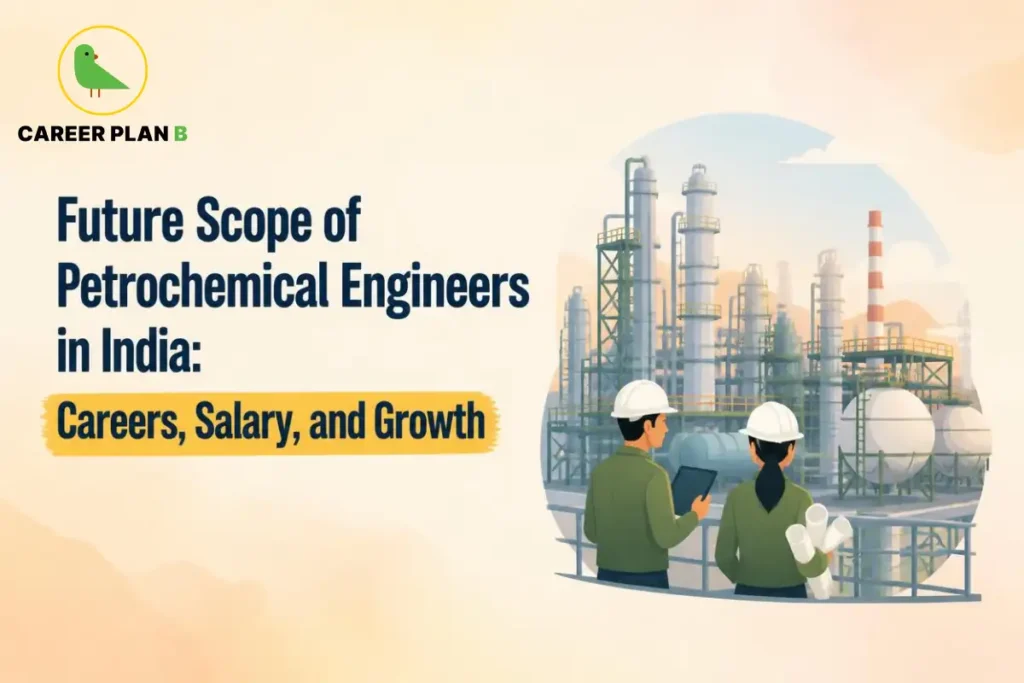
Petrochemical engineering plays a vital role in this ecosystem. Engineers design and operate large-scale processes that convert crude oil and natural gas into valuable products. Their work includes refining operations, polymer production, and the development of downstream chemical industries that support manufacturing, packaging, and infrastructure.
The future scope of petrochemical engineers in India extends far beyond traditional refineries. Core opportunities in organisations such as ONGC and other energy PSUs remain strong. At the same time, the industry is expanding into specialty chemicals, advanced polymers, bio-based feedstocks, and green hydrogen.
For students and professionals, petrochemical engineering offers long-term stability and excellent career growth. Opportunities are increasing across both the public and private sectors. Understanding these trends can help you decide whether this field matches your long-term career goals in India’s evolving energy and materials industry.
What Does a Petrochemical Engineer Actually Do?
Petrochemical engineers work at the intersection of chemistry, process engineering, and industrial operations. Their primary responsibility is to design and operate processes that convert crude oil, natural gas, and other hydrocarbons into valuable products. These products include fuels, plastics, synthetic fibres, fertilisers, solvents, and specialty chemicals.
On a day-to-day basis, petrochemical engineers perform a wide range of tasks. They optimise refinery processes, design polymer reactors, select feedstocks, and manage plant safety. They also oversee quality control of petrochemical products and scale up processes from pilot plants to commercial production.
Their work involves operating complex equipment such as distillation columns, catalytic crackers, heat exchangers, and polymerisation reactors. They ensure these systems run safely, efficiently, and profitably.Success in this field requires strong technical knowledge, analytical thinking, and practical problem-solving skills.
India’s Petrochemical Sector Growth, Policy, and Opportunity
The scope of petrochemical engineering after BTech is directly tied to how much India is investing in this sector, and the answer is substantially. India is already among the top ten chemical producers in the world, and the government has identified chemicals and petrochemicals as a priority sector for industrial growth.
National Chemical Policy: The Department of Chemicals and Petrochemicals under the Ministry of Chemicals and Fertilizers has outlined a vision to increase India’s chemical and petrochemical output significantly over the next decade, focusing on self-reliance in key chemicals and reducing import dependence.
Petroleum, Chemicals, and Petrochemicals Investment Region (PCPIR): The government has designated PCPIR zones in states like Andhra Pradesh, Gujarat, Odisha, and Tamil Nadu as large integrated investment regions specifically designed to attract petrochemical manufacturing and create engineering employment at scale.
PLI Scheme for Chemicals: The Production Linked Incentive scheme covers certain speciality chemicals and downstream petrochemical products, creating fresh industrial investment and engineering job creation.
These policy initiatives confirm that petrochemical industry jobs for engineers are not just available today; they are being actively created through government-backed industrial planning for the next two decades.
Key Career Paths for Petrochemical Engineers in India
Oil Refining and Upstream Oil and Gas
The most traditional and well-established career path for petrochemical engineers is in oil refining and upstream oil and gas. India operates some of the largest refineries in Asia, including the Jamnagar refinery complex operated by Reliance and government refineries run by IOCL, BPCL, and HPCL. Petrochemical engineers in this space work on crude distillation, catalytic reforming, hydrocracking, and product blending.
The oil and gas sector career growth India offers in this domain is among the most structured in engineering, with clear promotion tracks, high job security in PSUs, and some of the best starting salaries available to BTech engineers anywhere in the country.
Polymer and Plastics Manufacturing
Polymers and plastics are among the largest downstream products of the petrochemical industry. Petrochemical engineers working in this domain design and operate polymerisation reactors, extrusion lines, and compounding facilities that produce materials used in packaging, automotive components, textiles, and construction. India’s polymer consumption is growing rapidly, and companies like ONGC Petro additions Limited (OPAL) and GAIL’s polymer division are significant employers in this space.
Specialty Chemicals and Petrochemical Derivatives
Speciality chemicals including surfactants, adhesives, coatings, agrochemical intermediates, and performance polymers represent a high-value, high-growth segment of the petrochemical value chain. Petrochemical engineering careers in India in this segment offer excellent salary growth potential, particularly as India positions itself as a global alternative to Chinese specialty chemical supply chains. Companies in Gujarat, Maharashtra, and Tamil Nadu’s chemical corridors are aggressively expanding capacity and hiring process engineers with petrochemical backgrounds.
Research, Development, and Academia
For petrochemical engineers interested in innovation, research roles at institutions like CSIR-IIP (Indian Institute of Petroleum), IIT departments of chemical engineering, and R&D centres of major oil companies offer exciting long-term careers. CSIR-IIP in Dehradun is one of India’s premier petroleum research laboratories and regularly recruits engineers for fuel technology, catalysis, and refinery process research.
Have Any Doubts?
Top PSUs and Companies Hiring Petrochemical Engineers
PSU jobs for petrochemical engineers are among the most sought-after government roles in India, offering high pay, job security, and structured career growth. Key recruiters include the following:
- ONGC (Oil and Natural Gas Corporation): India’s largest oil and gas producer recruits petrochemical and chemical engineers as graduate trainees through GATE.
- IOCL (Indian Oil Corporation Limited): Operates major refineries and petrochemical complexes and is one of the largest PSU employers of petrochemical engineers.
- BPCL (Bharat Petroleum Corporation Limited): Hires engineers for refinery operations, petrochemical process design, and project management.
- GAIL (Gas Authority of India Limited): Recruits for gas processing, LPG extraction, and polymer manufacturing roles.
- HPCL (Hindustan Petroleum Corporation Limited): A major refining PSU with active recruitment for process and petrochemical engineers.
- ONGC Petro additions Limited (OPAL): A joint venture focused on polymer production, directly requiring petrochemical engineering expertise.
- HMEL (HPCL-Mittal Energy Limited): Operates one of India’s most modern refineries in Bathinda, Punjab, hiring engineers across refinery and petrochemical operations.
- DRDO and BARC: Select divisions working on fuels, propellants, and energy materials also recruit petrochemical engineers for defence and nuclear research applications.
Salary Outlook for Petrochemical Engineers in India
The petrochemical engineer salary in India varies significantly based on whether you join a PSU, a private refinery, or a speciality chemicals company. Here is a realistic salary breakdown across career stages:
| Career Stage | PSU / Government | Private Sector |
|---|---|---|
| Fresher (0–2 years) | ₹12–₹16 LPA (incl. benefits) | ₹4–₹8 LPA |
| Mid-Level (3–5 years) | ₹18–₹25 LPA | ₹10–₹18 LPA |
| Senior Level (10+ years) | ₹28–₹35 LPA | ₹20–₹35 LPA |
| Research / Specialist Roles | ₹14–₹22 LPA | ₹15–₹28 LPA |
Note: LPA = Lakhs Per Annum. Figures include salary, allowances, and applicable benefits. PSU figures follow DPE pay guidelines and vary between Maharatna, Navratna, and Miniratna companies.
Oil and gas PSUs consistently offer the highest starting packages for petrochemical engineers, with Maharatna companies like ONGC and IOCL leading on total compensation. Private sector salaries are more variable but can surpass PSU pay at senior levels in speciality chemicals and international oil companies.
GATE and UPSC ESE: Gateway to Government Roles
Students aiming for PSU jobs through GATE should appear for GATE CH (Chemical Engineering). This is the relevant paper for graduates with a B.Tech. in Petrochemical Engineering or Chemical Engineering.
GATE CH is accepted by major oil and gas PSUs, including ONGC, IOCL, BPCL, GAIL, and HPCL. A strong GATE rank improves your chances of securing graduate trainee positions in these organisations.
Maharatna and Navratna PSUs offer some of the highest-paying and most prestigious government engineering jobs for BTech graduates. They also provide structured career growth and excellent long-term benefits.
Students interested in central government services can also appear for the UPSC Engineering Services Examination (ESE). Since chemical engineering is one of the recognised disciplines, petrochemical engineers with a strong process engineering background are eligible to apply. Successful candidates are appointed as Group A officers in central government departments.
How Career Plan B Helps
The petrochemical sector offers a wide range of career paths, from PSU refinery roles to speciality chemicals, polymer manufacturing, and research, and choosing the right one requires more than just industry knowledge. Career Plan B offers personalised career counselling, psychometric and career assessment tests, and structured career roadmapping to help petrochemical and chemical engineering students identify their strengths, set clear goals, and build a focused preparation strategy for GATE, PSU recruitment, or private sector careers in India’s growing petrochemical industry.
For Latest Information
Frequently Asked Questions (FAQs)
Q1. Is petrochemical engineering a good career choice in India?
Yes, petrochemical engineering offers excellent career prospects in India. With government investment in PCPIR zones, PLI schemes for chemicals, and major PSUs like ONGC, IOCL, and GAIL actively recruiting, the future scope of petrochemical engineers in India is strong across both public and private sectors. The combination of high salaries, job security in PSUs, and growing industrial demand makes it one of the more rewarding engineering career paths available.
Q2. Which GATE paper should petrochemical engineers appear for?
Petrochemical engineers should appear for GATE CH (Chemical Engineering), which is accepted by all major oil and gas PSUs in India. This paper covers core chemical and process engineering topics that align well with a petrochemical engineering curriculum.
Q3. What are the top government organisations hiring petrochemical engineers in India?
The top government and PSU employers for petrochemical engineers include ONGC, IOCL, BPCL, GAIL, and HPCL. Research institutions like CSIR-IIP also offer research and development roles for petrochemical engineers.
Q4. What is the scope of petrochemical engineering beyond oil and gas?
The scope extends well beyond oil and gas into polymer and plastics manufacturing, speciality chemicals, agrochemical intermediates, surfactants, adhesives, and bio-based feedstocks. As India’s chemical industry diversifies and grows, petrochemical engineers who develop expertise in downstream chemical processes will find opportunities across a wide range of industries beyond traditional refining.
Conclusion
The future scope of petrochemical engineers in India is broad and continues to expand. Government investment and industrial growth are creating opportunities across multiple sectors.
High-paying PSU roles in oil refining remain a major attraction. At the same time, new opportunities are emerging in specialty chemicals, polymer manufacturing, and government-backed petrochemical hubs. This makes the career landscape both stable and dynamic.
India’s investments in PCPIR zones, PLI schemes, and domestic chemical manufacturing are driving long-term demand for skilled petrochemical engineers. These initiatives are expected to create even more career opportunities in the coming years.If you are considering this field, petrochemical engineering deserves serious attention. It offers competitive salaries, long-term career stability, and the opportunity to contribute to India’s growing industrial and energy sectors for decades to come.