Team5 · July 29, 2026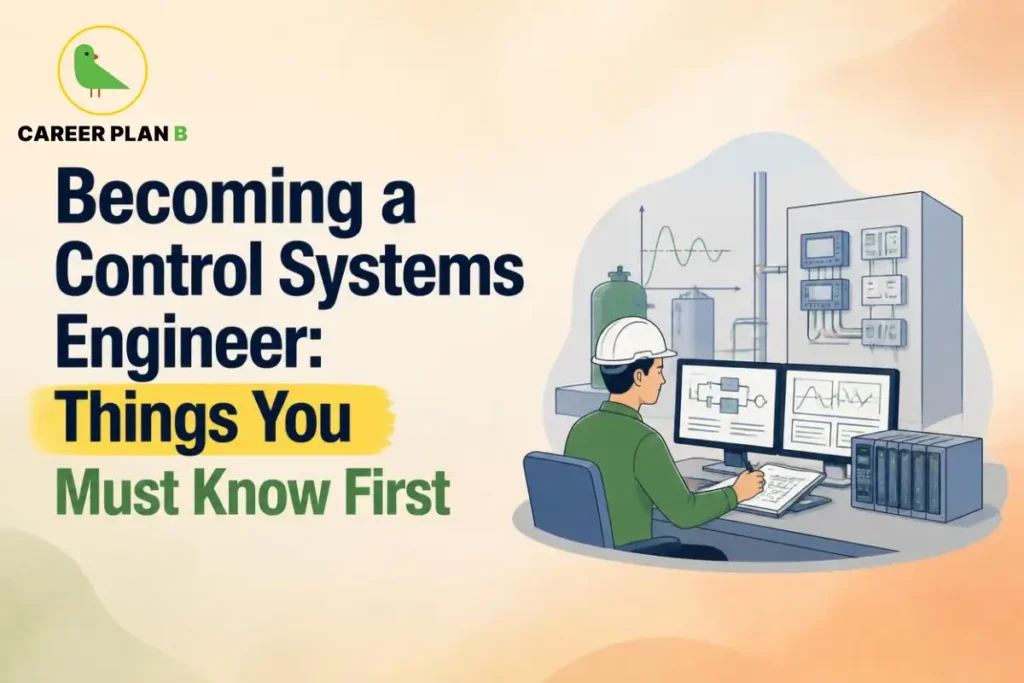
Introduction
Every time a refinery runs safely at full capacity, every time a power plant automatically balances its load, and every time a pharmaceutical factory produces a perfectly consistent batch of medicine, a control systems engineer made it possible.
Yet if you ask most engineering students what a control systems engineer actually does on a typical workday, very few can answer with confidence. Control systems engineering is one of those fields that is genuinely important, genuinely well-paying, and genuinely under-represented in career conversations at the college level.
Becoming a control systems engineer is not just about studying control theory and passing exams. It involves understanding a specific set of industries, mastering tools that are rarely taught in undergraduate programmes, and developing a mindset built around safety, precision, and continuous problem-solving. The gap between what colleges teach and what the industry actually expects is wider in this field than in almost any other engineering discipline.
This blog is written specifically to close that gap. Whether you are an EEE, ECE, or instrumentation engineering student considering this path, or an early-career engineer trying to understand whether control systems is the right direction, here is everything you need to know before you commit.
What Does a Control Systems Engineer Actually Do?
The simplest way to understand this role is to think of it this way: in any industrial system, there are physical processes that need to be monitored and controlled automatically. A control systems engineer is the person who designs, builds, programs, and maintains the systems that do that monitoring and controlling.
In Process Industries: Refineries, Chemicals, Pharmaceuticals
In a petroleum refinery, crude oil goes through dozens of processing stages, each requiring precise control of temperature, pressure, flow, and chemical composition. A control systems engineer programs the Distributed Control System that manages all of these variables simultaneously, designs the control loops that keep each parameter within safe limits and responds when something goes wrong. Control engineering jobs in core industries like oil and gas are among the most demanding and best-compensated in this field.
In pharmaceutical manufacturing, control systems engineers ensure that every batch of medicine is produced under exactly the same conditions because even small deviations can affect product quality and patient safety. The Central Drugs Standard Control Organisation sets strict regulatory standards for pharmaceutical manufacturing environments, and control systems engineers are central to meeting those standards.
In Power and Energy Systems
In thermal and hydroelectric power plants, control systems engineers manage the automatic generation control systems that regulate turbine speed, steam pressure, and power output in real time. The Central Electricity Authority publishes grid connectivity and operational standards that power plant control systems must comply with. As India expands its renewable energy capacity, control systems engineers are also increasingly working on the inverter control and grid stability systems that allow solar and wind plants to operate reliably.
In Manufacturing and Robotics
In automobile plants, electronics factories, and heavy manufacturing facilities, control systems engineers program the PLCs and robotic controllers that automate assembly lines. This is where the PLC and SCADA engineer career path begins for many engineers working on discrete manufacturing automation before potentially moving into process industries or power systems later.
Day-to-Day Realities
What does a typical day actually look like? Depending on the role and industry, a control systems engineer might spend time reviewing P&ID drawings with process engineers, writing or modifying PLC logic, troubleshooting a faulty control loop in a running plant, commissioning a new automated system, or training operators on a new HMI interface. The work combines desk-based engineering with hands-on field and control room work, and no two days are entirely the same.
The Educational Path to Becoming a Control Systems Engineer
Which Engineering Branches Qualify?
Control systems engineering is a multidisciplinary field. Four engineering branches provide particularly relevant foundations: Electrical and Electronics Engineering, Electronics and Communication Engineering, Instrumentation Engineering, and Mechanical Engineering. Mechanical graduates often enter the field through manufacturing and industrial automation roles.
The Role of GATE and Higher Education
For engineers who want to deepen their theoretical foundation, an M.Tech in Control Systems or Industrial Automation is a well-recognised postgraduate path. The Graduate Aptitude Test in Engineering is the gateway; a strong GATE score in EE or IN opens doors to M.Tech programmes at IITs and NITs with excellent placement outcomes in control systems roles. It also serves as the primary selection criterion for PSU recruitment in this domain.
NPTEL and Certification Courses
NPTEL offers several free, high-quality courses directly relevant to control systems engineering, including Control Engineering, Process Control, Industrial Automation, and PLC Programming. These courses are government-backed, carry NPTEL certification, and are widely recognised by employers as evidence of self-directed learning. For any engineering student planning to enter this field, completing at least two or three relevant NPTEL courses before graduation is a strong career move.
The Gap Between College and Industry
Here is the honest reality of the control systems engineering career in India: most engineering colleges teach control theory reasonably well, but almost none provide meaningful hands-on exposure to the tools that industry actually uses. PLC programming, DCS configuration, SCADA system setup, and industrial communication protocols are rarely covered in undergraduate curricula. This means that graduates entering this field typically need a period of structured learning, either through internships, industry training programmes, or self-directed study, before they become productive contributors on the job.
Skills You Must Build Before Entering This Field
Core Technical Skills
Understanding what a control systems engineer does in practice means understanding the technical foundation the role rests on.
Control theory is the starting point for PID controller design and tuning, transfer function analysis, stability criteria, and feedback system behaviour. These are taught in college, but the depth required for industrial application is greater than most courses provide. The ability to tune a PID loop on a real running process where the stakes are high and the system behaviour is often non-ideal is a skill that takes deliberate practice to build.
PLC programming is non-negotiable for most industrial control roles. The four main programming languages defined by the IEC 61131-3 standard Ladder Logic, Function Block Diagram, Structured Text, and Sequential Function Chart are all used in industry. Ladder Logic is the most common entry point, but Structured Text is increasingly important as control systems become more complex and software-intensive.
DCS knowledge understanding how a Distributed Control System is configured, how control modules are built, and how alarm management is structured is essential for process industry roles. SCADA system configuration and HMI design are equally important for both process and power sector positions.
Industrial communication protocols are an area where many candidates are weak. Profibus, Modbus RTU and TCP, HART, Foundation Fieldbus, OPC-UA, and Profinet are all in active use across different industries and generations of equipment. Having working knowledge of at least two or three of these protocols is a genuine differentiator in job applications.
Software Tools Industry Expects
The skills required for control systems engineer roles in India’s major industries centre on a specific set of software platforms.
MATLAB and Simulink are widely used for control system modelling, simulation, and algorithm development. Both industry and research organisations rely on these tools. Many engineering colleges introduce them, but students may need deeper practical knowledge for industry roles. NPTEL courses and other technical resources can help students strengthen these skills.
For PLC programming, Siemens TIA Portal is widely used with Siemens automation systems across process and manufacturing industries. Rockwell Studio 5000 supports Allen-Bradley automation systems and also appears across several industrial sectors. Learning at least one major PLC platform can significantly strengthen your preparation for a PLC and SCADA engineer career path in India.
DCS engineers work with platforms such as Honeywell Experion, ABB System 800xA, Yokogawa CENTUM, and Emerson DeltaV. Oil and gas, chemical, pharmaceutical, and other process industries use these systems for plant automation and control. These platforms require specialised knowledge, so employers often provide system-specific training. However, gaining basic practical exposure before applying can give graduates an advantage during technical interviews.
Soft Skills That Matter
Control systems engineers work at the boundary between engineering disciplines; they must communicate effectively with process engineers about what needs to be controlled, with electrical engineers about how power is delivered to control hardware, and with IT teams about data connectivity and cybersecurity. The ability to translate between these different technical languages is a genuinely valuable and surprisingly rare skill.
Documentation discipline is another underrated requirement. Every control loop, every PLC program, and every instrument calibration record must be accurately documented both for operational safety and for regulatory compliance. Engineers who develop strong documentation habits early stand out consistently in this field.
Industries That Hire Control Systems Engineers in India
Control systems engineer salary in India across levels:
- Entry level (0–2 years): ₹4.5–8 LPA in private sector; ₹8–12 LPA total CTC in oil and gas PSUs
- Mid-level (3–6 years): ₹12–22 LPA, with premium compensation in oil and gas and multinational automation companies
- Senior level (7+ years): ₹25–50 LPA in senior automation, DCS architecture, and project management roles at multinational EPC and technology companies
Realities of the Job Nobody Tells You About
Shift Work and Plant Shutdowns
Many control systems engineering roles in process industries involve shift work. Industrial plants often operate 24 hours a day, seven days a week. This means engineers must continuously monitor critical control systems.
Plant shutdowns can be particularly demanding. During these scheduled maintenance periods, facilities temporarily stop operations for repairs, modifications, and upgrades. Control systems engineers may work extended hours to complete these tasks within tight deadlines. They also test and recommission systems before the plant returns to normal operation.
Safety-Critical Responsibility
Control systems in refineries, chemical plants, and power stations are safety-critical. A poorly designed control loop or a programming error in a safety instrumented system can have serious consequences for people, equipment, and the environment. This responsibility is real, and engineers who enter this field must develop a safety-first mindset from day one. The Petroleum and Explosives Safety Organisation oversees safety standards for hazardous process industries in India; understanding its regulatory framework is relevant for engineers working in oil and gas and chemical sectors.
Continuous Learning Is Not Optional
Control systems technology evolves constantly. The shift from traditional DCS to software-defined control, the integration of IIoT platforms, the adoption of digital twin technology, and the growing importance of cybersecurity in industrial systems all mean that control systems engineers must invest continuously in updating their skills. Engineers who treat their initial training as a one-time event tend to fall behind quickly in this field.
PSU vs MNC vs Startup
The experience of being a control systems engineer differs significantly depending on where you work. In a PSU, the pace is structured and the technology base may be older, but the stability and benefits are strong, and the exposure to large national infrastructure projects is unmatched. An MNC like Siemens or Honeywell, the technology is cutting-edge, the projects are global, and the learning curve is steep. In a system integrator or startup, you may get broader exposure faster but with less structure and higher pressure. Understanding these differences before choosing your first job is important.
Have Any Doubts? <br />
Future Scope Where Control Systems Engineering Is Headed
Industry 4.0 and IIoT
AI and Machine Learning in Process Control
Cybersecurity in Industrial Systems
As industrial control systems become more connected, they also become more vulnerable. The convergence of operational technology and information technology in modern plants has created a new discipline, industrial cybersecurity, that control systems engineers increasingly need to understand. The National Critical Information Infrastructure Protection Centre in India oversees cybersecurity for critical infrastructure sectors, including power and oil and gas, both major employers of control systems engineers.
How Career Plan B Helps
Deciding whether control systems engineering is the right career direction and then figuring out which industry and role to target requires honest self-assessment alongside career information. Career Plan B offers PsycheIntel Career Assessment Tests and Personalised Career Counselling to help engineering graduates understand whether the demands and rewards of control systems engineering align with their strengths and goals. Their Career Roadmapping service then builds a concrete plan covering the skills, certifications, and experiences needed to break into this field successfully, whether the target is a PSU, an MNC, or an industrial automation company.
For Latest Information
Frequently Asked Questions (FAQs)
Q1. Which engineering branch is best for becoming a control systems engineer?
Instrumentation Engineering and Electrical and Electronics Engineering are the two most direct pathways into control systems engineering in India’s process and power industries. ECE graduates are also well-placed for roles in manufacturing automation and robotics.
Q2. Is GATE necessary for a control systems engineering career?
GATE is essential if your goal is a PSU role in oil and gas companies like ONGC and IOCL or power sector PSUs like NTPC and BHEL. For private sector roles in automation companies, system integrators, and EPC contractors, GATE is not required, and companies recruit directly through campus placements and lateral hiring.
Q3. What is the difference between a PLC engineer and a DCS engineer?
PLC (Programmable Logic Controller) systems are typically used for discrete manufacturing automation and smaller-scale process control applications. DCS, or Distributed Control System, is used for large-scale continuous process control in refineries, chemical plants, and power stations.
Q4. How important is field experience versus office-based design work in this career?
Both are important, and the balance depends on your role and employer. In EPC companies and system integrators, control systems engineers typically spend significant time on project sites during commissioning phases. T product companies like Siemens or ABB, work is more office and lab-based. In plant operations roles at refineries or power stations, the control room and the field are both part of daily work.
Q5. Where can I find official resources to learn about industrial safety standards relevant to control systems?
The Petroleum and Explosives Safety Organisation covers safety regulations for oil, gas, and chemical industries. The Central Electricity Authority publishes technical standards for power sector control and protection systems. For pharmaceutical manufacturing control systems, the Central Drugs Standard Control Organisation sets the relevant regulatory framework.
Conclusion
Becoming a control systems engineer is one of the most rewarding paths available to engineering graduates in India, but it demands more preparation than most students realise before they arrive at their first job.
The field sits at the intersection of power engineering, electronics, software, and industrial safety. The tools it uses are specialised and not widely taught in colleges. The industries it serves oil and gas, power, pharmaceuticals, defence, and space are among the most critical and best compensated in the economy. And the future it is heading toward,, Industry 4.0, IIoT, AI-assisted process control, and industrial cybersecurity are genuinely exciting for engineers who enjoy continuous learning and technical depth.
The control systems engineering career in India rewards engineers who combine strong fundamentals with hands-on tool proficiency and a safety-first mindset. If that description fits who you are or who you want to become, this field deserves serious consideration.
Not sure if control systems engineering is the right fit for your strengths and goals? Visit Career Plan B to take a career assessment and get personalised guidance on building your path in control systems and industrial automation engineering.