Team6 · July 30, 2026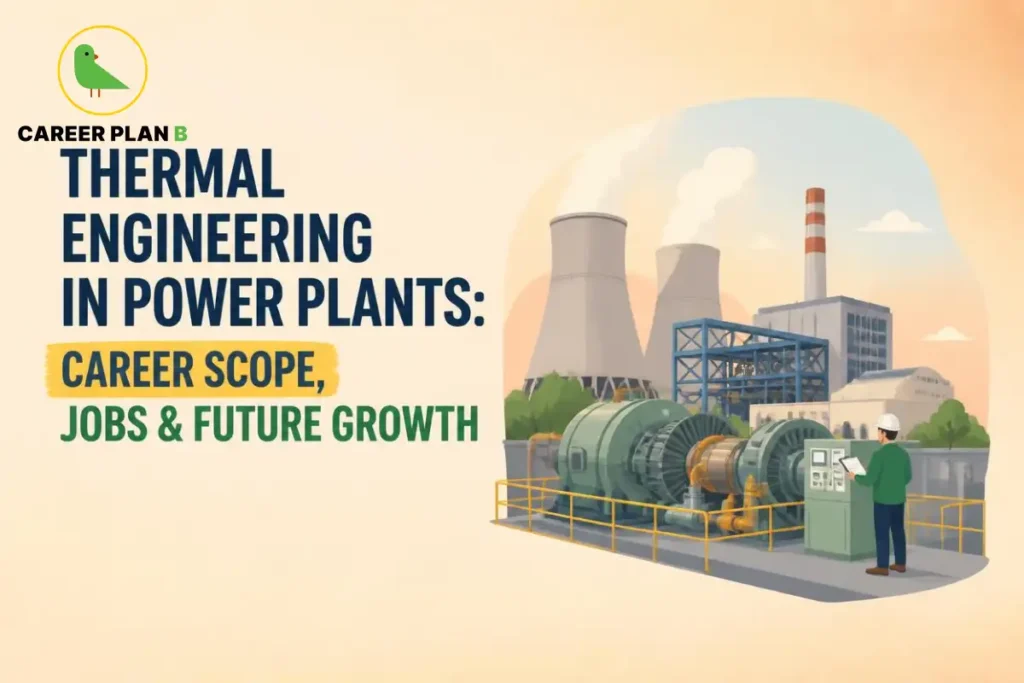
Introduction
India is one of the fastest-growing energy markets in the world. With a nationally installed power capacity crossing 442 GW (Ministry of Power, 2024), the demand for skilled engineers who understand energy systems has never been higher. At the heart of this energy revolution is thermal engineering in power plants, a field that converts heat into electricity and keeps the nation’s lights on.
If you are a mechanical or energy engineering student wondering where your degree can take you, thermal engineering offers a career path that is stable, well-paying, and deeply impactful. From managing massive boiler systems to designing next-generation turbines, thermal engineers are the backbone of India’s power infrastructure.
This blog breaks down exactly what thermal engineering in power plants involves, what career opportunities exist, and how you can build a future in this high-demand field.
What Is Thermal Engineering and Why Does It Matter?
Thermal engineering is a branch of mechanical engineering that deals with heat energy, how it is generated, transferred, and converted into useful work. In the context of power plants, it covers the science behind boilers, turbines, condensers, and heat exchangers.
Heat transfer engineering sits at the core of this discipline. Engineers apply the principles of thermodynamics, fluid mechanics, and material science to ensure that power plants run efficiently and safely.
India’s power sector relies heavily on thermal sources. According to the Ministry of Power, Government of India, thermal power accounts for nearly 57% of total electricity generation in the country. This means millions of homes and industries depend directly on what thermal engineers do every single day.
What Does a Thermal Engineer Do in a Power Plant?
A thermal engineer in a power plant is responsible for designing, operating, and maintaining systems that generate electricity from heat. Their work spans several critical areas:
- Boiler operations: Ensuring fuel combustion is efficient and emissions are within limits
- Turbine management: Monitoring steam flow through turbines to maximize electricity output
- Condenser and cooling systems: Managing the condensation cycle and water treatment
- Energy audits: Identifying heat losses and improving plant efficiency
- Safety compliance: Meeting standards set by regulatory authorities
Steam and turbine systems are especially critical; even a minor inefficiency here can result in crores of rupees in energy losses annually.
Core Skills Required
To succeed as a thermal engineer, you need the following:
- Strong foundation in thermodynamics and fluid mechanics
- Analytical thinking and problem-solving ability
- Familiarity with CAD and simulation tools (ANSYS, AutoCAD)
- Knowledge of safety regulations and environmental norms
- Communication skills for cross-functional teamwork
Career Paths in Thermal Engineering
The thermal engineering career scope in India is broad and growing. Here are the major career paths available:
- Graduate Engineer Trainee (GET) Entry-level role in PSUs like NTPC or BHEL after clearing the GATE exam.
- Operations Engineer manages day-to-day plant operations, monitors output, and troubleshoots issues.
- Maintenance Engineer Focuses on preventive and corrective maintenance of thermal systems.
- Design & R&D Engineer Works on improving plant design, thermal efficiency, and new energy technologies.
- Energy Auditor / Consultant Conducts efficiency assessments for plants and industries.
- Project Engineer Manages thermal plant construction or expansion projects.
Emerging Roles in Renewable Thermal Energy
Beyond conventional coal plants, thermodynamics career opportunities are expanding into:
- Concentrated Solar Power (CSP) plants
- Waste-to-energy plants
- Combined Heat and Power (CHP) systems
- Geothermal energy projects
This shift means that thermal engineers who upskill in renewable systems will be in even greater demand over the next decade.
Top Employers: Where Can You Work?
India has several prestigious public and private sector employers for power plant engineer jobs:
Public Sector (PSUs):
- NTPC Limited, India’s largest power utility
- BHEL (Bharat Heavy Electricals Limited) Major manufacturer of power equipment
- NPCIL (Nuclear Power Corporation of India) Nuclear thermal power
- NHPC, THDC, NEEPCO: Regional power utilities
Private Sector:
- Tata Power, Adani Power, Torrent Power, JSW Energy
Global Opportunities:
- The Middle East, Southeast Asia, and Africa offer strong demand for trained thermal engineers from India.
Salary & Growth Potential
Energy sector careers in India offer competitive salaries at every level:
| Experience Level | Average Salary (Per Annum) |
|---|---|
| Fresher / GET | ₹4 – ₹7 LPA |
| Mid-Level (3–7 years) | ₹8 – ₹15 LPA |
| Senior Engineer (7+ years) | ₹16 – ₹30 LPA |
| Managerial / Consultant | ₹30 LPA and above |
PSUs like NTPC and BHEL also offer additional benefits, including housing, medical coverage, and pension schemes, making them highly attractive employers.
How to Build a Career in Thermal Engineering
Choosing the right education path is the first step toward a strong career in mechanical engineering specializations like thermal engineering.
Education Pathway:
- B.Tech in Mechanical / Thermal Engineering from an AICTE-approved institution
- GATE qualification to enter PSUs or pursue M.Tech (a high-scoring GATE rank opens doors to IITs and top NITs)
- M.Tech in Thermal Engineering / Energy Systems for research and design roles
- Optional: MBA in Energy Management for leadership and project roles
Certifications to Consider:
- Energy Auditor Certification by Bureau of Energy Efficiency (BEE)
- Safety certifications from regulatory bodies
Internships: Apply for internships at NTPC, BHEL, or state electricity boards during your B.Tech. Hands-on plant exposure is invaluable and often leads to pre-placement offers.
How Career Plan B Helps
Choosing a career path in thermal engineering can feel overwhelming, especially when you are unsure whether it aligns with your strengths and interests. Career Plan B offers personalized career counselling, psychometric-based career assessment tests, and structured career roadmapping to help you identify whether thermal engineering is the right fit. Whether you are a student exploring options or a graduate planning your next move, Career Plan B’s expert guidance can help you make confident, informed decisions.
For Latest Information
Frequently Asked Questions (FAQs)
Q1. Is thermal engineering a good career in India?
Yes, absolutely. With India’s energy demand growing rapidly, thermal engineers are in high demand across both public and private sectors. The career offers job security, good salaries, and long-term growth.
Q2. Which exam should I clear to get into NTPC or BHEL as a thermal engineer?
You need to qualify for the GATE exam (Graduate Aptitude Test in Engineering) in the mechanical engineering paper. PSUs like NTPC and BHEL recruit directly through GATE scores.
Q3. Can thermal engineers work in the renewable energy sector?
Yes. Thermal engineering principles apply directly to solar thermal, geothermal, and waste-to-energy plants. Upskilling in these areas significantly broadens your career options.
Q4. What is the difference between a thermal engineer and a mechanical engineer?
Thermal engineering is a specialization within mechanical engineering. While all thermal engineers have a mechanical engineering base, not all mechanical engineers specialize in heat and energy systems. Thermal engineering focuses specifically on heat transfer, thermodynamics, and energy conversion.
Q5. What is the scope of thermal engineering abroad?
The global scope is strong. Countries in the Middle East, Africa, and Southeast Asia actively hire Indian thermal engineers for power plant projects. With experience and certifications, international roles can offer significantly higher compensation.
Conclusion
Thermal engineering in power plants is one of the most stable, impactful, and rewarding career choices for engineering students in India today. From keeping the national grid running to pioneering clean energy solutions, thermal engineers play a role that goes far beyond the plant floor.
The key is to plan early, choose the right specialization, prepare strategically for GATE, gain hands-on experience, and continuously upskill as the energy sector evolves.
Your career in thermal engineering does not have to be a guessing game. Start with clarity, back it with the right guidance, and the opportunities in India’s booming energy sector are yours to claim.
Ready to map out your engineering career? Visit Career Plan B today and take the first step toward a future you are genuinely excited about.