Team6 · November 2, 2026
Introduction
India is building refineries, pharmaceutical plants, semiconductor units, and food processing hubs at a pace never seen before. Behind every efficient production line and optimised manufacturing unit stands one key professional: a process engineer. Yet, when engineering students are asked about their dream roles, process engineering rarely makes the top five.
If you are wondering how to become a process engineer, this guide is your complete roadmap. From eligibility and skills to salary and career growth, here is everything you need to know about one of India’s most in-demand industrial careers.
What Does a Process Engineer Do?
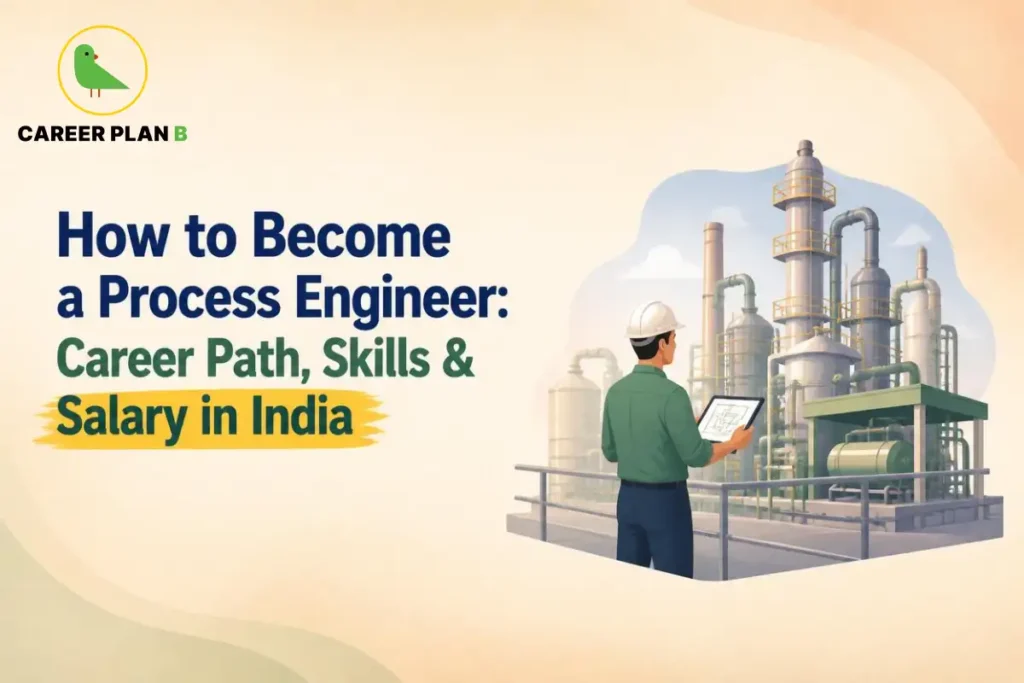
A process engineer designs, optimises, and maintains the systems and processes used to convert raw materials into finished products. They work at the intersection of design, operations, and quality, making sure production is safe, efficient, and cost-effective.
Their day-to-day responsibilities include:
- Designing and reviewing process flow diagrams (PFDs) and P&IDs
- Identifying inefficiencies and implementing process improvements
- Troubleshooting production issues and minimising downtime
- Conducting HAZOP studies and ensuring safety compliance
- Collaborating with R&D, maintenance, and quality teams
Process engineers are employed across oil and gas, pharmaceuticals, chemicals, food processing, power generation, and semiconductor industries that form the backbone of India’s manufacturing economy under the PLI scheme.
Process Engineer vs Chemical Engineer: Are They the Same?
Not exactly. A chemical engineer focuses on the science of reactions and materials, while a process improvement engineer applies that science to real-world production systems. Think of a chemical engineer as the researcher and the process engineer as the implementer. Many process engineers do hold chemical engineering degrees, but mechanical and instrumentation engineers also enter this field regularly.
Process Engineer Eligibility: What Qualifications Do You Need?
Understanding process engineer eligibility is the first step. Here is what most roles require:
Undergraduate Degree A B.Tech or B.E. in Chemical Engineering, Mechanical Engineering, Petroleum Engineering, or Instrumentation. Engineering is the standard entry point. Your programme must be from an AICTE-approved institution.
Postgraduate Options An M.Tech in Process Engineering, Chemical Engineering, or Industrial Engineering strengthens your profile for senior roles. An MBA in operations is also a popular route for those targeting managerial positions.
GATE Score For PSU Jobs: For process engineers and M.Tech admissions, a strong GATE score in Chemical Engineering (CY/CH) or Mechanical Engineering (ME) is essential.
Certifications That Add Value
- Six Sigma (Green Belt or Black Belt) for process improvement roles
- Lean Manufacturing certification
- ISO 9001 internal auditor certification
- HAZOP training from recognised bodies
What Process Engineering Skills Do You Actually Need?
Raw degrees get you interviews. Process engineering skills get you the job. Here is what employers look for:
Technical Skills
- Process simulation using Aspen Plus or HYSYS
- P&ID reading and design
- HAZOP and risk assessment techniques
- Basic CFD understanding (ANSYS Fluent)
- AutoCAD for process layout
Software Proficiency
- Aspen HYSYS / Aspen Plus
- MATLAB for modelling
- MS Excel for data analysis and mass balance calculations
Soft Skills
- Analytical and problem-solving ability
- Strong communication for cross-functional collaboration
- Attention to detail in compliance-heavy environments
- Ability to manage timelines under production pressure
If you are still in college, try to get hands-on exposure to process simulation tools through NPTEL courses, many of which are free and industry-aligned.
Process Engineer Career Path in India
The process engineer career path typically follows this progression:
Entry Level (0–3 years) Graduate Trainee or Junior Process Engineer at a plant or refinery. You will work under senior engineers on process monitoring, data collection, and report preparation. Expected CTC: ₹4–7 LPA.
Mid-level (3–8 years) Process Engineer or Senior Process Engineer handling independent projects, process optimisation studies, and cross-department coordination. Expected CTC: ₹8–15 LPA.
Senior Level (8+ years) Lead Process Engineer, Process Manager, or Plant Head. Strategic decision-making, capital project execution, and vendor management. Expected CTC: ₹18–30+ LPA.
Is GATE Necessary for a Process Engineer?
GATE is not mandatory for private sector roles, but it is essential for PSU jobs for process engineers. Major PSU recruiters include:
- ONGC
- Indian Oil Corporation Limited (IOCL)
- BPCL
- GAIL
These organisations recruit process engineers through GATE scores for their refineries, pipelines, and petrochemical plants. A GATE rank in the top 500–1000 (Chemical Engineering) significantly improves your chances.
Have Any Doubts?
Process Engineer Salary in India
Process engineer salary in India varies by sector, location, and experience:
| Level | Private Sector | PSU |
|---|---|---|
| Entry Level | ₹4–7 LPA | ₹7–9 LPA |
| Mid-level | ₹8–15 LPA | ₹12–18 LPA |
| Senior Level | ₹18–30+ LPA | ₹20–28 LPA |
PSUs offer additional benefits including housing allowance, medical cover, and retirement benefits, making the effective compensation significantly higher than the CTC alone.
For chemical engineering jobs in India, cities like Mumbai, Vadodara, Pune, Visakhapatnam, and Chennai are the key hiring hubs due to their concentration of refineries, pharma parks, and manufacturing clusters.
How Career Plan B Helps
If you are serious about building a career in process engineering, Career Plan B can help you navigate the path with clarity. From psychometric and career assessments that identify your engineering strengths to personalised career counselling, GATE guidance, and career roadmapping, Career Plan B gives engineering students and graduates a structured plan to enter and grow in the process engineering field.
For Latest Information
Frequently Asked Questions (FAQs)
1. Which branch is best for becoming a process engineer?
Chemical Engineering is the most direct route, but Mechanical, Petroleum, and Instrumentation Engineering graduates are also widely hired in process engineering roles.
2. Is GATE compulsory to become a process engineer?
GATE is not compulsory for private sector roles but is essential for PSU recruitment through organisations like ONGC, IOCL, and GAIL.
3. What is the starting salary of a process engineer in India?
Entry-level process engineer salaries in India range from ₹4–7 LPA in the private sector and ₹7–9 LPA in PSUs, depending on the company and location.
4. What are the top companies hiring process engineers in India? Top recruiters include ONGC, IOCL, BPCL, GAIL, Reliance Industries, L&T Hydrocarbon, Tata Chemicals, and UPL Limited.
5. Can a mechanical engineer become a process engineer?
Yes. Mechanical engineers are regularly hired as process engineers, especially in power plants, automotive manufacturing, and FMCG production environments. Additional certifications in process simulation tools strengthen the application.
Conclusion
Knowing how to become a process engineer is one thing; building the right profile for it is another. The process engineer career path rewards engineers who combine strong technical foundations with a continuous improvement mindset. Whether you are aiming for a PSU role through GATE or targeting Reliance and L&T straight out of college, the roadmap is clear: get the right degree, build your simulation skills, earn relevant certifications, and stay updated with India’s industrial growth sectors.
Process engineering is not just a job; it is the engine room of manufacturing in India. Start building your path today.