Team6 · November 2, 2026
Introduction
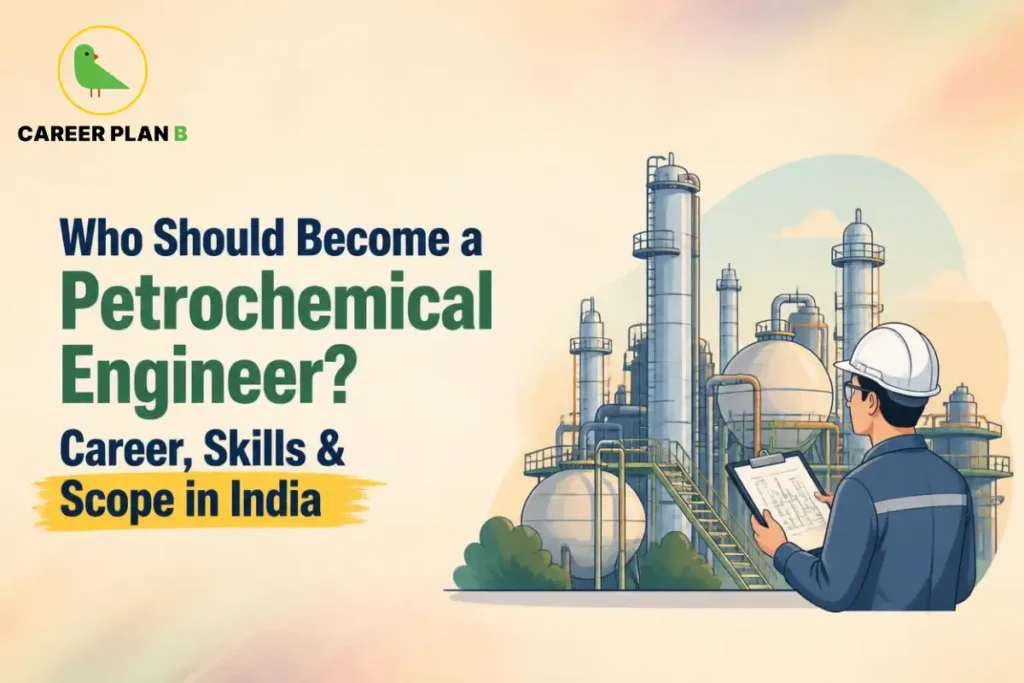
India is the sixth largest producer of chemicals globally and one of the fastest-growing petrochemical markets in the world. With massive investments flowing into refineries, polymer plants, and speciality chemical hubs, the demand for skilled petrochemical engineers has never been stronger. Yet many engineering aspirants overlook this field entirely either because they confuse it with petroleum engineering or simply do not know what the role involves.
So, who should become a petrochemical engineer? If you are an engineering student or graduate with a strong interest in chemistry, large-scale industrial processes, and the science behind everyday materials from plastics and fertilisers to synthetic fibres and pharmaceuticals, petrochemical engineering might be exactly the career you have been looking for. This blog breaks down everything you need to know, from eligibility and skills to salary and career scope in India.
What Does a Petrochemical Engineer Do?
A petrochemical engineer works at the core of converting petroleum and natural gas into valuable chemical products used across industries. Their work spans process design, plant operations, quality control, and safety management all within large-scale industrial environments.
Key responsibilities include:
- Designing and optimising chemical processes for refining and polymer production
- Monitoring plant operations and troubleshooting process deviations
- Conducting HAZOP studies and ensuring compliance with safety standards
- Coordinating with R&D and production teams to improve yield and reduce waste
- Managing process documentation including P&IDs and process flow diagrams
Petrochemical engineers find roles across plastics manufacturing, fertiliser production, synthetic rubber, petroleum refining, pharmaceuticals, and even the textiles sector. These are industries that directly support India’s manufacturing ambitions under the PLI scheme and the Petroleum, Chemicals and Petrochemicals Investment Region (PCPIR) policy.
Petroleum Engineering vs Petrochemical Engineering What Is the Difference?
This is one of the most common points of confusion among students. Petroleum engineering focuses on the extraction and production of crude oil and natural gas from reservoirs. Petrochemical engineering, on the other hand, focuses on what happens after extraction, converting those hydrocarbons into useful chemical products. Both are valuable fields, but they require different skill sets and lead to different career environments. If you are more drawn to chemistry and process systems than to drilling and reservoir management, petrochemical engineering is the better fit.
Who Should Become a Petrochemical Engineer?
Not every engineer is suited for every field. Petrochemical engineering rewards a very specific kind of thinking and personality. Here is who naturally thrives in this career:
You enjoy chemistry and thermodynamics. Petrochemical engineering is built on reaction kinetics, thermodynamics, and mass transfer. If these subjects excite rather than overwhelm you, you are already ahead.
You are drawn to large-scale industrial systems. This is not a desk-bound profession. Petrochemical engineers work in plants, refineries, and production facilities where every decision affects thousands of tonnes of output.
You are a systematic problem-solver. When a process deviation occurs in a cracker unit at 3 AM, the petrochemical engineer on shift needs to diagnose and resolve it fast. Methodical thinking under pressure is non-negotiable.
You care about safety and precision. Petrochemical plants handle flammable, toxic, and high-pressure materials. Engineers in this field must have a zero-compromise attitude toward safety protocols and documentation.
You want a career with long-term industrial relevance. Despite the global energy transition, petrochemicals underpin plastics, medicines, fertilisers, and synthetic materials, all of which will remain essential for decades.
Is Petrochemical Engineering Right for You? A Quick Self-Check
Ask yourself these questions:
- Do I find subjects like reaction engineering, fluid mechanics, or heat transfer interesting?
- Am I comfortable working in plant or field environments, not just offices?
- Do I have strong attention to detail and a process-orientated mindset?
- Am I interested in chemical engineering jobs in the petrochemical industry long-term?
If most answers are yes, this career path deserves serious consideration.
Petrochemical Engineering Eligibility
Understanding petrochemical engineering eligibility upfront saves you from making the wrong academic choices. Here is what you need:
Undergraduate Degree A B.Tech or B.E. in Chemical Engineering, Petrochemical Engineering, Petroleum Engineering, or Polymer Engineering is the standard entry qualification. Your institution must be AICTE-approved
Postgraduate Options An M.Tech in Petrochemical Engineering or Chemical Engineering from a reputed institution adds significant depth. IITs, NITs, and institutions like UPES Dehradun and ICT Mumbai offer specialised programmes in this area.
GATE Score A strong GATE score in Chemical Engineering (CH) is essential for M.Tech admissions at premier institutions and for PSU jobs for petrochemical engineers.
Certifications That Strengthen Your Profile
- HAZOP and Process Safety Management training
- Six Sigma Green Belt or Black Belt certification
- Aspen HYSYS or Aspen Plus process simulation certification
- ISO 14001 Environmental Management Systems awareness
Skills Required for Petrochemical Engineer
The skills required for a petrochemical engineer span both technical depth and workplace competence. Here is a breakdown of what employers consistently look for:
Technical Skills
- Process simulation using Aspen HYSYS and Aspen Plus
- P&ID reading, design, and interpretation
- Reaction kinetics and thermodynamic modelling
- HAZOP analysis and process safety reviews
- Material and energy balance calculations
Software and Tools
- Aspen HYSYS / Aspen Plus for process design
- MATLAB for process modelling
- AutoCAD for plant layout
- MS Excel for operational data analysis
Soft Skills
- Precision and attention to detail in compliance-heavy environments
- Strong analytical and troubleshooting ability
- Cross-functional communication with operations, safety, and maintenance teams
- Adaptability in shift-based or plant environments
For students still in college, NPTEL offers free, high-quality courses on chemical reaction engineering, process simulation, and petroleum refinery engineering, all directly relevant to this career.
Have Any Doubts?
Petrochemical Engineer Career in India Scope and Opportunities
The petrochemical engineer career in India is supported by a robust industrial ecosystem and strong government policy push. The Indian government’s PCPIR policy has established dedicated investment regions in Andhra Pradesh, Gujarat, Odisha, and Tamil Nadu specifically for petrochemical and chemical industries.
PSU Opportunities: PSU jobs for petrochemical engineers are among the most sought-after roles in this field due to job security, structured career growth, and competitive compensation. Key PSU recruiters include the following:
- ONGC
- Indian Oil Corporation Limited (IOCL)
- BPCL
- HPCL
- GAIL
These organisations recruit through GATE scores for Graduate Apprentice Engineer (GAE) and Executive Engineer roles at their refineries, cracker units, and gas processing facilities.
Private Sector Opportunities Private recruiters include Reliance Industries, BASF India, Haldia Petrochemicals, ONGC Petro Additions (OPAL), Deepak Nitrite, and UPL Limited. The private sector offers faster career growth and exposure to cutting-edge process technologies.
Career Growth Path From Graduate Trainee to Plant Head
- Graduate Trainee / Junior Engineer (0–3 years): Plant operations, process monitoring, data analysis
- Process / Production Engineer (3–7 years): Independent process management, optimisation projects
- Senior Engineer / Shift Manager (7–12 years): Team leadership, capital project execution
- Plant Manager / Operations Head (12+ years): Full plant responsibility, strategic planning
Petrochemical Engineer Salary in India
A petrochemical engineer’s salary in India is competitive across both public and private sectors, with PSUs offering additional non-monetary benefits.
| Level | Private Sector | PSU |
|---|---|---|
| Entry Level (0–3 yrs) | ₹4.5–7 LPA | ₹7–10 LPA |
| Mid-level (3–8 yrs) | ₹9–16 LPA | ₹12–18 LPA |
| Senior Level (8+ yrs) | ₹18–35+ LPA | ₹20–30 LPA |
PSU packages also include housing allowance, medical benefits, a provident fund, and gratuity, making the effective compensation substantially higher than the CTC figure.
Major employment hubs for chemical engineering jobs in the petrochemical industry in India include Jamnagar, Vadodara, Visakhapatnam, Dahej, Haldia, Mumbai, and Mangaluru, all home to large refineries, cracker complexes, or chemical parks.
How Career Plan B Helps
If you are still figuring out whether a petrochemical engineer career in India is the right fit for you, Career Plan B can help you decide with confidence. Through personalised career counselling, psychometric assessments, and career roadmapping, Career Plan B helps engineering students and graduates identify their strengths, choose the right specialisation, and build a focused plan for entering and growing in the petrochemical sector.
For Latest Information
Frequently Asked Questions (FAQs)
1. Which engineering branch is best for becoming a petrochemical engineer?
Chemical Engineering is the most direct route. Petroleum Engineering and Polymer Engineering graduates are also widely hired. Mechanical Engineering graduates can enter the field through process and operations roles with additional certifications.
2. Is GATE necessary for a career in petrochemical engineering?
GATE is not required for private sector roles, but it is essential for PSU jobs for petrochemical engineers at organisations like ONGC, IOCL, BPCL, and GAIL. It is also required for M.Tech admissions at NITs and IITs.
3. What is the starting salary of a petrochemical engineer in India?
The entry-level petrochemical engineer salary in India ranges from ₹4.5–7 LPA in the private sector and ₹7–10 LPA in PSUs, depending on the organisation, location, and role.
4. What are the top colleges for petrochemical engineering in India?
Top institutions include IIT Bombay, IIT Madras, ICT Mumbai, NIT Trichy, UPES Dehradun, and Maharaja Sayajirao University Vadodara. Check AICTE’s approved institution list for the full directory.
5. What is the difference between petroleum and petrochemical engineering?
Petroleum engineering focuses on extracting crude oil and natural gas, while petrochemical engineering focuses on converting those raw materials into chemical products like plastics, fertilisers, and synthetic fibres. They are related fields but involve different processes, skills, and work environments.
Conclusion
Understanding who should become a petrochemical engineer comes down to a combination of academic interest, personality fit, and career ambition. If you are someone who is energised by chemistry, large-scale processes, and the challenge of making complex industrial systems run efficiently, this is a career worth pursuing seriously.
India’s petrochemical sector is expanding rapidly, backed by strong government investment and growing domestic demand. The PSU opportunities are structured and rewarding, the private sector is dynamic, and the long-term relevance of this field is not in question.
Start by assessing your fit, building the right academic foundation, and connecting with career guidance that helps you move forward with a plan, not just a degree.