Team6 · November 2, 2026
Introduction
Picture a world without refined fuel, packaged medicines, processed food, clean water, or plastic alternatives. Sounds impossible, right? That is because behind every one of these essential products stands a chemical engineer.
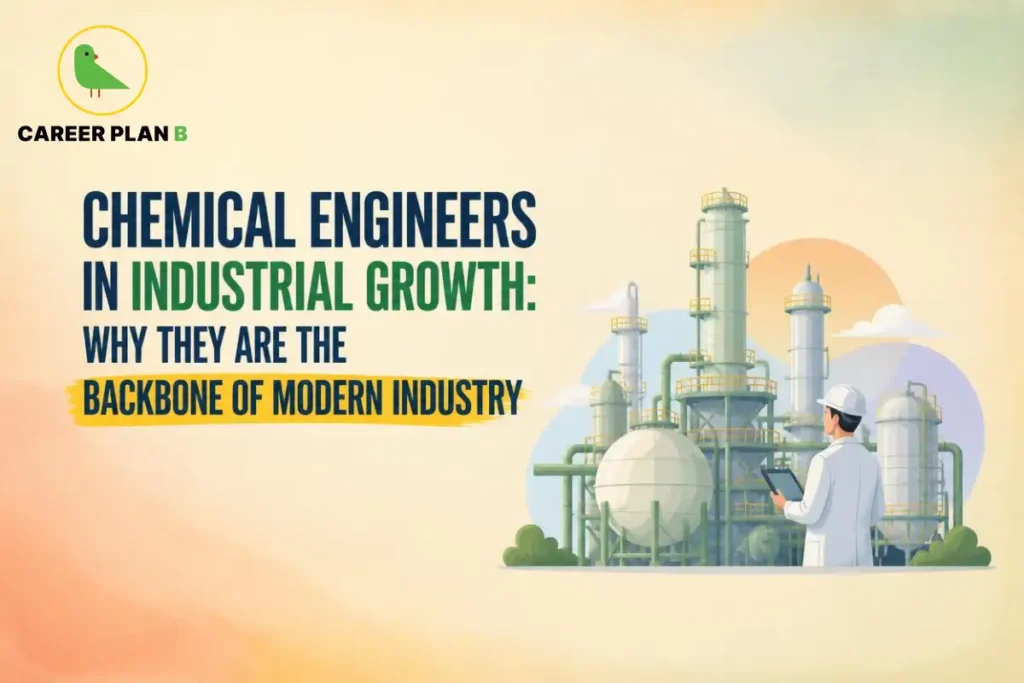
Chemical engineers in industrial growth are not just participants; they are the architects of modern industry. They design the processes, build the systems, and solve the problems that keep entire economies running. From the petrol in your car to the tablet you take when you are sick, chemical engineers have had a hand in almost everything manufactured at scale.
Yet despite their enormous contribution, chemical engineering remains one of the most underappreciated disciplines in public conversation. This blog sets the record straight, exploring the critical role of chemical engineers in industry, the sectors they power, the innovations they drive, and why this career continues to be one of the most impactful choices a science student can make.
Who Are Chemical Engineers and What Do They Do?
A chemical engineer applies the principles of chemistry, physics, biology, and mathematics to design and optimise processes that transform raw materials into finished products safely, efficiently, and at an industrial scale.
Unlike chemists who work primarily in laboratories, chemical engineers work on the entire system from raw material input to final product output. Their responsibilities in an industrial context include:
- Designing and scaling up production processes
- Ensuring plant safety and regulatory compliance
- Optimising energy use and reducing waste
- Troubleshooting equipment and process failures
- Collaborating with multidisciplinary teams across engineering, science, and management
In short, industrial chemical engineering is the engine that keeps manufacturing plants, refineries, pharmaceutical factories, and food processing units running efficiently day after day.
Key Industries Powered by Chemical Engineers
The influence of process engineering industries spans virtually every sector of the modern economy. Here is a look at the major industries where chemical engineers are indispensable:
1. Oil, Gas, and Petrochemicals
Chemical engineers design refining processes that convert crude oil into petrol, diesel, LPG, and petrochemical feedstocks. India’s largest public sector energy companies ONGC, IOCL, BPCL, and GAIL are among the biggest employers of chemical engineering graduates. Careers here involve process design, plant operations, and safety management at a massive scale.
2. Pharmaceuticals and Biotechnology
Every medicine manufactured at scale requires a chemical engineer to design its production process. From tablet formulation to injectable drug manufacturing, chemical engineers ensure consistency, purity, and regulatory compliance. India’s pharmaceutical industry, the third largest in the world by volume, depends heavily on chemical engineering job roles in production and quality control.
3. Food and Beverage Processing
The food you eat has been pasteurised, preserved, packaged, and quality-tested, all using processes designed by chemical engineers. They ensure food safety, optimise shelf life, and develop new formulation techniques for everything from packaged snacks to dairy products.
4. Specialty Chemicals and Agrochemicals
India is one of the world’s leading producers of speciality chemicals and agrochemicals. Chemical engineers in this sector develop fertilisers, pesticides, dyes, and advanced materials that support agriculture and manufacturing industries across the country.
5. Environmental Engineering and Water Treatment
Chemical engineers design water purification systems, industrial effluent treatment plants, and air pollution control systems. As environmental regulations tighten globally, their expertise in chemical engineering and sustainability has become more critical than ever.
6. Renewable Energy and Clean Technology
From hydrogen fuel cells to solar panel manufacturing and biofuel production, chemical engineers are at the forefront of the clean energy transition, making them central to the future of industrial chemical engineering.
How Chemical Engineers Drive Industrial Innovation
Innovation in industry rarely happens in a single breakthrough moment. It happens through incremental process improvements, smarter material use, and better system design all areas where chemical engineers excel.
Here is how they actively drive industrial growth:
- Process Optimisation: Chemical engineers continuously analyse and improve manufacturing processes to reduce production time, energy consumption, and material waste, directly improving profitability for industries.
- Scale-Up Expertise: A pharmaceutical compound developed in a laboratory needs to be produced in tonnes for the market. Chemical engineers bridge this gap, translating lab-scale discoveries into viable industrial production.
- Cost Reduction at Scale: By improving yield rates, reducing raw material waste, and optimising energy use, chemical engineers save industries millions of rupees annually.
- New Material Development: From biodegradable plastics to advanced composites used in aerospace, chemical engineers collaborate with material scientists to develop the next generation of industrial materials.
- Digital Process Integration: Modern chemical engineers increasingly work with simulation software like ASPEN and HYSYS and integrate data analytics into process management, making plants smarter and more responsive.
Chemical Engineers and Sustainability
One of the most exciting and urgent frontiers for chemical engineering and sustainability is the global push toward net-zero emissions and a circular economy.
India has committed to achieving net-zero carbon emissions by 2070, as outlined in its updated Nationally Determined Contributions submitted to the United Nations Framework Convention on Climate Change (UNFCCC). Official details are available at unfccc.int. Meeting these goals is impossible without chemical engineers leading the charge.
Here is where they are making a direct impact:
- Green Chemistry: Redesigning chemical processes to use fewer hazardous substances and generate less waste
- Carbon Capture and Storage: Developing technologies to capture CO₂ from industrial emissions before they enter the atmosphere
- Biofuels and Renewable Feedstocks: Engineering processes that replace fossil fuel inputs with sustainable biological alternatives
- Water Conservation: Designing closed-loop water systems in manufacturing plants to dramatically reduce freshwater consumption
- Waste-to-Energy Systems: Converting industrial and municipal waste into usable energy through chemical and thermal processes
The Ministry of New and Renewable Energy (MNRE) in India is actively funding clean energy initiatives that rely on chemical engineering expertise. You can explore ongoing programmes at their official website: mnre.gov.in.
Chemical Engineering Scope in India
The chemical engineering scope in India has never been stronger, and it continues to expand across both the public and private sectors.
Public Sector Opportunities
Chemical engineers are actively recruited by major PSUs through GATE (Graduate Aptitude Test in Engineering) scores. Key recruiters include ONGC, IOCL, BPCL, GAIL, Coal India, and NALCO.
Private Sector Demand
Private sector demand for chemical engineers spans pharmaceuticals (Sun Pharma, Cipla, Dr. Reddy’s), speciality chemicals (UPL, Aarti Industries, SRF Limited), FMCG (HUL, ITC), and consulting firms that advise on process engineering and plant design.
Global Opportunities
Chemical engineers are in high demand across the USA, Canada, Germany, Saudi Arabia, and the UAE, particularly in oil refining, pharmaceutical manufacturing, and environmental consulting. The U.S. Bureau of Labour Statistics projects consistent demand for chemical engineers in emerging sectors like biotechnology and clean energy. Official data is available at bls.gov.
Have Any Doubts?
Skills That Make Chemical Engineers Invaluable
A strong chemical engineering career is built on a combination of technical mastery and professional competence. Here are the skills that make chemical engineers particularly valuable to industries:
Technical Skills:
- Process simulation and modelling (ASPEN, HYSYS, MATLAB)
- Thermodynamics, fluid mechanics, and reaction kinetics
- Knowledge of industrial safety standards and HAZOP analysis
- Understanding of environmental regulations and compliance
Professional Skills:
- Analytical and critical thinking
- Cross-functional team collaboration
- Clear communication of complex technical concepts
- Project management and cost estimation
Emerging Skills:
- Data analytics and digital twin technology
- Sustainability assessment and lifecycle analysis
- Knowledge of AI-driven process optimisation tools
How Career Plan B Helps
Understanding the role of chemical engineers in industry is one thing; figuring out whether this career is right for you is another. Career Plan B offers personalised career counselling, PsycheIntel career assessment tests, and structured career roadmapping designed specifically for science and engineering aspirants. Whether you are confused about choosing chemical engineering, planning your GATE preparation, or exploring PSU and private sector pathways, Career Plan B’s admission guidance and academic profile support helps you build a clear, confident roadmap toward a successful chemical engineering career.
For Latest Information
Frequently Asked Questions (FAQs)
1. Why are chemical engineers important to industrial growth?
Chemical engineers design and optimise the processes that convert raw materials into finished products across every major industry from energy and pharmaceuticals to food and clean technology. Without them, large-scale industrial production would be inefficient, unsafe, and unsustainable.
2. Which industries hire the most chemical engineers in India?
The top hiring industries for chemical engineers in India include oil and gas (ONGC, IOCL, and BPCL); pharmaceuticals (Sun Pharma and Cipla); speciality chemicals; agrochemicals; food processing; and environmental engineering firms.
3. What is the average salary of a chemical engineer in India?
Entry-level chemical engineers in India earn between ₹3.5 – ₹6 LPA. With five to ten years of experience, salaries typically range from ₹8 – ₹18 LPA depending on the industry and specialisation. PSU roles often come with additional benefits and job security.
4. How does chemical engineering contribute to sustainability?
Chemical engineers contribute to sustainability through green chemistry, carbon capture technologies, biofuel development, water conservation systems, and waste-to-energy solutions. They are central to India’s clean energy transition and net-zero goals.
5. Is chemical engineering a good career choice in 2026 and beyond?
Absolutely. With India’s growing manufacturing sector, expanding pharmaceutical industry, and increasing focus on clean energy and environmental compliance, the demand for skilled chemical engineers is expected to rise steadily over the next decade.
6. What higher studies options are available after a chemical engineering degree?
Chemical engineering graduates can pursue M.Tech or M.S. in chemical, petroleum, or environmental engineering, an MBA in operations or supply chain management, or a Ph.D. for research and academic careers. GATE scores are essential for M.Tech admissions in IITs and NITs.
Conclusion
The contribution of chemical engineers in industrial growth is vast, varied, and absolutely vital. They are the professionals who turn scientific discoveries into real-world products, who make industries cleaner and more efficient, and who are now leading the charge toward a more sustainable global economy.
Whether India is refining oil, manufacturing medicines, processing food, or building renewable energy infrastructure, chemical engineers are at the centre of it all. For students who enjoy problem-solving, applied science, and making a tangible difference at scale, a chemical engineering career offers one of the most rewarding and impactful paths available.
Choose wisely, prepare thoroughly, and invest in understanding where your strengths truly lie.
Ready to explore whether chemical engineering is the right career for you? Visit Career Plan B and take a personalised career assessment today.