Team6 · September 18, 2026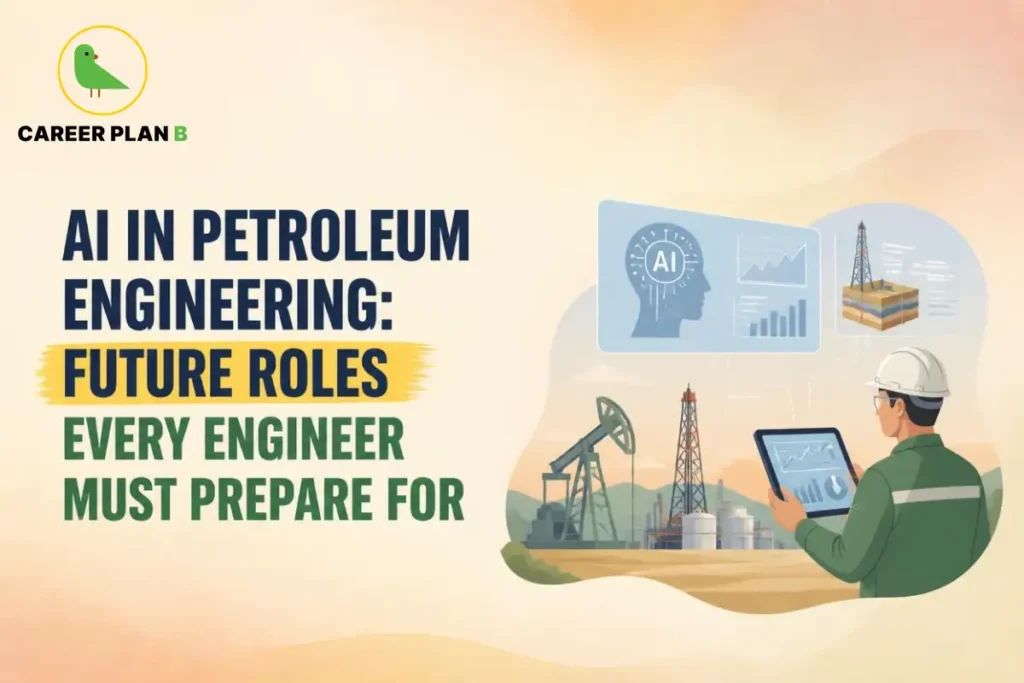
Introduction
The image of a petroleum engineer standing on a rig, hard hat on, making decisions based on years of field instinct, that image is not disappearing. But it is evolving rapidly. Today, that same engineer is just as likely to be analysing machine learning outputs, interpreting AI-generated reservoir models, or configuring sensors on a digital oilfield platform. AI in petroleum engineering is no longer a futuristic concept; it is an operational reality that is actively reshaping roles, workflows, and career trajectories across the global oil and gas industry.
For Indian engineering students and early-career petroleum engineers, this shift presents both a challenge and an extraordinary opportunity. The engineers who understand how to combine domain expertise with digital fluency will be the most valuable professionals in the industry through 2030 and well beyond. This blog breaks down exactly how AI is changing petroleum engineering, what new roles are emerging, and how you can position yourself to thrive in this transformed landscape.
How AI Is Already Changing the Oil and Gas Industry
The adoption of artificial intelligence in oil and gas industry operations has accelerated dramatically over the past five years. What began as experimental use cases in seismic interpretation has expanded into virtually every domain of petroleum engineering from subsurface modelling and drilling optimisation to production forecasting and offshore maintenance.
According to the International Energy Agency, digital technology investment in the energy sector has grown consistently, with AI and data analytics identified as key drivers of efficiency improvement and cost reduction in upstream operations. Globally, oil majors and national oil companies are spending billions on digital transformation initiatives, and they need engineers who can operate at the intersection of petroleum domain knowledge and digital technology.
In India, the Ministry of Petroleum and Natural Gas and the Directorate General of Hydrocarbons have both acknowledged the importance of technology adoption in improving India’s upstream productivity. India’s National AI portal, run by the Ministry of Electronics and Information Technology, also highlights energy as a priority sector for AI-driven transformation.
Key Applications of AI in Petroleum Engineering
Machine Learning for Reservoir Engineering
Machine learning for reservoir engineering is one of the most impactful applications of AI in the upstream sector. Traditionally, reservoir modelling required weeks of simulation time and significant manual input from experienced engineers. Today, machine learning algorithms can analyse historical production data, pressure readings, and geological parameters to build predictive reservoir models in a fraction of the time and with continuously improving accuracy as more data is fed into them.
AI-Driven Drilling Optimisation
AI-driven drilling optimisation is reducing non-productive time, one of the most expensive problems in drilling operations. AI systems now analyse real-time drilling parameters, identify patterns that precede equipment failures or wellbore instability, and recommend corrective actions before problems escalate. This capability is particularly valuable in high-cost deepwater and HPHT environments where every hour of downtime translates into enormous financial loss.
Predictive Maintenance on Offshore Platforms
Offshore platforms contain thousands of interconnected mechanical and electrical systems. AI-powered predictive maintenance platforms analyse sensor data continuously to detect early signs of equipment degradation, predicting failures days or weeks before they occur, and allowing maintenance to be scheduled proactively rather than reactively. This dramatically reduces unplanned shutdowns and improves overall platform safety.
Seismic Data Interpretation Using Deep Learning
Interpreting seismic data to identify subsurface formations has traditionally been one of the most time-consuming and skill-intensive tasks in petroleum exploration. Deep learning algorithms are now capable of processing vast volumes of seismic data and identifying geological features, faults, fractures, and reservoir boundaries with speed and consistency that far exceeds manual interpretation. This is compressing exploration timelines significantly.
Production Forecasting and Decline Curve Analysis
AI models trained on production histories across thousands of wells are delivering more accurate production forecasts and decline curve analyses than conventional methods. This has direct implications for field development planning, reserve estimation, and financial modelling, making AI literacy increasingly essential even for engineers in traditionally non-digital roles.
Future Roles in Petroleum Engineering Created by AI
The rise of AI is not eliminating petroleum engineering jobs; it is transforming them and creating entirely new categories of future roles in petroleum engineering that did not exist a decade ago.
Petroleum Data Scientist
This role combines petroleum domain knowledge with expertise in Python, statistical modelling, and machine learning. Petroleum data scientists build and validate predictive models for production optimisation, reservoir behaviour, and equipment performance. They are among the most sought-after professionals in the current oil and gas hiring market.
Digital Oilfield Engineer
Digital oilfield technology in India and globally is creating demand for engineers who can design, deploy, and manage integrated digital oilfield systems connecting sensors, data platforms, and AI analytics tools across an entire production asset. This role sits at the intersection of petroleum engineering, instrumentation, and software systems.
AI Reservoir Simulation Specialist
Traditional reservoir simulation is being augmented by AI-accelerated modelling tools. Specialists in this area combine classical reservoir engineering knowledge with the ability to configure, train, and validate machine learning models that work alongside conventional simulators, dramatically reducing computation time while maintaining technical rigour.
Subsurface Machine Learning Engineer
This emerging role focuses specifically on applying deep learning and computer vision techniques to subsurface data seismic volumes, well logs, and core images to extract geological insights faster and more accurately than traditional interpretation workflows allow.
Energy Technology Consultant
As oil and gas companies accelerate their digital transformation programmes, there is growing demand for consultants who understand both petroleum operations and digital technology implementation. This role involves advising companies on AI adoption strategy, technology selection, and change management, combining technical depth with business acumen.
Will AI Replace Petroleum Engineers?
This is the question most students ask, and the honest answer is both reassuring and motivating. AI will not replace petroleum engineers. But petroleum engineers who understand and work with AI will absolutely replace those who do not.
The reason is straightforward. AI systems in petroleum engineering are powerful tools, but they require domain expertise to be configured correctly, validated rigorously, and interpreted accurately. A machine learning model that predicts reservoir behaviour is only as reliable as the petroleum engineer who designed the training data, defined the physical constraints, and evaluated the outputs against real-world experience.
The petroleum engineering career in 2030 will be defined by professionals who bring irreplaceable domain knowledge to AI-augmented workflows, not by algorithms working in isolation.
Have Any Doubts?
Skills Petroleum Engineers Need in the Age of AI
Building data science skills for petroleum engineers does not mean becoming a full-stack software developer. It means developing sufficient digital fluency to work effectively alongside AI tools and data science teams. Practically, this involves:
Learning Python fundamentals, particularly libraries like Pandas, NumPy, and Scikit-learn, is used in engineering data analysis. Understanding the basics of machine learning, supervised and unsupervised learning, model validation, and feature engineering. Gaining familiarity with industry-specific digital platforms used in reservoir simulation and production optimisation. Maintaining strong foundations in core petroleum engineering subjects, reservoir mechanics, drilling engineering, and production systems, because domain knowledge remains the irreplaceable differentiator.
AICTE has been encouraging engineering colleges to integrate data science and AI modules into core engineering curricula, reflecting the industry’s direction. GATE syllabi for petroleum engineering also increasingly reflect the importance of computational and analytical skills.
Indian Context: Digital Oilfield Technology in India
ONGC has been actively investing in digital oilfield technology India initiatives, deploying integrated operations centres, real-time monitoring systems, and AI-assisted production optimisation tools across its major assets. Oil India Limited has similarly been exploring digital transformation in its northeastern operations.
NITI Aayog has identified AI as a strategic national priority, with energy listed among the key sectors for AI deployment. This policy support is accelerating the adoption of artificial intelligence in oil and gas industry operations within India, creating a domestic market for digitally skilled petroleum engineers that did not exist five years ago.
How Career Plan B Helps
Navigating the intersection of petroleum engineering and AI requires more than technical upskilling; it requires a clear understanding of which roles suit your profile and how to build toward them strategically. Career Plan B offers personalised career counselling that helps petroleum engineering students identify where their strengths align with emerging digital roles in the oil and gas sector. Through PsycheIntel assessments, you can map your aptitude for data-driven work alongside your core engineering knowledge. Their career roadmapping service helps you plan the right combination of coursework, certifications, and practical experience to position yourself confidently for the future roles in petroleum engineering that AI is creating.
Get In Touch With Us
Frequently Asked Questions
1. Is AI actually being used in petroleum engineering today, or is it still theoretical?
AI is already widely used in petroleum engineering. Major oil companies apply AI to seismic interpretation, drilling optimisation, predictive maintenance, and production forecasting. Saudi Aramco, Shell, and ONGC have adopted these technologies in their operations. Therefore, AI has moved beyond the experimental stage and now supports real-world petroleum engineering work.
2. Do petroleum engineers need to learn coding to stay relevant?
Employers increasingly expect petroleum engineers to know Python and basic data analysis. These skills help with reservoir modelling, production data analysis, and digital oilfield platforms. You do not need to become a professional programmer. However, basic coding skills are becoming a standard requirement.
3. Which new future roles in petroleum engineering are most in demand right now?
Petroleum data scientists, digital oilfield engineers, and AI reservoir simulation specialists rank among the industry’s in-demand roles. National oil companies and international oilfield service firms hire professionals for these positions. These roles can also offer competitive salaries and strong career opportunities.
4. How is ONGC using digital oilfield technology in India in its operations?
ONGC has deployed integrated operations centres across major assets. These centres use real-time sensor data and AI-assisted analytics. They help teams monitor and optimise production across onshore and offshore operations.
5. Will AI reduce petroleum engineering job opportunities in India?
Not in the foreseeable future. AI is creating new specialised roles while transforming existing ones. The overall effect in India is an expansion of the skills required rather than a reduction in the number of engineers needed, particularly as domestic upstream investment increases alongside digital adoption.
Conclusion
AI is already transforming petroleum engineering. It is changing how engineers work and make decisions. However, this shift can create new opportunities for engineers who adapt to new technologies.
By 2030, successful petroleum engineers will need both technical expertise and digital skills. They will also need to understand AI tools and their limitations. Most importantly, engineers must add what algorithms cannot provide. This includes contextual judgment, physical intuition, and professional accountability when using AI-generated insights.Start building those skills today. And if you need a structured plan to get there, Career Plan B is ready to help you design it.
The future of petroleum engineering is intelligent. Make sure you are part of it.