Team6 · September 23, 2026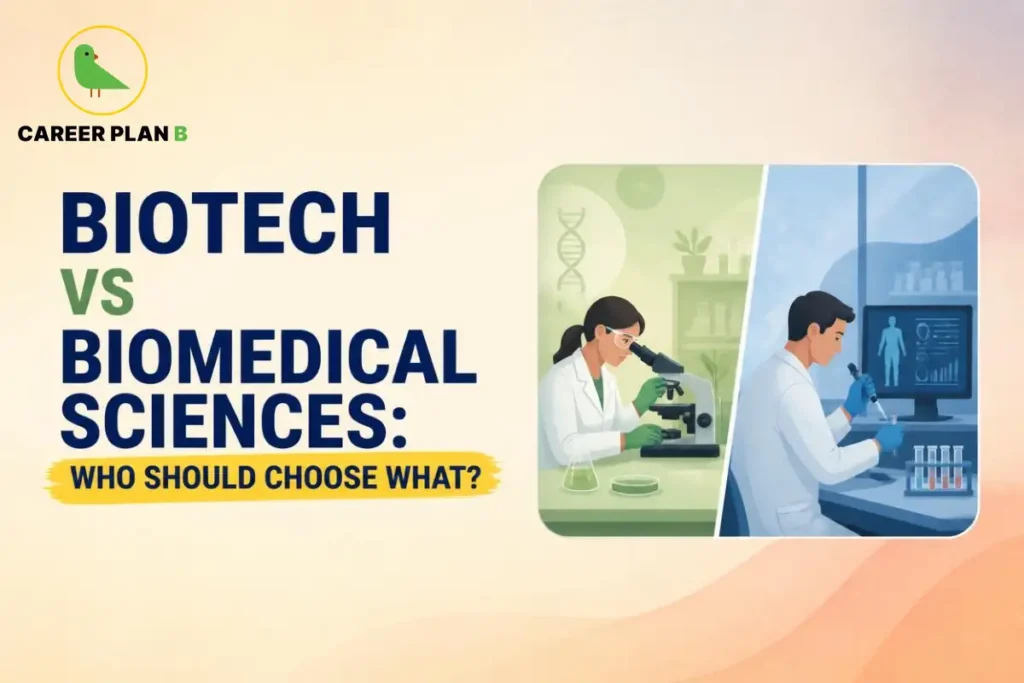
Introduction
Every year, thousands of science students in India sit with their Class 12 marksheets and face a question that sounds deceptively simple: biotech or biomedical sciences? Both involve biology. Both sound cutting-edge. And both promise careers in healthcare, research, and life sciences. So what actually sets them apart?
The confusion is understandable. Biotech vs biomedical sciences is one of the most searched comparisons among PCB and PCM students exploring their options after 12th grade. But choosing between the two without understanding what each field truly involves can lead to years of study in a direction that does not match your interests or goals.
This blog breaks down exactly what each course covers, what kind of student thrives in each, and how to make the choice that is right for you, not just what sounds impressive at a family dinner.
What Is Biotechnology and What Does It Cover?
Biotechnology is the science of using living organisms, cells, and biological systems to develop products and technologies that benefit human life. In practical terms, that means working with DNA, proteins, microbes, and genetic tools to solve problems in healthcare, agriculture, food production, and the environment.
A typical biotechnology programme covers subjects like the following:
- Molecular biology and genetics
- Genetic engineering and recombinant DNA technology
- Microbiology and fermentation technology
- Bioinformatics and computational biology
- Industrial and environmental biotechnology
The scope of biotechnology in India is expanding rapidly. According to the Department of Biotechnology , India’s biotech sector is among the top 12 globally and is projected to grow to USD 150 billion by 2025. Government bodies like BIRAC actively fund biotech startups and research initiatives, creating a strong demand for trained professionals across pharma, agri-biotech, and diagnostics.
If you are someone who wants to work at the frontier of science developing new medicines, engineering crops, or building bio-based solutions, biotechnology is where that work happens.
What Is Biomedical Science and How Is It Different?
Biomedical science sits closer to clinical medicine. It is the study of how the human body works, what goes wrong during disease, and how laboratory tools and diagnostics help detect and understand those conditions.
A biomedical science programme typically covers:
- Human anatomy and physiology
- Pathology and clinical biochemistry
- Haematology and immunology
- Medical microbiology and virology
- Pharmacology and toxicology
It is worth clarifying a common point of confusion here. Biomedical science and biomedical engineering are not the same thing. Biomedical engineering vs biomedical science is itself a separate debate. Engineering focuses on building medical devices and equipment, while biomedical science focuses on understanding disease mechanisms and supporting clinical diagnosis through laboratory work.
A biomedical science career in India typically leads to roles in hospital laboratories, diagnostic centres, blood banks, public health agencies, and pharmaceutical regulatory bodies. It is a strong path for students who want to be connected to patient care without pursuing MBBS.
Biotech vs Biomedical Sciences: Head-to-Head Comparison
Here is a direct comparison to help you see the difference between biotechnology and biomedical science at a glance:
| Parameter | Biotechnology | Biomedical Science |
|---|---|---|
| Core Focus | Research, product development, genetic tools | Clinical diagnostics, disease understanding, lab medicine |
| Key Subjects | Genetics, bioinformatics, fermentation | Pathology, haematology, pharmacology |
| Work Environment | R&D labs, biotech firms, agri companies | Hospitals, diagnostic labs, public health agencies |
| Further Study | M.Tech. Bioinformatics, MBA, PhD in Life Sciences | MSc Biomedical Science, MLT, MPH |
| Top Recruiters | Biocon, Dr. Reddy’s, CSIR labs, startups | AIIMS, diagnostic chains, ICMR, pharma companies |
| Starting Salary | INR 3.5 – 6 LPA | INR 3 – 5.5 LPA |
Both fields offer genuine career potential. The difference lies in what kind of work excites you on a daily basis.
Who Should Choose Biotechnology?
Choose biotechnology if you see yourself as someone who wants to create, innovate, and experiment at the level of molecules and genes. Here is a more specific profile:
You are a good fit for biotech if:
- You are fascinated by genetics, DNA technology, or how living systems can be engineered
- You want to explore roles in pharmaceutical research, agricultural biotech, or industrial fermentation
- You are open to combining biology with data. Bioinformatics and AI in biotech are growing fast
- You want the flexibility to move into research, product development, or even entrepreneurship
- You are comfortable with a career path that may involve a postgraduate degree for specialisation
Biotechnology course after 12th options:
- B.Tech in Biotechnology is offered by IITs, BITS Pilani, VIT, and many state universities
- B.Sc. in Biotechnology offered by Delhi University, JNU, and Bangalore University
- Integrated M.Sc. programmes at IISERs in and other IISER campuses
Biotech is the better pick if you want a broad, research-orientated foundation that can take you into multiple industries over a career.
Who Should Choose Biomedical Science?
Biomedical science is the right choice if you are drawn to the clinical world understanding disease, working with patient samples, and contributing to medical diagnosis and treatment but do not want to pursue MBBS.
You are a good fit for biomedical science if:
- You are interested in how diseases develop and how laboratory tests detect them
- You want to work in hospitals, diagnostic centres, or public health organisations
- You see yourself in a role that directly supports patient care, even if indirectly
- You are interested in regulatory affairs, clinical research, or medical writing down the line
- You prefer a more structured career path with clear professional milestones
Life sciences career options India after biomedical science:
- Medical Laboratory Technologist
- Clinical Research Associate
- Hospital Lab Scientist
- Public Health Specialist
- Regulatory Affairs Executive at pharma companies
Institutions offering strong biomedical science programmes include AIIMS, Manipal Academy of Higher Education, and Jamia Hamdard.
Have Any Doubts?
Career and Salary Outlook for Both
Understanding which is better, biotech or biomedical, also means looking honestly at where each path leads financially and professionally.
Biotechnology Career Outlook:
- Roles: Research Scientist, Bioinformatics Analyst, Bioprocess Engineer, Quality Assurance Executive, Regulatory Affairs Specialist
- Industries: Pharma, agri-biotech, food tech, environmental consulting, genomics startups
- Salary range: INR 3.5 – 6 LPA at entry level; INR 10 – 18 LPA at mid-senior level with specialisation
- Government opportunities: CSIR, DBT-funded projects, ICAR for agri-biotech roles
Biomedical Science Career Outlook:
- Roles: Lab Scientist, Clinical Data Analyst, Haematologist (lab-based), Medical Writer, Hospital Researcher
- Industries: Hospitals, diagnostic chains, CROs, public health agencies, pharma regulatory divisions
- Salary range: INR 3 – 5.5 LPA at entry level; INR 8 – 14 LPA with experience and specialisation
- Government opportunities: ICMR, AIIMS, state health departments under the Ministry of Health and Family Welfare
Neither field has a ceiling. What determines your growth is how well you align your specialisation with your strengths.
Top Colleges and Regulatory Bodies to Know
When shortlisting colleges, always verify programme approvals through official regulatory bodies.
For Biotechnology:
- IIT Delhi, IIT Bombay, IIT Kharagpur B.Tech and M.Tech programmes
- BITS Pilani’s strong industry-linked biotech programme
- JNU School of Life Sciences is excellent for research-focused students
- AICTE approves B.Tech Biotech programmes; always verify college approval here
For Biomedical Science:
- AIIMS New Delhi BSc programmes in allied health sciences
- Manipal Academy’s well-regarded BSc Biomedical Science programme
- Jamia Hamdard strong clinical sciences faculty
- UGC regulates BSc programmes; check university recognition before applying
How Career Plan B Helps
Choosing between biotech and biomedical sciences is not just about subjects; it is about understanding your own strengths, thinking style, and long-term goals. Career Plan B offers personalised career counselling and the PsycheIntel assessment, which helps science students identify which life sciences path genuinely fits their aptitude and personality.
Get In Touch With Us
Frequently Asked Questions
1. What is the main difference between biotechnology and biomedical science?
Biotechnology focuses on using biological systems to develop products and technologies across pharma, agriculture, and industry. Biomedical science focuses on understanding human disease and supporting clinical diagnosis through laboratory science. One is primarily research and development oriented; the other is clinically oriented.
2. Which has better scope in India biotech or biomedical science?
Both have strong scope, but in different directions. Biotechnology offers broader industry diversity including agri-biotech, bioinformatics, and industrial biotech. Biomedical science has more direct pathways into hospital and healthcare settings. The better option depends entirely on your career goals.
3. Can a biotech student work in hospitals?
Not in a direct clinical diagnostic role without additional qualifications. However, biotech graduates can work in hospital research departments, pharmaceutical divisions, and clinical research organisations. Some pursue additional certifications in clinical research to bridge the gap.
4. What are the government job opportunities for biomedical science graduates in India?
Graduates can apply for positions under ICMR, AIIMS, state health departments, and through recruitment under the Ministry of Health and Family Welfare. CSIR institutes also hire biomedical science graduates for research support roles.
5. Is MBBS necessary for a biomedical science career?
No. Biomedical science is specifically designed as a career path for those who want to work in the healthcare ecosystem without an MBBS degree. Roles in laboratory diagnostics, clinical research, and public health are fully accessible with a B.Sc. or M.Sc. in Biomedical Science.
Conclusion
The biotech vs biomedical sciences debate does not have a universal winner and that is actually the point. Both fields are legitimate, growing, and rewarding in their own right. Biotechnology suits students who want to work at the cutting edge of research, product development, and biological innovation. Biomedical science suits those who want to be embedded in the clinical world, contributing to diagnosis, disease understanding, and patient care.
What matters most is not which degree sounds more impressive but which one aligns with how you think, what excites you, and where you want to be in ten years.
Take time to assess your interests honestly. Speak to professionals in both fields if you can. And if you need structured guidance, tools like the PsycheIntel assessment at Career Plan B are built precisely for moments like this to help you choose with clarity, not just instinct.
Your degree is a long-term investment. Make sure it is one you will actually enjoy building.