Team Career Plan B · September 28, 2026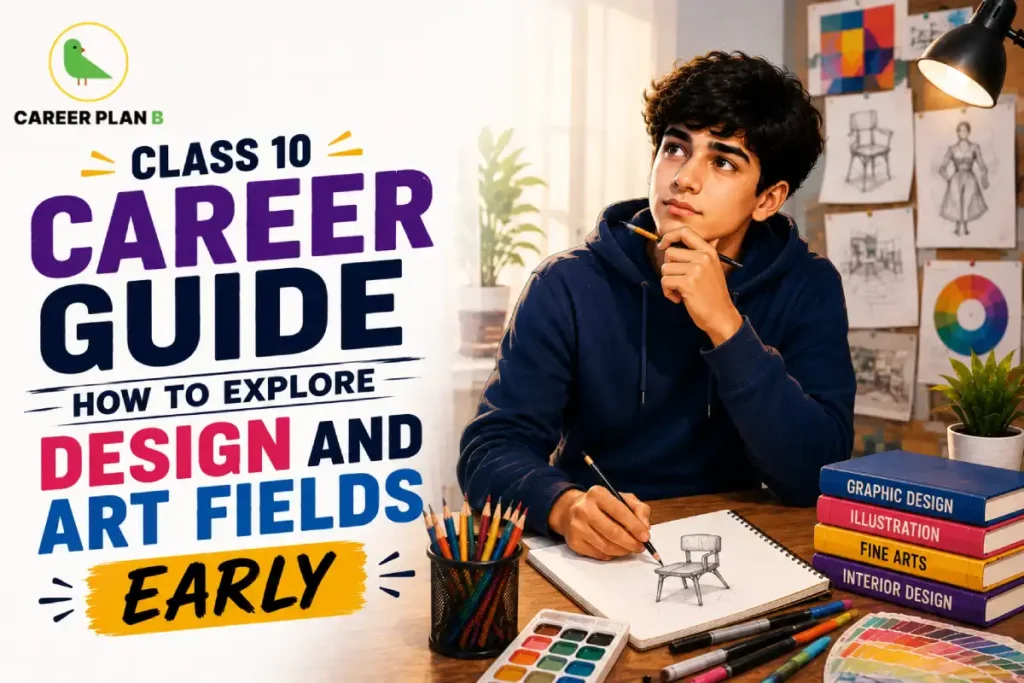
Introduction
Many Class 10 students spend hours sketching in notebooks, designing posters for school events, editing videos, creating digital artwork, or imagining how everyday products could be improved. Yet when discussions about future careers begin, these interests are often pushed aside. Parents may see them as hobbies, while students themselves may not realise that these creative interests can lead to meaningful and rewarding professions.
This is why it is important to explore the design and art fields early. Class 10 is not the time to make final career decisions, but it is the perfect time to discover interests, understand career possibilities, and build a foundation for future choices. The earlier students begin exploring creative fields, the better prepared they are when stream selection and higher education decisions arrive.
Why Early Exploration Matters
Career decisions often become stressful because students wait until Class 12 to think seriously about their future. By that point, many feel pressured to choose a college course or profession without truly understanding what they enjoy or where their strengths lie.
Creative careers are especially misunderstood because most students and parents are only familiar with a few traditional options. When someone hears the word “designer,” they may immediately think of fashion design. When they hear “artist,” they may imagine someone who paints canvases. The reality is much broader.
Today’s design and art industries influence nearly every aspect of daily life. The apps people use, the products they buy, the websites they visit, the advertisements they see, the films they watch, and even the spaces they live in are shaped by professionals working in creative fields.
Students who start exploring early gain something valuable: clarity. Instead of making decisions based on assumptions, they begin understanding what different creative professions actually involve.
Understanding the Different Design and Art Fields
One of the biggest misconceptions among students is that design and art represent a single career path. In reality, they consist of many specialised fields, each requiring different skills, interests, and working styles.
| Field | What You Work On | Suitable For |
|---|---|---|
| Graphic Design | Visual communication, branding, marketing materials | Creative visual thinkers |
| UI/UX Design | Websites, apps, digital experiences | Problem solvers and creative thinkers |
| Animation | Motion graphics, films, storytelling | Students who enjoy drawing and storytelling |
| Fashion Design | Clothing, accessories, styling | Trend-focused and artistic students |
| Product Design | Physical products and user experiences | Creative innovators |
| Fine Arts | Painting, sculpture, visual expression | Students passionate about artistic creation |
The most important thing to understand is that no field is inherently better than another. The right choice depends on individual interests, strengths, and personality. A student who enjoys solving problems may thrive in UX design, while someone who loves storytelling may find animation more fulfilling.
Signs That You May Enjoy a Creative Career
Many students already show signs of creative potential without recognising them.
Perhaps you enjoy designing presentations more than delivering them. Maybe you spend extra time making school projects visually appealing. You could be the student who notices when a website feels difficult to use or who constantly imagines better designs for everyday products.
These small behaviours often reveal genuine interests.
A common mistake students make is assuming that creativity is only about drawing well. While artistic ability can be helpful, many design careers rely just as much on observation, problem-solving, communication, and critical thinking.
Some of the most successful designers are not necessarily the best artists. They are simply excellent at understanding people and finding creative solutions to problems.
Activities Class 10 Students Can Start Today
Exploring design and art does not require expensive courses or professional equipment. Many valuable skills can be developed through simple activities that students can begin immediately.
| Activity | Skill Developed |
|---|---|
| Sketching | Observation and visual thinking |
| Photography | Composition and storytelling |
| Design Challenges | Creativity and problem-solving |
| Portfolio Building | Presentation and organisation |
| Art Competitions | Confidence and exposure |
| Learning Digital Tools | Technical and creative skills |
Students should focus less on perfection and more on experimentation. Trying different activities helps reveal which aspects of creativity feel most engaging and enjoyable.
Many students discover surprising interests through exploration. Someone who begins with drawing may eventually become fascinated by digital interfaces. Another student interested in photography may develop a passion for visual communication or advertising design.
The goal at this stage is not expertise. The goal is curiosity.
How Stream Selection Connects to Design Careers
One of the biggest concerns students and parents have is choosing the right stream after Class 10.
The good news is that many design and art careers are accessible through multiple academic pathways. Depending on the specific field, students may come from Science, Commerce, or Humanities backgrounds.
This flexibility often surprises families.
Many parents worry that choosing a creative career means limiting future opportunities. In reality, several design fields combine creativity with technology, business, psychology, communication, and innovation. Modern design careers are increasingly interdisciplinary.
However, this flexibility can also create confusion.
Students frequently ask which stream is “best” for design. The more useful question is often which stream aligns with both their creative interests and broader academic strengths.
This is why self-awareness becomes so important before making educational decisions.
The Importance of Building a Portfolio Early
A portfolio is one of the most important tools in many creative careers. Unlike traditional professions that may rely heavily on examination scores, creative fields often evaluate what students can create and demonstrate.
The good news is that Class 10 students can begin building a portfolio long before applying to colleges.
A portfolio does not need to be professional. It can include sketches, photographs, digital designs, creative projects, illustrations, school competition entries, or personal experiments.
The purpose is not to impress others immediately.
The purpose is to document growth.
Over time, students begin noticing patterns in their work. They discover what excites them, what challenges them, and which projects they enjoy most. This self-discovery often becomes more valuable than the portfolio itself.
For Personalized Guidance
Why Career Exploration Should Come Before Career Decisions
Many students feel pressure to choose a future career as quickly as possible.
Ironically, rushing often creates more confusion.
The strongest career decisions usually emerge from exploration, not certainty. Students who spend time understanding themselves, experimenting with different interests, and learning about various professions tend to make more confident choices later.
This is especially true in creative fields where multiple career paths may appear similar from the outside but differ significantly in practice.
A student interested in design today may eventually discover a passion for animation, architecture, product design, visual communication, or digital experiences. Without exploration, these distinctions often remain invisible.
The goal during Class 10 should not be to have all the answers.
The goal should be to ask better questions.
How Career Plan B Helps
Over the years, Career Plan B has worked with many students who felt drawn towards creative careers but struggled to understand where their interests could lead. Often, the challenge is not a lack of talent but a lack of clarity.
- Career Counselling for Students helps identify strengths, interests, and potential career pathways.
- PsycheIntel Assessment provides insights into aptitude, personality, and career preferences.
- Academic Counselling supports stream selection and future educational planning.
- Guidance is based on balancing interests, abilities, career opportunities, and long-term satisfaction.
Get In Touch With Us
Frequently Asked Questions
Q1. Can Class 10 students start preparing for design careers?
Yes. Class 10 is an excellent time to explore interests, develop creative skills, and learn about different design fields before making stream decisions.
Q2. Do I need to be good at drawing to pursue design?
Not necessarily. While drawing can help, many design careers value creativity, problem-solving, communication, research, and user understanding as much as artistic ability.
Q3. Which stream is best for design after Class 10?
The answer depends on the specific design field and the student’s strengths. Design careers can be pursued through Science, Commerce, or Humanities depending on future goals.
Q4. How can I explore design and art fields early?
Students can begin through sketching, photography, digital design tools, creative competitions, portfolio development, and learning about different design professions.
Q5. Can career counselling help students interested in creative fields?
Yes. Career counselling and psychometric assessments can help students understand whether their interests, abilities, and personality align with specific creative career paths.
Conclusion
Creative careers are no longer limited to a few traditional professions. Today’s design and art industries offer opportunities across technology, media, communication, entertainment, product development, and many other sectors. For students in Class 10, the most valuable step is not choosing a career immediately but beginning the process of exploration.
The students who make the best career decisions are often not the ones who decide the earliest. They are the ones who spend time understanding themselves before deciding where they want to go.
If you stripped away expectations, trends, and outside opinions, what creative interests would you still be excited to explore?