Team6 · October 7, 2026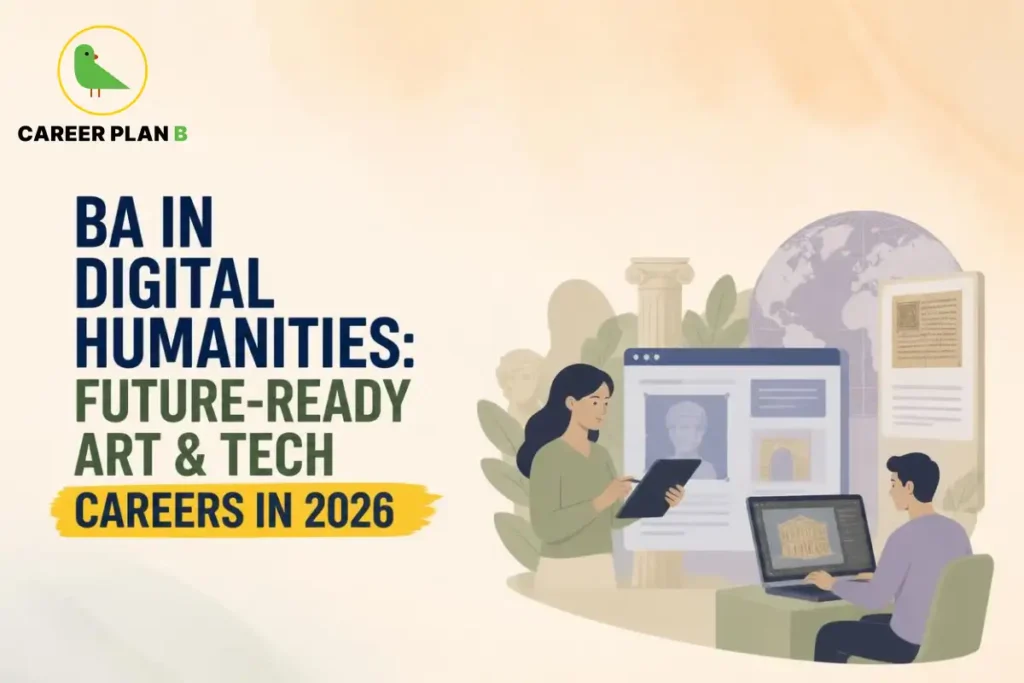
Introduction
Digital Humanities sits at a genuinely interesting intersection, literature, history, and cultural analysis studied through data visualization, text mining, and computational tools. A BA in Digital Humanities promises exactly this blend, though understanding where this field is genuinely established in India, at what academic level, matters before you build an admission plan around it.
This guide gives you an honest picture of where Digital Humanities genuinely exists in Indian higher education right now, including a directly verified example, so your understanding rests on confirmed facts rather than an appealing but unverified course description.
Where This Field Is Genuinely, Officially Established
Here’s the clearest, most directly verifiable fact on this topic: the Department of Humanities and Social Sciences at IIT (ISM) Dhanbad, one of India’s constitutive IITs, officially offers a two-year M.A. in Digital Humanities and Social Sciences, explicitly described on the institute’s own website as blending technology with humanities to enable digital analysis and cultural preservation, drawing on data visualization, GIS, computational tools, and natural language processing (source: iitism.ac.in). This is a genuine, government-institute-backed confirmation that Digital Humanities is a real, structured academic field in India, even though this specific confirmed programme sits at the postgraduate, not undergraduate, level.
BA Digital Humanities Career Scope: What This Blend of Skills Leads To
BA Digital Humanities Career Scope, whether pursued through a dedicated undergraduate programme or a minor specialization within a broader BA, spans genuinely distinct roles. Digital archivists and cultural heritage technologists work on preserving and digitizing historical and cultural material. Text and data analysts within media and research organizations apply computational methods to literary or historical datasets. UX researchers and content strategists at technology companies increasingly value graduates who combine humanities-trained critical thinking with genuine technical fluency. Academic and research paths remain available too, particularly for students who pursue this specialization through to a master’s degree, following IIT ISM’s own confirmed programme structure.
Digital Humanities Courses After 12th: What Genuinely Exists Right Now
Digital Humanities Courses After 12th exist today primarily in two forms. Some universities offer a specifically named “BA Digital Humanities” or closely related combined degree, such as programmes listed at Osmania University-affiliated colleges, though this specific naming and availability varies by college rather than being a single, uniform Osmania-wide offering, so direct verification with the specific college matters here. More reliably documented, some universities offer Digital Humanities as a formal minor specialization within a broader BA, such as JAIN (Deemed-to-be University)’s BA English Honours programme, which explicitly offers a Minor Specialisation in Digital Humanities alongside Journalism and Mass Communication options.
Art and Technology Careers: Why This Combination Genuinely Matters
Art and Technology Careers increasingly reward exactly this kind of hybrid training. As cultural institutions, media companies, and even technology firms invest in digital archiving, computational storytelling, and data-informed cultural analysis, graduates who can move fluently between humanities thinking and technical tools genuinely stand out. This isn’t a hypothetical trend; IIT ISM’s own programme description explicitly cites career opportunities in academia, media, culture, and tech industries as the direct outcome of its Digital Humanities training.
Have Any Doubts?
Digital Humanities Degree in India: How to Evaluate a Specific Option
Given how young and unevenly established this field remains at the undergraduate level specifically, evaluate any Digital Humanities Degree in India option against concrete factors: confirm directly with the institution’s own official admissions office whether the programme is a full standalone degree or a minor specialization within a broader BA, request the actual curriculum showing genuine technical coursework, data tools, computational methods, not just humanities theory with a trendy label attached, and check faculty backgrounds for genuine interdisciplinary expertise spanning both humanities and technical training.
Read more:- BA Courses with Easy Entry: Psychology, Sociology, Mass Media
BA in Digital Humanities Admission 2026: Practical Steps
For BA in Digital Humanities Admission 2026, since this field lacks one single, standardized national admission pathway, your practical steps involve directly contacting your shortlisted institutions to confirm the exact programme structure and current eligibility criteria, since Class 12 requirements and entrance processes vary by institution rather than following one uniform national pattern. If a dedicated undergraduate track isn’t available at your target university, seriously consider a BA with a Digital Humanities minor, like JAIN’s confirmed offering, as a genuinely solid alternative path toward the same skill combination.
How Career Plan B Helps
Evaluating whether a specific Digital Humanities programme is genuinely substantive, and choosing between a dedicated degree and a minor specialization, takes careful verification in a field still establishing its undergraduate footing in India.
- Personalized Career Counselling: Helps you evaluate whether Digital Humanities genuinely fits your interest in blending humanities and technology.
- Psychometric & Career Assessment Tests: Identifies whether research-focused, technical, or creative-strategy roles within this field suit you best.
- Career Roadmapping: Builds a realistic plan connecting your undergraduate path, whether a full degree or a minor, to genuine graduate study or career outcomes.
- Admission & Academic Profile Guidance: Supports you in verifying a specific institution’s actual programme structure before you commit.
Get In Touch With Us
Frequently Asked Questions
1. Is Digital Humanities a genuinely established field in Indian higher education?
Yes, genuinely established, most clearly confirmed through IIT (ISM) Dhanbad’s own official M.A. in Digital Humanities and Social Sciences, though undergraduate-level offerings remain less standardized nationally.
2. Is a full BA in Digital Humanities widely available across Indian universities?
Not yet widely standardized; it exists at some institutions as a named degree and more commonly as a minor specialization within a broader BA programme, so verify availability directly with your specific target university.
3. What’s a genuine alternative if my target university doesn’t offer a standalone Digital Humanities degree?
Consider a BA with a Digital Humanities minor specialization, confirmed at institutions like JAIN University, as a solid path toward the same interdisciplinary skill set.
4. What kind of Art and Technology Careers does this training genuinely lead to?
Digital archiving, cultural heritage technology, media and text analytics, and UX research roles all genuinely value this combination of humanities thinking and technical fluency.
5. Can I pursue a master’s in Digital Humanities even without a specifically named undergraduate degree in the field?
Generally yes, since programmes like IIT ISM’s MA typically accept BA or BSc graduates from relevant humanities or social science backgrounds, not exclusively students with an identically named undergraduate degree.
Conclusion
A BA in Digital Humanities represents a genuinely valuable, real academic direction, most solidly confirmed in India through IIT (ISM) Dhanbad’s official postgraduate programme, while undergraduate options remain less standardized and require direct verification with each specific institution. Understanding this honest landscape protects you from assuming a widely available, uniform degree exists when the field is still establishing its undergraduate footing nationally.
Verify any specific programme’s actual structure directly with the institution before applying, and consider a minor specialization as a genuine alternative if a full degree isn’t available at your target university. If you’d like help evaluating genuine options in this evolving field, Career Plan B’s counsellors are ready to guide you through it.