Team6 · October 13, 2026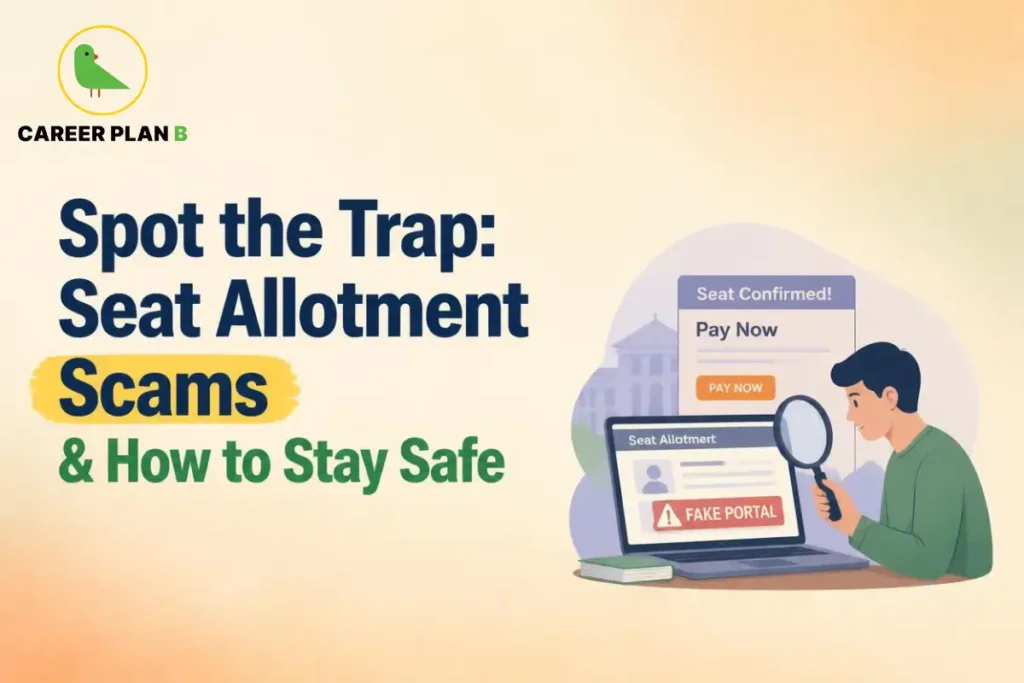
Introduction
Every year, around this time, the same story repeats itself. A student finally gets their CUET score, breathes a sigh of relief, and starts dreaming about which college they’ll walk into come August. And that’s exactly when the scammers show up too. CUET 2026 seat allotment scams tend to spike right when students are most hopeful and least suspicious, which is precisely why they work so well.
If you or someone you know is going through CUET counselling this year, this one’s for you. We’re going to walk through how these CUET 2026 seat allotment scams actually operate, what red flags to watch for, how to check if an allotment letter is genuine, and what to do if you’ve already been targeted. No jargon, no scare tactics, just the stuff you actually need to know.
What Exactly Happens During CUET Seat Allotment?
Before we get into the scams, let’s quickly understand the real process. After CUET results are out, most central and state universities conduct their counselling through CSAB (Central Seat Allocation Board) or through their own dedicated admission portals.
Here’s the basic flow:
- You register on the official counselling portal of CSAB or the specific university
- You fill in your preferences (courses and colleges, in order)
- Based on your rank, category, and preferences, a seat is allotted
- You accept or decline the seat through the portal
- You complete document verification and pay the admission fee directly through the official portal
That’s it. Notice something? At no point does this process involve a random phone call telling you your seat is “confirmed” or asking you to pay through a personal UPI ID. Keep that in mind, because it’s the foundation of everything else we’re about to discuss.
How Do Seat Allotment Scams Actually Work?
So how do scammers actually pull this off? They’re not hacking into university systems or anything that dramatic. Mostly, they’re playing on two things: confusion and urgency. Students going through CUET counselling for the first time often don’t know exactly what to expect, and scammers exploit that gap.
Let’s break down the most common tactics.
Fake Allotment Letters
This is the big one. A student receives a PDF or image that looks like an official seat allotment letter, complete with university letterheads, seals, and signatures. It looks convincing at first glance. But when you check the details, things don’t add up: spelling errors, wrong dates, a generic email address, or a course that doesn’t even exist at that university.
“Pay Now to Confirm Your Seat” Calls
You get a call from someone claiming to be from the admissions office. They tell you your seat is at risk unless you transfer the admission fee “right now” to a specific account. The pressure is the point here. They want you to act before you think.
Fraudulent Agents Promising Guaranteed Admission
Some “consultants” claim they have special access or contacts that can guarantee you a seat in a top university, regardless of your CUET score. They ask for a hefty “processing fee” upfront. Spoiler: no one, anywhere, can guarantee a seat outside the official merit-based process.
Phishing Links Mimicking University Portals
You receive a link via SMS or email that looks almost identical to the real CUET counselling portal. The design, the logo, even the URL look close enough to the original that it’s easy to miss the difference. Once you log in, your credentials and personal data are compromised.
Real Red Flags You Should Never Ignore
If something feels slightly off, it probably is. Here are the signs that should make you pause immediately:
- The message creates a sense of panic or urgency (“Act within 2 hours or lose your seat”)
- You’re asked to pay fees to a personal bank account, UPI ID, or any account that isn’t the official institution’s
- The email comes from a generic domain like @gmail.com instead of the university’s official domain
- There are spelling mistakes, inconsistent fonts, or odd formatting in official-looking documents
- Someone claims they can get you admission “outside the counselling process” for a fee
- You’re asked to share your CUET login credentials, OTP, or Aadhaar details over a call or message
If you spot even one of these, stop. Don’t click, don’t pay, don’t share anything. Take a breath and verify first.
Is That Allotment Letter Real? Here’s How to Check
This is probably the most useful section, so let’s slow down here. When you receive an allotment letter or admission offer, here’s how to tell if it’s genuine or not.
| Feature | Genuine Allotment Letter | Fake / Suspicious Letter | 2026 Verification Protocol & Risk Action |
|---|---|---|---|
| Source | Downloaded directly from official CSAB (csab.nic.in) or university portals (e.g., ugadmission.uod.ac.in) | Sent via WhatsApp, personal email, social media, or unknown phone numbers | Never trust documents received via messaging apps; official bodies strictly use candidate dashboards. |
| Email Domain | Ends with official suffixes like .ac.in, .edu.in, or .nic.in | Generic commercial domains like @gmail.com, @yahoo.com, or mispelled domain variants | Inspect email headers; centralized platforms never send seat confirmations from public domain servers. |
| Payment Instructions | Directs payment exclusively through the candidate’s authenticated counseling dashboard gateway | Asks for payment to a personal UPI ID, individual bank account, or external third-party payment link | Immediate fraud trigger: No centralized university authority collects admission fees outside its portal payment engine. |
| Verification | Cross-checked seamlessly by logging into your official counseling portal dashboard | Cannot be verified or found anywhere on the official university database or counseling portal | If the seat status is absent on your authenticated login, the letter is 100% fraudulent. |
| Language & Formatting | Professional tone, consistent fonts, official university seals/watermarks, and standard templates | Spelling errors, low-resolution/mismatched logos, urgent threats, and irregular typography formatting | Scrutinize seal alignment, application reference numbers, and legal phrasing to spot forged documents quickly. |
The golden rule: your CUET 2026 seat allotment is always visible on your own counselling dashboard. If a letter claims you’ve been allotted a seat, log in directly (not through any link sent to you) and check your status there. CSAB publishes round-wise allotment results and schedules on its official portal, so that’s your first stop for verification.
For university-specific admissions, most central universities also list their admission updates on their official sites. For example, Delhi University publishes its undergraduate admission information directly on its admissions portal.
Have Any Doubts?
What Should You Do If You Suspect a Scam?
Let’s say something feels off, or worse, you’ve already shared some information. Don’t panic. Here’s what to do, step by step:
- Stop all communication with the person or number immediately. Don’t respond, don’t pay, don’t click further links.
- Take screenshots of the message, call details, and any documents sent to you, you’ll need these as evidence.
- Log in directly to your official CUET counselling dashboard to check your actual allotment status.
- Report the incident to your university’s grievance or admission cell using contact details listed on their official website.
- File a complaint with the National Cyber Crime Reporting Portal if money or personal data was involved (cybercrime.gov.in).
- Inform your parents or school counsellor so you’re not handling this alone, scams can feel embarrassing, but you’re far from the only one targeted.
Acting quickly matters, but acting calmly matters more. Most fraud cases get worse when students panic and make hasty decisions trying to “fix” things themselves.
How Career Plan B Helps
Career Plan B helps students navigate CUET 2026 counselling with clarity, confidence, and reliable guidance—especially when misinformation and scams can make an already stressful process even more confusing:
- Personalized Career Counselling: Helps students evaluate colleges, courses, and admission opportunities based on their strengths, interests, and long-term goals rather than relying on rumours or unverified advice.
- Psycheintel & Career Assessment Tests: Provides data-backed insights into aptitude, personality traits, learning styles, and suitable academic and career pathways to support informed decision-making.
- Admission & Academic Profile Guidance: Supports students in understanding legitimate admission processes, evaluating opportunities carefully, and avoiding costly mistakes caused by misleading information or false promises.
- Career Roadmapping: Helps students create a structured long-term plan that connects their current admission decisions with future academic and professional aspirations.
- End-to-End Guidance: Assists students throughout CUET 2026 counselling, admissions, and career planning so every decision is based on accurate information, thoughtful planning, and realistic opportunities.
For Latest Information
Frequently Asked Questions
1. How will I know my real CUET 2026 seat allotment status?
Always check directly through your official CUET counselling dashboard or the CSAB portal. Never rely solely on emails, calls, or messages claiming to confirm your seat.
2. Can someone guarantee me a seat if I pay extra money?
No. CUET seat allotment is purely merit and preference-based through the official counselling process. Anyone promising guaranteed admission for a fee is running a scam.
3. What if I already paid money to a fraudulent number or account?
Report it immediately to the National Cyber Crime Reporting Portal and inform your bank to flag the transaction. Also notify your university’s admission cell.
4. Are calls from “university representatives” asking for OTP legitimate?
No legitimate university representative will ever ask for your OTP, password, or login credentials over a call or message. Treat such requests as a major red flag.
5. Is it normal to feel anxious during the counseling season?
Completely normal. Counselling season is stressful for most students. Talking to a parent, teacher, or counsellor can help you stay calm and make clearer decisions.
Conclusion
Counselling season is stressful enough without having to worry about scammers preying on your hopes. The good news is that once you know what to look for, these scams become a lot easier to spot and a lot less scary. Stick to official portals, double-check everything, and don’t let urgency push you into decisions you’ll regret.
Remember, your CUET 2026 journey is yours to navigate, calmly and on your own terms. When in doubt, pause, verify, and ask someone you trust. That one habit alone can save you from a world of trouble this admission season.