Team Career Plan B · October 14, 2026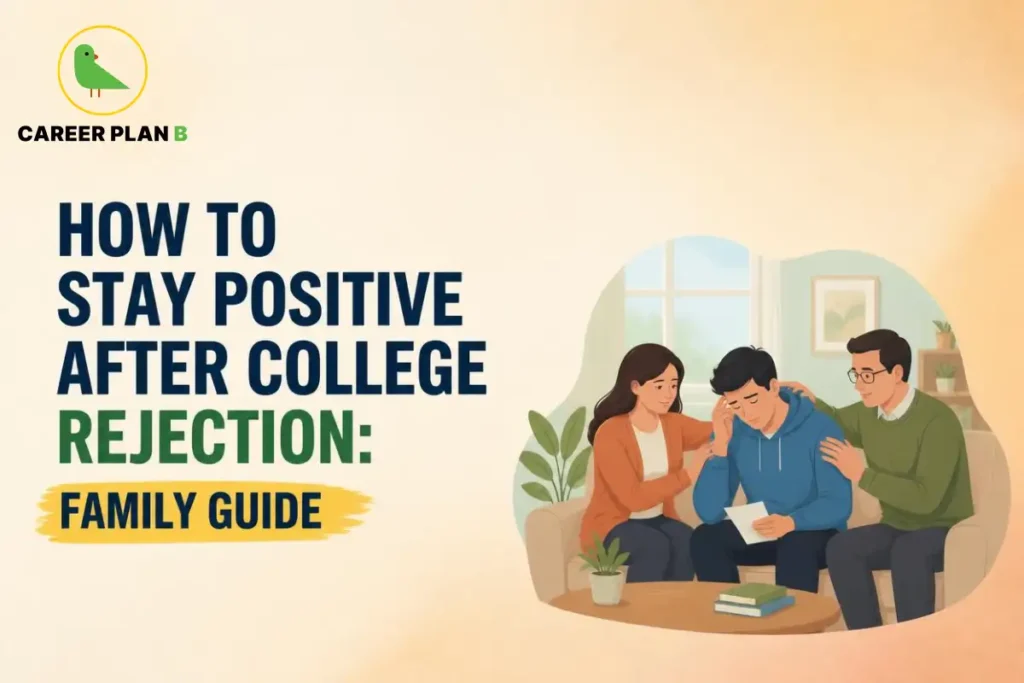
Introduction
That little envelope or email notification can feel like it’s deciding your entire future. For thousands of students every year, college rejection arrives right when hope was highest, and it can knock the wind out of an entire family. But here’s something worth holding onto: college rejection is rarely the end of the story, it’s often just an unexpected detour.
This guide walks you through what to do in the first confusing days after a rejection, how parents can support without making things worse, and most importantly, how to build a solid backup plan so college rejection doesn’t define what comes next.
Why a College Rejection Letter Feels Like the End of the World
Let’s be honest, no one prepares you for how heavy that “we regret to inform you” email feels. Months of preparation, late-night study sessions, and dreams pinned on one university name, and then suddenly, it’s a no.
Part of the reason it stings so much is the sheer scale of competition today. With CUET 2026 seeing applications from over 15 lakh students for the undergraduate exam, the math was always going to be tough. Universities have a fixed number of seats, and even brilliant students get turned away simply because there wasn’t room.
So if your child (or you, if you’re the student reading this) got a rejection, it doesn’t mean they’re not good enough. It means the seat count didn’t match the applicant count. That’s it. That’s the whole equation.
The First 48 Hours — What Families Should (and Shouldn’t) Do
The first two days after a rejection are usually the messiest, emotionally. Here’s how to get through them without making any decisions you’ll regret later.
For Students
- Allow yourself to feel disappointed. Bottling it up doesn’t help.
- Avoid comparing your results to friends on social media for a few days.
- Don’t make any big decisions (like giving up on a field entirely) while you’re still upset.
- Talk to someone you trust, a parent, sibling, or counsellor.
For Parents
- Resist the urge to immediately problem-solve. Sometimes your child just needs to be heard first.
- Avoid phrases like “I told you so” or “you should have studied more.” These don’t help and can damage trust.
- Don’t panic-call relatives or start comparing your child to cousins or neighbours.
- Give it a day before discussing “what’s next.”
Rejection Isn’t a Verdict on Your Worth — Here’s Why
Here’s a way to think about it: imagine applying for a single seat on a crowded train. Even if you have a valid ticket, if the train is full, you don’t get on. That doesn’t mean you’re a bad traveller. It just means the timing and capacity didn’t line up.
College admissions work similarly. A university might reject a student not because they lack ability, but because of cutoff percentiles, category-based seat allocations, or simply because thousands of equally qualified students applied for the same limited spots.
Many successful professionals, doctors, engineers, entrepreneurs, faced at least one rejection during their academic journey. The difference between those who thrive afterward and those who stay stuck isn’t talent. It’s what they did next.
Backup Options Most Families Overlook
This is where things get practical. A college rejection doesn’t mean the doors are closed, it usually means you need to look at doors you hadn’t considered yet.
Private Universities Worth Considering
Private universities in India have grown significantly, and many now offer strong faculty, modern infrastructure, and industry-linked programs. Before considering any private university, families should always verify its recognition status through the University Grants Commission’s official private university list. This single step can save you from costly mistakes.
| Factor | What to Check |
|---|---|
| Recognition | UGC-approved status on the official UGC website |
| Accreditation | NAAC grade, if available |
| Course Relevance | Whether the syllabus matches industry needs |
| Placement Record | Verified data, not just marketing claims |
| Fee Structure | Total cost across all years, not just first-year fees |
CUET-Based Second Rounds and Spot Admissions
Many universities under CUET 2026 conduct multiple rounds of counselling, and some even open spot admission windows for vacant seats. Keeping an eye on the official CUET portal for updates on additional rounds, result revisions, or special admission windows can open doors that seemed closed just days earlier.
Taking a Gap Year — Done Right
A gap year sounds scary to most Indian families, but when planned well, it can actually become an advantage. Students can use this time to:
- Prepare more strategically for a re-attempt
- Build skills through certified online courses
- Gain clarity about which stream truly excites them
- Explore internships or volunteering to strengthen their profile
The key word here is “planned.” An unplanned gap year can feel like drifting, but a structured one can feel like recharging.
How to Talk to Your Child After a Rejection (For Parents)
What you say in the days after a rejection can shape how your child views setbacks for years to come. Here’s a quick comparison:
Instead of saying:
- “What will people think?”
- “All that money and effort wasted.”
- “You should have tried harder.”
Try saying:
- “This isn’t the only path. Let’s figure out the next one together.”
- “I’m proud of how hard you worked, regardless of the outcome.”
- “Let’s take a day, and then plan calmly.”
Small shifts in language make a massive difference in how a student processes disappointment.
For Personalized Guidance
Building a Backup Admission Plan — A Simple Framework
Every family should ideally have this ready before results even come out, but it’s never too late to build one.
- List 3-5 backup universities or colleges, including at least one or two UGC-recognised private options.
- Check application deadlines for these institutions immediately, as many run on rolling admissions.
- Shortlist alternative courses that align with your child’s interests but might have different entry requirements.
- Keep documents ready, mark sheets, ID proofs, category certificates, so applications can be submitted without delay.
- Stay updated on CUET counselling rounds and any seat-matrix revisions through official university websites.
Having this plan reduces panic significantly, because the family isn’t scrambling, they’re simply moving to “Plan B,” which was already mapped out.
How Career Plan B Helps
Career Plan B helps students and families move forward after college rejections with clarity, confidence, and a structured plan for what comes next:
- Personalized Career Counselling: Helps families evaluate backup admission options, alternative pathways, and realistic opportunities based on the student’s profile, interests, and long-term goals.
- Psycheintel & Career Assessment Tests: Provides data-backed insights into aptitude, personality traits, learning styles, and academic/career alignment, helping students understand where their true strengths lie.
- Admission & Academic Profile Guidance: Supports students in identifying suitable colleges and programs, strengthening their academic profile, and building a practical admission strategy for the next phase.
- Career Roadmapping: Helps students create a structured long-term plan that connects immediate admission decisions with future academic and professional aspirations.
- End-to-End Guidance: Assists families throughout the decision-making process so that setbacks become opportunities to reassess, refocus, and move forward with purpose.
For Latest Information
Frequently Asked Questions
Q1: My child got rejected from their dream college. Is it really not the end of their future?
Not at all. Many students who didn’t get into their first-choice college went on to excel in private universities, alternative courses, or after a re-attempt. What matters most is the next decision, not the rejection itself.
Q2: Are private universities a good backup option after CUET 2026?
Yes, many are. However, always verify recognition through the official UGC website before applying anywhere, since not all institutions calling themselves “universities” are properly recognised.
Q3: Should my child reapply through CUET next year? This depends on the specific situation. If the rejection was due to a narrow cutoff miss, a re-attempt with better preparation could help. If it was about course availability, exploring other recognised institutions might be faster.
Q4: How can I support my child without adding pressure?
Focus on listening first, problem-solving second. Avoid comparisons with siblings, cousins, or classmates, and instead ask your child what they feel ready to do next.
Q5: Is a gap year a bad idea after college rejection?
Not if it’s structured. A gap year used for skill-building, focused preparation, or exploring interests can actually strengthen a student’s profile for the next attempt.
Conclusion
A college rejection letter feels permanent at the moment, but it’s really just one chapter, not the whole book. With the right support system, a calm family conversation, and a solid backup plan, students can move forward with confidence rather than fear.
Remember, the goal isn’t to erase the disappointment, it’s to make sure it doesn’t become the only thing your child remembers about this season of their life. Take a breath, regroup as a family, and start exploring what comes next, because there’s always a next step worth taking.