Team6 · November 4, 2026
Introduction
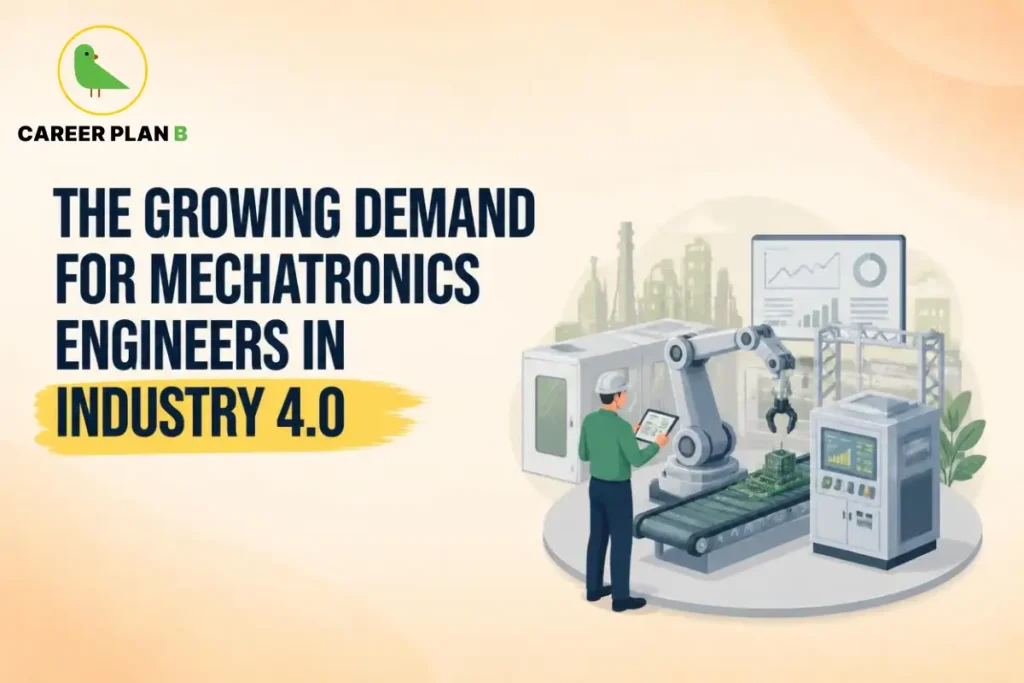
Imagine walking into a factory where robotic arms weld car parts with millimetre precision, sensors detect faults before machines even break down, and entire production lines talk to each other in real time. This is not science fiction; this is happening right now. And behind every single one of these systems is a mechatronics engineer.
Industry 4.0 is reshaping manufacturing, defence, aerospace, and consumer electronics at a pace the world has never seen before. But here is the uncomfortable truth: there are not enough mechatronics engineers in Industry 4.0 to meet the demand. As India pushes aggressively toward smart manufacturing through initiatives like Make in India and the National Manufacturing Policy, the skills gap in this field is widening every year. If you are an engineering student or a young professional trying to figure out where the jobs actually are, this blog is for you.
What Is Industry 4.0, Really?
‘Industry 4.0’ refers to the fourth industrial revolution, a wave of technological transformation where physical machines are integrated with digital intelligence. Think of it as the internet, but for factories and production systems.
The core pillars of Industry 4.0 include the following:
- Internet of Things (IoT) connecting machines and sensors
- Artificial Intelligence for predictive decision-making
- Robotics and autonomous systems
- Cyber-physical systems that merge the real and digital worlds
- Cloud computing and big data analytics
According to Invest India, the government’s official investment promotion agency , India’s manufacturing sector is targeting a contribution of 25% to GDP under the Make in India programme, and Industry 4.0 technologies are central to achieving that goal. The scale of transformation ahead is enormous.
Where Does Mechatronics Fit In?
Mechatronics engineering is the discipline that sits at the intersection of mechanical engineering, electronics, computer science, and control systems. A mechatronics engineer does not just design a motor; they design the motor, the sensor that monitors it, the embedded system that controls it, and the software that lets it communicate with the rest of the production line.
This cross-disciplinary profile is precisely what Industry 4.0 demands. Traditional engineers who specialise in only one domain often struggle to bridge hardware and software in integrated systems. Mechatronics engineers are built for exactly that role.
5 Reasons Industry 4.0 Urgently Needs Mechatronics Engineers
1. Designing Smart Machines and Robotic Systems
Automation and robotics careers are among the fastest-growing in the global job market. From collaborative robots (cobots) on assembly lines to autonomous guided vehicles in warehouses, every smart machine needs a mechatronics engineer to design, program, and deploy it. India’s automotive and electronics manufacturing sectors alone are investing heavily in robotic automation right now.
2. Building and Maintaining Industrial IoT Networks
Industrial IoT engineers are responsible for connecting machines, sensors, and systems so they can share data seamlessly. Mechatronics engineers are uniquely equipped for this role because they understand both the physical sensors generating the data and the embedded systems processing it. The Ministry of Electronics and Information Technology (MeitY) has been actively promoting IoT-based manufacturing infrastructure under its national programmes, driving direct demand for this skill set.
3. Bridging the Gap Between Hardware and Software
One of the biggest challenges facing smart manufacturing jobs is the disconnect between mechanical teams and software teams. Mechatronics engineers speak both languages fluently. They can work with PLCs, SCADA systems, CAD tools, and Python or C++ in the same workflow, making them the connective tissue of any Industry 4.0 team.
4. Enabling Predictive Maintenance and Automation
Predictive maintenance using sensors and AI to detect machine failure before it happens can reduce industrial downtime by up to 50%, according to industry estimates. Embedded systems engineering is at the heart of this capability. Mechatronics engineers design the sensor arrays and real-time control systems that make predictive maintenance possible, saving companies enormous costs in unplanned outages.
5. Driving Innovation in Cyber-Physical Systems
Cyber-physical systems, where physical processes are monitored and controlled by computing algorithms, are the backbone of smart factories. Whether it is a drone inspecting a power line or a robotic surgical tool, mechatronics engineers are the professionals designing these systems. Organisations like DRDO and ISRO in India actively recruit mechatronics and embedded systems specialists for exactly this kind of advanced development work.
What Does the Job Market Actually Look Like?
The future of manufacturing jobs is bright, but only for those with the right skills. According to the National Skill Development Corporation, automation-related roles are among the top emerging jobs in India across sectors, including automotive, aerospace, FMCG, defence electronics, and heavy machinery.
Globally, the mechatronics engineering career path leads to roles such as the following:
- Robotics Engineer
- Automation Engineer
- Control Systems Engineer
- Embedded Systems Developer
- Industrial IoT Specialist
- Product Design Engineer
Salary trajectories are strong, with experienced mechatronics professionals in India earning between ₹6 and ₹18 LPA, depending on domain and company and significantly higher in global markets or multinational firms operating in India.
Have Any Doubts?
Is Mechatronics the Right Career Path for You?
If you enjoy both building things and programming them, mechatronics is likely a natural fit. Students who thrive in this field tend to have a curiosity that spans hardware and software, enjoy problem-solving in physical systems, and are comfortable learning new tools continuously.
Key skills to develop early include:
- PLC and SCADA programming
- CAD and simulation tools (SolidWorks, MATLAB)
- Sensor and actuator technologies
- Basics of Python, C, or C++ for embedded applications
- Understanding of control theory and feedback systems
How Career Plan B Helps
Choosing a mechatronics engineering career in the age of Industry 4.0 is promising, but knowing where to start can be overwhelming. Career Plan B offers personalised career counselling. PsycheIntel aptitude assessments to match your strengths with the right engineering specialisation, and structured career roadmapping to guide you from your B.Tech to your first smart manufacturing or automation role.
For Latest Information
Frequently Asked Questions (FAQs)
Q1. Is mechatronics engineering a good career in India?
Yes. With India’s push toward smart manufacturing, defence technology, and industrial automation under Make in India, the demand for mechatronics professionals is growing steadily across both private industry and public sector organisations.
Q2. What is the scope of mechatronics after B.Tech?
Graduates can pursue roles in robotics, industrial automation, embedded systems, automotive engineering, aerospace, and more. Higher studies in control systems or robotics further expand options globally.
Q3. Which industries hire mechatronics engineers the most?
Automotive, aerospace, consumer electronics, defence, FMCG manufacturing, and industrial machinery sectors are the largest employers of mechatronics engineers in India and abroad.
Q4. How is mechatronics different from mechanical or electronics engineering?
Mechatronics integrates all three disciplines, mechanical, electronics, and computer science, making engineers capable of designing complete intelligent systems rather than individual components.
Q5. Do I need coding skills as a mechatronics engineer?
Yes. Basic to intermediate programming skills in C, Python, or MATLAB are increasingly essential, especially for embedded systems engineering and industrial IoT roles.
Conclusion
Industry 4.0 is not coming; it is already here. And the professionals who will power it are not just software developers or mechanical engineers working in silos. The future belongs to mechatronics engineers in Industry 4.0 who can bring machines, sensors, software, and intelligence together into unified, intelligent systems.
If you are exploring a mechatronics engineering career and want to understand exactly where your strengths fit in this rapidly evolving landscape, choose Career Plan B to get personalised guidance, career assessments, and a clear roadmap built around your goals.
The factories of the future are being designed today. Make sure you are the one designing them.