Team6 · November 4, 2026
Introduction
India’s cities are growing rapidly. However, their road networks, public transport, and traffic systems struggle to keep up.
By 2030, over 500 million people are expected to live in Indian cities. This growth puts increasing pressure on urban mobility. We can already see the impact in crowded intersections, overloaded bus routes, and busy metro systems.
To address these challenges, the government has introduced several major initiatives. These include the Smart Cities Mission, AMRUT, and the National Urban Transport Policy. Together, they support investment in better urban mobility.
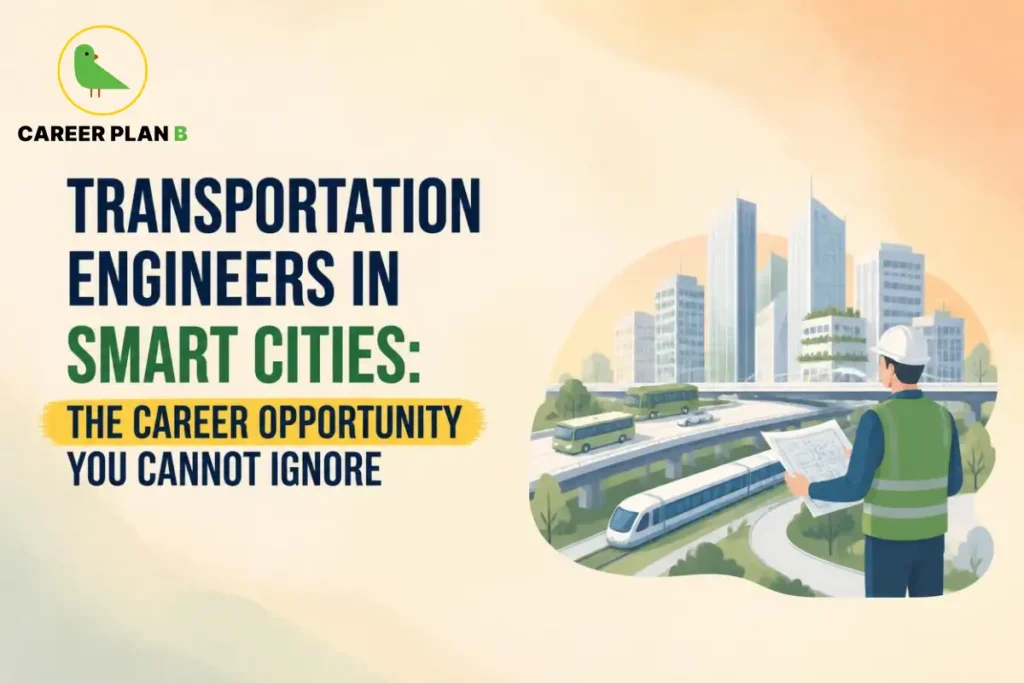
Transportation engineers in smart cities play an important role in this transformation. They design intelligent road networks, integrated transit systems, and data-driven mobility solutions.
If you are a civil engineering student or professional, this career deserves your attention. This blog explains why transportation engineering in India’s smart cities offers promising opportunities.
What Does a Transportation Engineer Do in a Smart City Context?
A transportation engineer plans, designs, and improves systems that move people and goods. These systems include roads, highways, intersections, and public transport networks.
However, the role has expanded significantly with the growth of smart cities. Today, a transportation engineering career in India involves much more than traditional road design.
Key Responsibilities of Transportation Engineers
Modern transportation engineers work with several technologies and infrastructure systems, including:
- Intelligent Transportation Systems (ITS): They implement technology-based traffic management solutions.
- Adaptive Traffic Signals: They help optimise signal timings based on real-time traffic conditions.
- Congestion Monitoring: They analyse mobility data to identify and reduce traffic bottlenecks.
- Multimodal Transit Networks: They improve connections between buses, metros, and other transport options.
- Pedestrian Infrastructure: They plan safer footpaths and non-motorised transport facilities.
- EV Infrastructure: They integrate electric vehicle charging facilities into road network planning.
Additionally, transportation engineers plan bus rapid transit corridors. They also design grade separators and underpasses to reduce congestion.
Their work combines civil engineering, data science, urban planning, and public policy. As a result, they influence both infrastructure development and urban mobility decisions.
Why Smart Cities Are Creating Unprecedented Demand for Transportation Engineers
India’s investment in smart city infrastructure has created significant opportunities for transportation professionals.
The Smart Cities Mission, launched by the Ministry of Housing and Urban Affairs, covers 100 cities. It has a total investment of over ₹2.05 lakh crore.
A significant part of this investment supports urban mobility. These projects include intelligent traffic management, multimodal transit integration, smart parking, and non-motorised transport infrastructure.
Role of the Smart Cities Mission
Smart city projects are already creating work for engineers across India. Many cities are implementing projects that require transportation planning and technical expertise.
Consequently, transportation engineers contribute to several ongoing infrastructure initiatives.
How AMRUT Supports Urban Mobility
AMRUT, or the Atal Mission for Rejuvenation and Urban Transformation, supports urban development in 500 cities.
The programme also focuses on improving public transport, walkability, and non-motorised mobility. Therefore, it creates additional opportunities for transportation professionals.
Importance of the National Urban Transport Policy
The National Urban Transport Policy further supports this development. It prioritises people-centred mobility and public transport investment.
It also encourages cities to integrate technology into traffic management. Together, these policies support long-term demand for transportation engineers.
As a result, smart city projects for engineers in India are no longer just future plans. Cities are actively tendering and executing these projects. This creates opportunities across multiple urban infrastructure sectors.
What Qualifications Do You Need?
A B.Tech or BE in Civil Engineering from an AICTE-approved institution provides the foundation for this career.
However, your undergraduate subjects and technical skills also matter. Focus on transportation engineering, traffic engineering, highway design, urban planning, and geographic information systems.
Important Technical Skills
During your undergraduate studies, start learning relevant industry tools.
For example, AutoCAD helps you prepare engineering drawings. VISSIM supports traffic simulation. GIS platforms help you analyse geographical and transportation data.
These skills can strengthen your profile. They also prepare you for postgraduate studies and industry roles.
Why Pursue an M.Tech in Transportation Engineering?
An M.Tech in Transportation Engineering is a valuable qualification for specialised roles. It can help you enter smart city planning, ITS design, and research.
GATE is the main admission route for many postgraduate programmes. A strong score in the Civil Engineering paper can improve your chances of admission.
Several leading institutions offer relevant programmes, including:
- IIT Bombay
- IIT Delhi
- IIT Madras
- IIT Roorkee
- IIT Kharagpur
CEPT University in Ahmedabad also has a strong reputation in urban transport and planning studies.
Additional Qualifications for Working Professionals
Working professionals can also consider postgraduate diplomas in urban transport. Programmes from institutions aligned with the Ministry of Housing and Urban Affairs can add value.
These qualifications may strengthen your profile for government-facing and consultancy roles.
Career Paths Available for Transportation Engineers in Smart Cities
Transportation engineers can explore opportunities across government departments, private companies, and research organisations.
Each sector offers different responsibilities and career growth opportunities.
Government and Urban Local Bodies
Government transportation engineering jobs in India offer opportunities to work on major infrastructure projects.
Urban Local Bodies (ULBs), Smart City Special Purpose Vehicles (SPVs), and state transport departments hire engineers for smart mobility projects.
Some major employers include:
- NHAI: Recruits transportation engineers for highway design, traffic impact assessments, and corridor management.
- DMRC: Employs transportation planners for metro expansion and last-mile connectivity.
- Ministry of Road Transport and Highways: Develops national road policies and engages engineering professionals through project offices and consultancies.
- Smart City SPVs: Hire professionals to plan and execute urban mobility projects.
- State PWDs and Transport Departments: Offer opportunities in road development and transport planning.
Moreover, government positions follow structured pay scales under the 7th Pay Commission. They can also provide long-term job security.
These roles allow engineers to contribute to projects with national importance.
Private Consultancies and EPC Firms
The private sector offers another important career path. Transportation engineers work with urban planning consultancies, EPC firms, and real estate developers.
These organisations need professionals for traffic impact studies and mobility planning. They also hire engineers to support large township and infrastructure projects.
International firms operating in India also offer opportunities. Some work on major developments, including Delhi-Mumbai Industrial Corridor projects.
Furthermore, private consultancies participate in World Bank and ADB-funded urban transport projects. These assignments require technical knowledge and familiarity with international project frameworks.
Therefore, the urban mobility engineering scope in India extends beyond conventional road construction.
Research and Policy Organisations
Some transportation engineers prefer research and policy development. They can explore opportunities with organisations that influence urban mobility decisions.
Two important organisations include:
- Central Road Research Institute (CRRI): Works under CSIR and conducts research on traffic safety, road materials, and intelligent transportation systems.
- National Institute of Urban Affairs: Focuses on urban transport policy and capacity building for city governments.
These organisations offer research-oriented opportunities. They suit engineers with strong academic credentials and an interest in urban mobility systems.
Emerging Technologies Reshaping Transportation Engineering
Technology is changing how Indian cities manage transportation. As a result, smart infrastructure career opportunities in India continue to expand.
Transportation engineers now need to understand both physical infrastructure and digital systems.
Artificial Intelligence in Traffic Management
AI-powered adaptive traffic signals can adjust signal timings according to traffic conditions. Unlike fixed-cycle signals, these systems respond to changing traffic patterns.
Cities such as Bengaluru, Pune, and Surat have deployed AI-based traffic management systems.
Electric Vehicle Infrastructure
Electric vehicle infrastructure has become an important part of urban planning. Engineers must consider charging stations when designing roads and parking facilities.
The FAME II policy has also supported India’s electric mobility development. Consequently, EV infrastructure is becoming increasingly relevant to transportation engineering.
Autonomous and Connected Vehicles
Autonomous and connected vehicle technology remains at an early stage in India. However, it creates research and pilot project opportunities.
Engineers interested in emerging mobility systems can explore this area.
Mobility as a Service (MaaS)
Mobility as a Service platforms connect different transport options through digital platforms. These services can integrate buses, metros, ride-hailing, and cycling into one journey planner.
Smart cities are exploring such platforms to improve travel convenience. Therefore, transportation engineers need to understand both physical transport networks and their digital systems.
Digital Toll Management
NHAI’s FASTag-based toll management system demonstrates how technology can improve existing infrastructure.
Digital tolling supports more efficient toll collection. It also creates opportunities for engineers who combine transportation knowledge with data skills.
Have Any Doubts?
Transportation Engineer Salary in India: What to Expect
Transportation engineer salary in India depends on qualifications, experience, specialisation, and the employer.
However, smart city investment is creating new opportunities across the sector. This growth also supports long-term career prospects.
Entry-Level Salary
B.Tech graduates joining private transport consultancies or EPC firms can expect ₹4 lakh to ₹7 lakh per annum.
M.Tech graduates from IITs entering specialised transportation roles typically earn ₹8 lakh to ₹14 lakh per annum.
Top smart city consultancies and international firms may offer higher packages to strong candidates.
Government positions at NHAI, DMRC, or urban local bodies may offer starting pay between ₹35,000 and ₹56,100 per month. These figures depend on the post and applicable 7th Pay Commission structure. Employees may also receive additional allowances.
Mid-Level and Senior-Level Salary
Transportation engineers with five to eight years of experience can earn ₹15 lakh to ₹28 lakh per annum in private consultancies and EPC firms.
Senior transportation planners and ITS specialists can earn ₹35 lakh to ₹55 lakh or more. This is especially possible with international firms and World Bank-funded assignments.
Skills That Can Increase Your Salary
Specialisation plays an important role in salary growth. Engineers with advanced technical knowledge can command higher compensation.
Focus on developing expertise in:
- Traffic modelling software
- Intelligent Transportation Systems design
- EV infrastructure integration
Additionally, gain practical project experience. Strong communication and problem-solving skills can also support your career progression.
How Career Plan B Helps
Building a career in smart city transportation engineering involves several decisions. You need to select the right M.Tech programme and identify a suitable specialisation.
You must also decide whether government or private-sector work matches your goals. In addition, you need to develop the technical and soft skills that employers expect.
Career Plan B supports civil engineering students and professionals through personalised career guidance.
Its services include:
- One-on-one Career Counselling: Understand which transportation specialisation matches your strengths and interests.
- Psycheintel Assessments: Evaluate your aptitude, abilities, and work preferences through psychometric and career assessments.
- Structured Career Roadmapping: Build a clear plan from your current academic or professional stage to your target role.
With the right guidance, you can make informed decisions about your education and career direction.
For Latest Information
Frequently Asked Questions (FAQs)
1. What is the best qualification to become a transportation engineer for smart city projects in India?
A B.Tech in Civil Engineering provides the starting point. You can then pursue an M.Tech in Transportation Engineering from an IIT or NIT through GATE.
For smart city roles, learn GIS, VISSIM, and ITS technologies. These skills can strengthen your profile.
GATE in Civil Engineering is also an important route to leading postgraduate programmes and certain PSU recruitment opportunities.
2. Which government organisations hire transportation engineers in India?
Several government organisations recruit transportation engineering professionals.
Major employers include NHAI, DMRC, Smart City SPVs, and the Ministry of Road Transport and Highways.
State-level PWDs and transport departments also offer opportunities. Additionally, CRRI under CSIR recruits engineers for research roles.
3. Is transportation engineering a future-proof career in India?
Transportation engineering has promising long-term prospects in India. The country continues to invest in smart cities, metro networks, highways, and EV infrastructure.
Furthermore, AI and data analytics are changing how cities manage transportation. These developments create technical roles that were less common in the past.
Therefore, transportation engineering is an increasingly relevant specialisation within civil engineering.
4. What software skills are most important for a transportation engineer?
Transportation engineers use several software tools for planning, design, and analysis.
Some important options include:
- VISSIM and AIMSUN: Used for traffic simulation.
- AutoCAD and Civil 3D: Support road design and engineering drawings.
- ArcGIS and QGIS: Help with geographical and spatial analysis.
- CUBE and TransCAD: Support travel demand modelling.
You can also explore free NPTEL courses. These courses cover transportation engineering fundamentals and GIS applications.
5. What is the scope for transportation engineers in India’s EV transition?
India’s EV transition creates significant opportunities for transportation engineers.
As EV adoption grows under the FAME II policy, engineers will help plan charging infrastructure. They will also support EV-compatible parking facilities and highway development.
Additionally, smart city mobility platforms need professionals who can integrate EV data into transportation systems.
As a result, smart infrastructure career opportunities in India’s EV and clean mobility sectors may grow substantially over the next 5–10 years.
Conclusion
Transportation engineers in smart cities do much more than build roads. They design mobility systems that influence the daily lives of millions of people.
India’s growing cities need better roads, reliable public transport, and intelligent traffic management. Consequently, demand for skilled transportation professionals continues to create opportunities.
You can work on AI-powered traffic systems, multimodal transit networks, EV infrastructure, or highway modernisation. Each area offers a combination of technical challenges and meaningful public impact.
India’s cities are undergoing major changes. Transportation engineers will play an important role in shaping that future.
If you want to enter this field, start by building your technical skills and exploring relevant qualifications. For personalised guidance, visit Career Plan B. Explore career counselling, psychometric assessments, and a tailored roadmap for civil engineering careers in transportation and smart city infrastructure.