Team Career Plan B · July 14, 2026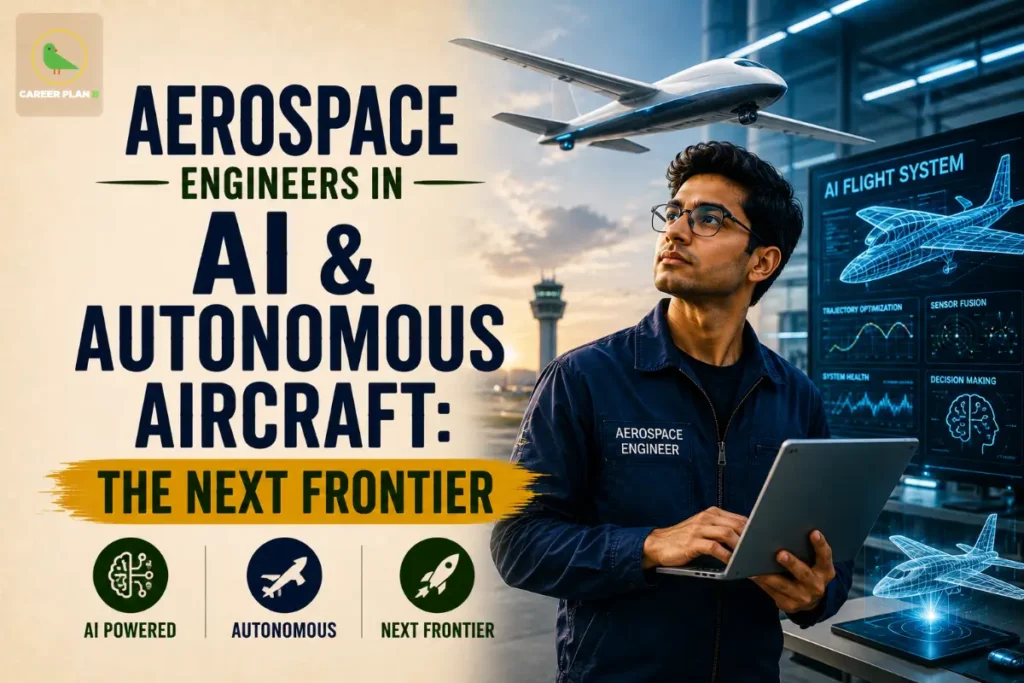
Introduction
Imagine an aircraft that can detect a fault mid-flight, adjust its course, and land safely, all without human intervention. This isn’t science fiction anymore. Aerospace engineers in AI and autonomous aircraft are at the forefront of one of the most transformative shifts in aviation history, combining traditional flight engineering with artificial intelligence to build smarter, safer, and increasingly self-reliant aircraft systems.
In this blog, we’ll explore how AI in aerospace engineering is reshaping career opportunities, what skills you need to enter this emerging field, and where the future of autonomous aviation is headed in India.
Why AI Is Transforming Aerospace Engineering
The aviation industry has always pushed technological boundaries, but the integration of artificial intelligence is accelerating that pace dramatically. From autonomous drones to AI-assisted cockpit systems, modern aircraft increasingly rely on intelligent software to enhance safety, efficiency, and decision-making. This shift is creating demand for engineers who understand both traditional aerospace principles and advanced AI applications.
What Does AI in Aerospace Engineering Actually Mean?
AI in aerospace engineering covers a wide range of applications, including autonomous navigation systems that allow aircraft to make real-time decisions, predictive maintenance algorithms that detect potential failures before they occur, and flight optimization tools that improve fuel efficiency and route planning. These applications rely heavily on machine learning in aviation, where systems learn from vast amounts of flight data to improve performance over time.
What Is Autonomous Aircraft Technology?
Autonomous aircraft technology refers to systems capable of operating with minimal or no human intervention. This ranges from semi-autonomous features like advanced autopilot systems to fully autonomous UAVs and emerging eVTOL (electric vertical takeoff and landing) aircraft designed for urban air mobility. Different levels of autonomy exist, from pilot-assisted automation to fully self-operating systems used in specialized defence and commercial applications.
Career Opportunities for Aerospace Engineers in AI and Autonomous Systems
AI-Driven Avionics Engineer
These engineers design and develop AI-driven avionics systems that manage navigation, communication, and flight control, integrating machine learning models to improve real-time decision-making.
Autonomous Flight Systems Engineer
This role focuses on building the software and hardware systems that allow aircraft to operate independently, a core part of careers in autonomous flight systems within both defence and commercial sectors.
Machine Learning Engineer for Aviation Applications
These specialists develop and train AI models specifically for aviation use cases, such as predictive maintenance, anomaly detection, and autonomous navigation algorithms.
Aerospace Data and Simulation Engineer
This role involves analyzing flight data and building simulation models to test AI systems safely before real-world deployment, an essential step in validating autonomous aircraft technology.
Autonomous Systems Test Engineer
These engineers rigorously test autonomous and AI-integrated systems to ensure safety, reliability, and compliance with aviation standards before certification.
For Personalized Guidance
Top Organizations and Sectors Hiring
| Organization/Sector | Focus Area |
|---|---|
| DRDO | Autonomous defense systems and UAVs |
| HAL | AI-integrated aircraft systems |
| ISRO-linked Projects | Autonomous systems for aerospace research |
| Private Aviation AI Startups | eVTOL, urban air mobility, autonomous drones |
| Defense Contractors | AI-driven avionics and autonomous combat systems |
For ongoing research and development in autonomous systems, students can refer to DRDO, HAL , and ISRO.
Salary Trends for AI-Focused Aerospace Roles
| Career Stage | Estimated Annual Salary |
|---|---|
| Entry-level (0–2 yrs) | ₹6–10 LPA |
| Mid-level (3–7 yrs) | ₹12–20 LPA |
| Senior-level (8+ yrs) | ₹22–35 LPA |
Aerospace AI specialist jobs tend to command a premium over traditional aerospace roles due to the specialized combination of aerospace knowledge and AI/machine learning expertise required.
Skills Needed to Work in This Emerging Field
- Strong foundation in aerospace engineering fundamentals (aerodynamics, avionics, control systems)
- Programming skills in Python, particularly for machine learning frameworks
- Understanding of sensor fusion, computer vision, and robotics
- Knowledge of flight data analysis and simulation tools
- Familiarity with aviation safety standards and certification processes
- Strong analytical and problem-solving abilities
For programme eligibility and accreditation, students can check AICTE. Entry into postgraduate programmes or specialized research roles typically requires GATE qualification, with details available on the official GATE portal. For regulatory updates on autonomous flight systems, refer to Digital Sky under the Ministry of Civil Aviation.
What’s Next for Autonomous Aviation?
Where is this technology headed next? The future of autonomous aviation in India looks increasingly promising, with growing interest in eVTOLs for urban air mobility, expanding defence investment in autonomous combat systems, and continued research into fully self-operating aircraft. As regulatory frameworks evolve and AI technology matures, engineers entering this field today are positioned at the forefront of aviation’s next major transformation.
How Career Plan B Helps
Curious whether a career combining aerospace engineering and AI is right for you? Career Plan B‘s Psycheintel assessment helps students identify their strengths in both technical engineering and emerging technologies like AI. With personalized career counselling and academic profile guidance, Career Plan B helps you build a clear roadmap toward this cutting-edge field.
For Latest Information
Frequently Asked Questions
- Do aerospace engineers need to learn AI and machine learning?
While not mandatory for all roles, AI and machine learning skills are increasingly valuable, especially for engineers interested in autonomous systems and avionics innovation.
- What is the difference between automation and full autonomy in aircraft?
Automation typically assists pilots with specific tasks, while full autonomy means the aircraft can operate and make decisions independently, with minimal or no human input.
- Which organizations in India are leading autonomous aircraft research?
DRDO, HAL, and ISRO are at the forefront of autonomous systems research in India, particularly for defence and aerospace applications.
- Is this field only relevant to defence, or does it apply to commercial aviation too?
Both. While defense applications like autonomous UAVs are prominent, commercial aviation is also adopting AI for predictive maintenance, flight optimization, and emerging urban air mobility solutions.
- What qualifications are needed for aerospace AI specialist jobs?
A degree in aerospace, electronics, or computer engineering is typically required, along with specialized skills in machine learning, robotics, or avionics systems.
Conclusion
Aerospace engineers in AI and autonomous aircraft are shaping one of the most exciting frontiers in modern aviation. As autonomous technology continues to evolve, this field offers strong career growth for engineers who combine traditional aerospace expertise with emerging AI skills. If you’re ready to explore whether this cutting-edge career path matches your strengths, start with Career Plan B‘s personalized career assessment today.