Team Career Plan B · July 16, 2026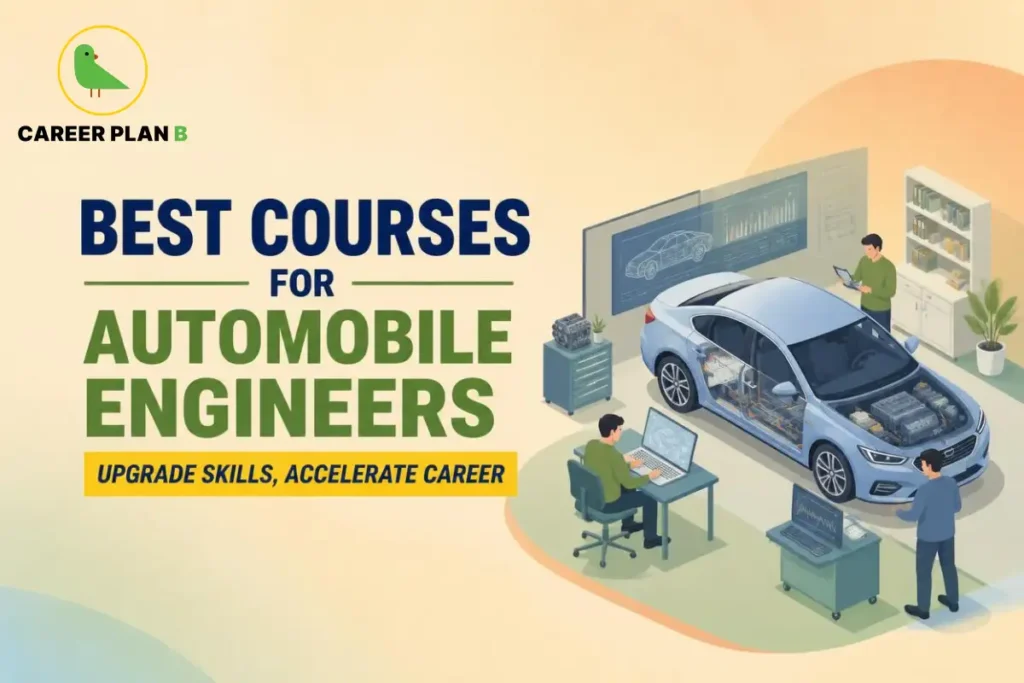
Introduction
The automotive industry your professors taught you about is not the one you’re working in today. Electric powertrains, ADAS features, and connected vehicle systems have changed what it means to be an automobile engineer, and a four-year degree alone doesn’t cover all of it anymore. That’s exactly why finding the best courses for automobile engineers in 2026 matters so much right now. Whether you’re a fresh graduate or a working professional, the right course can be the difference between staying relevant and falling behind. This blog walks you through the top course options available, how to pick the right one for your career stage, and what skills each one builds.
Why Automobile Engineers Need to Keep Upskilling in 2026
Here’s a question worth sitting with: when was the last time your engineering syllabus was updated to match what’s actually happening in the industry?
Automobile engineering courses in India typically cover strong fundamentals, mechanical systems, thermodynamics, and vehicle dynamics. But EVs, autonomous driving features, and connected vehicle technology are moving faster than most academic curricula can keep pace with. This is why continuous upskilling has become part of the job itself, not an optional add-on for ambitious engineers.
Best Courses for Automobile Engineers in 2026
Here’s a closer look at the strongest course options available, ranging from short certifications to full postgraduate degrees.
ARAI Academy’s Proficiency Improvement Programmes (PIPs)
Run by the Automotive Research Association of India (ARAI), an autonomous body under the Ministry of Heavy Industries, these Proficiency Improvement Programmes give engineers, faculty, and students hands-on technical training across a wide range of automotive disciplines. Programmes cover emerging areas too, including specialised training on electric and autonomous vehicle challenges like noise, vibration, and harshness in EVs.
ARAI ePIPs (E-Learning Modules)
For engineers who can’t attend in-person training, ARAI has developed ePIPs, interactive e-learning modules hosted on its own learning management system. These cover various automobile engineering subjects and allow flexible, self-paced learning, ideal for working professionals balancing a full-time job.
M.Tech in Automotive Engineering
For those wanting a deeper, more formal qualification, ARAI Academy has partnered with several universities, including VIT Vellore, Veltech University Chennai, and the College of Engineering, Pune, to offer M.Tech programmes in automotive engineering. Many working professionals pursue this degree while continuing their jobs, with companies like Tata Motors, Ashok Leyland, and Mahindra & Mahindra supporting employee participation.
AICTE-Approved Specialised Programs
Beyond ARAI’s own offerings, several AICTE-approved automobile courses now include focused specialisations in electric vehicle technology and automotive design, reflecting how formal engineering education is adapting to industry shifts.
Domain Training Programs (Customised Industry Training)
ARAI Academy also conducts Domain Training Programmes, customised training sessions designed around a company’s or individual’s specific requirements, delivered either at ARAI’s facilities or on-site. This is a strong option for engineers looking to build very targeted expertise, such as electric vehicle certification courses tailored to a particular role.
How to Choose the Right Course for Your Career Stage
Not every course suits every stage of your career. Here’s how to think about it:
- Fresh graduates: Short certification programmes like PIPs or ePIPs are a great way to build practical, industry-relevant skills quickly, without committing to a multi-year degree.
- Working professionals: M.Tech programmes offered alongside employment let you deepen your expertise without pausing your career, while domain training programmes let you build specific skills your current role demands.
- Engineers pivoting toward new specialisations: If you’re moving from traditional mechanical roles into EV or ADAS-focused work, targeted courses in electric vehicle certification or ADAS systems make the most sense.
Have Any Doubts?
Skills These Courses Help You Build
| Course Type | Skill Outcome |
|---|---|
| ARAI PIPs | Practical, hands-on expertise across automotive disciplines |
| ARAI ePIPs | Flexible, self-paced technical learning |
| M.Tech (Automotive Engineering) | Deep theoretical and research-based specialisation |
| AICTE-approved EV/design courses | Formal qualification in emerging automotive fields |
| Domain Training Programs | Highly targeted, role-specific skill building |
Choosing the right mix of these can significantly support your automobile engineer career growth, especially as the industry keeps evolving.
How Career Plan B Helps
Not sure which course fits your goals in automotive engineering upskilling? Career Plan B offers personalised career counselling to help you map out the right learning path based on your current stage and interests. Through PsycheIntel and Career Assessment Tests, we identify whether certification programmes, a postgraduate degree, or targeted training suits you best. Our Admission and Academic Profile Guidance and Career Roadmapping services help you plan each step with clarity.
For Latest Information
Frequently Asked Questions
- What are the best courses for automobile engineers in 2026?
Top options include ARAI Academy’s Proficiency Improvement Programmes, ePIPs; M.Tech in Automotive Engineering through ARAI’s university partnerships; and AICTE-approved specialised courses in EV and automotive design.
- Are ARAI courses recognised officially?
Yes, ARAI is an autonomous body under the Ministry of Heavy Industries, Government of India, and its academy offers officially recognised training and certification programmes.
- Can working professionals pursue these courses alongside their jobs?
Yes, ARAI’s ePIPs and M.Tech programmes are specifically designed to accommodate working professionals, with several companies supporting employee enrolment.
- Do I need a postgraduate degree to specialise in EV or ADAS technology?
Not necessarily. Short certification programmes like PIPs and Domain Training Programs offer targeted, practical training without requiring a full degree.
- How do I know which course matches my career stage?
It depends on your goals; fresh graduates often benefit from shorter certifications, while professionals seeking deeper expertise may prefer M.Tech programmes or customised domain training.
- Why is upskilling important for automobile engineers right now?
The industry is shifting rapidly toward EVs, ADAS, and connected vehicles, and continuous learning helps engineers stay relevant as these technologies become mainstream.
Conclusion
Finding the best courses for automobile engineers in 2026 isn’t just about adding a certificate to your resume; it’s about staying genuinely relevant in an industry that’s transforming faster than ever. From ARAI’s hands-on training programmes to formal M.Tech degrees, there’s a path suited to wherever you are in your career.
Ready to figure out which course fits your goals? Connect with Career Plan B to plan your next learning step.