Team6 · November 3, 2026
Introduction
Hydrogen is being called the “fuel of tomorrow”, and for good reason. From powering vehicles to decarbonizing heavy industries like steel and fertilizers, hydrogen is rapidly becoming a cornerstone of the global clean energy transition.
But who’s actually building this future? Chemical Engineers in the hydrogen economy of the future are at the centre of it all. The Government of India, through its National Green Hydrogen Mission, aims to accelerate the deployment of green hydrogen as a clean energy source and support the development of supply chains for transporting and distributing it across the country.
If you’re a chemical engineering student or aspirant wondering where the field is headed, this blog will walk you through what the hydrogen economy actually means, why chemical engineers are essential to it, and what career opportunities and skills you should be thinking about.
Why Chemical Engineers Are Central to the Hydrogen Economy
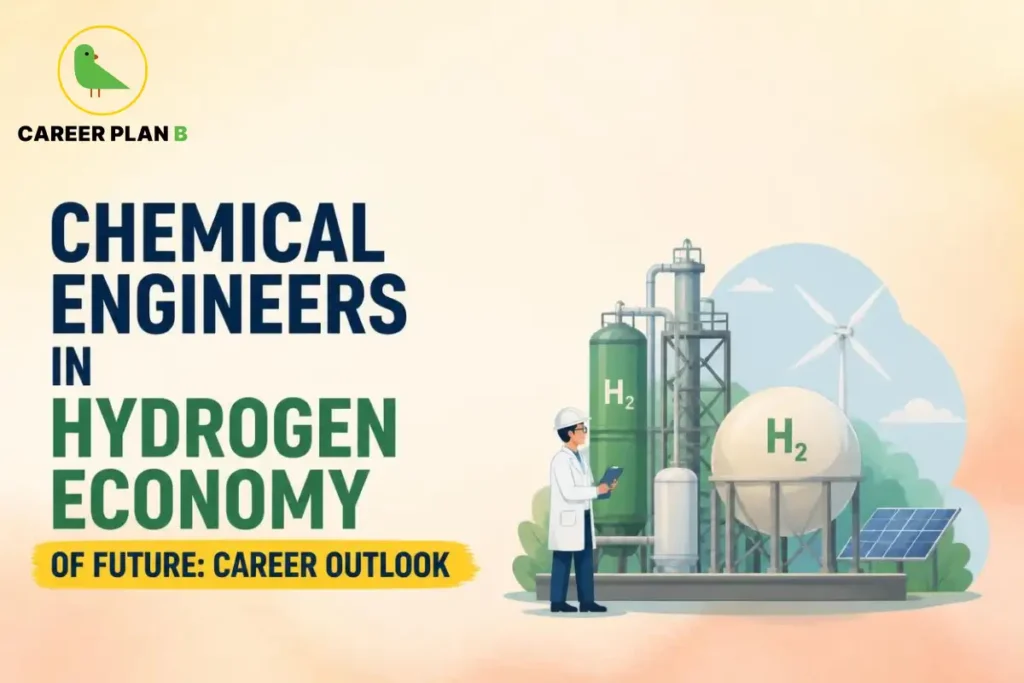
Hydrogen doesn’t just appear; it needs to be produced, purified, compressed, stored, and transported safely and efficiently. This is where chemical engineers come in.
Hydrogen Production Processes
Chemical engineers design and optimize the electrolysis units, reactors, and separation systems that convert renewable electricity and water into hydrogen. Their expertise in reaction engineering and process design is critical to making green hydrogen jobs in India a reality at scale.
Storage, Transport, and Fuel Cell Technology
Beyond production, hydrogen needs to be stored under high pressure or as a liquid and transported via pipelines or tankers. Chemical engineers work on materials selection, safety systems, and storage technologies that make this possible.
Who Designs the Plants That Make Green Hydrogen Possible?
The answer is chemical engineers often work alongside electrical and mechanical engineers but bring core expertise in process flow, thermodynamics, and chemical reactions that form the backbone of any hydrogen production facility.
Career Opportunities in the Hydrogen Sector
As the hydrogen economy grows, so do the roles available to chemical engineers. Here’s a look at some of the emerging job options:
| Job Role | Description | Typical Employer | 2026–2027 Green Hydrogen Outlook & Strategy |
|---|---|---|---|
| Process Engineer (Hydrogen) | Designs and optimizes electrolysis and hydrogen production units | Energy companies, EPC firms | Crucial for scaling up gigawatt-scale electrolyzer installations under national clean energy initiatives. |
| R&D Scientist | Researches new catalysts, materials, and storage methods | Research institutions, universities | Focuses on reducing platinum-group metal reliance and improving proton-exchange membrane (PEM) durability. |
| Plant Design Engineer | Designs hydrogen production and storage facilities | Engineering and construction firms | Integrates renewable power feeds (solar/wind) directly with cryogenic storage and compression skids. |
| Safety and Compliance Engineer | Ensures hydrogen plants meet safety regulations | Government bodies, energy companies | Addresses high-pressure containment, leak detection, and explosion mitigation standards for hazardous green fuel sites. |
| Sustainability Analyst | Assesses lifecycle emissions and efficiency of hydrogen projects | Consulting firms, energy companies | Validates carbon-intensity metrics to ensure compliance with global green hydrogen certification frameworks. |
These roles reflect the growing hydrogen production technology careers that are opening up as countries invest heavily in clean energy infrastructure.
Have Any Doubts?
India’s Push Toward Hydrogen Energy
India has made hydrogen a national priority. The National Green Hydrogen Mission, launched by the Ministry of New and Renewable Energy, has an outlay of Rs 19,744 crore with a target of 5 MMT production capacity of green hydrogen per annum.
What does this mean for students? A growing need for skilled professionals. In fact, the mission includes a skilling, upskilling and reskilling component to develop a trained, certified and industry-ready workforce across the green hydrogen value chain. This signals strong future scope for hydrogen industry jobs, particularly for chemical engineering graduates with the right skill set.
Skills Chemical Engineers Need for Hydrogen Careers
To be ready for this emerging sector, here are skills worth building alongside your core chemical engineering knowledge:
- Understanding of electrochemistry and electrolysis processes
- Knowledge of process design for energy systems
- Familiarity with materials used in hydrogen storage and transport
- Awareness of safety standards and regulatory frameworks for hydrogen
- Exposure to sustainability assessment and lifecycle analysis
Building these skills positions you well for a career in clean energy as a chemical engineer, whether in production, research, or plant operations.
How Career Plan B Helps
Exploring a career as a chemical engineer in the hydrogen economy can feel like uncharted territory, but you don’t have to navigate it alone. Career Plan B offers personalised career counselling to help you understand emerging opportunities in clean energy. Their PsycheIntel and Career Assessment Tests help determine if this future-focused path aligns with your strengths, while admission and academic profile guidance and career roadmapping guide you toward the right courses and specializations to enter this growing field.
For Latest Information
Frequently Asked Questions (FAQs)
1. Do chemical engineers really have a role in the hydrogen sector?
Yes, chemical engineers are central to hydrogen production, storage, and transport, given their expertise in process design and reaction engineering.
2. Is the hydrogen economy a real career opportunity in India?
Yes, India’s National Green Hydrogen Mission is creating significant investment and skill development opportunities in this sector.
3. What qualifications are needed for hydrogen-related jobs?
A bachelor’s degree in chemical engineering is a strong foundation, with additional knowledge in electrochemistry and renewable energy systems being helpful.
4. Are there government job opportunities in the hydrogen sector?
Yes, government bodies and PSUs involved in renewable energy projects are increasingly hiring for hydrogen-related roles.
5. How can I prepare for a career in green hydrogen during my degree?
Look for electives or projects related to renewable energy, electrochemistry, or sustainable process design.
Conclusion
The role of Chemical Engineers in Hydrogen Economy of the future is only set to grow as countries push toward cleaner energy systems. With strong government backing through initiatives like India’s National Green Hydrogen Mission, this is a field offering both meaningful work and long-term career growth.
If you’re excited about combining chemical engineering with clean energy innovation, now is a great time to start building the right skills and exploring this path. Curious where this journey could lead? The right guidance can help you map out a future in one of the most promising sectors of our time.