Team6 · August 29, 2026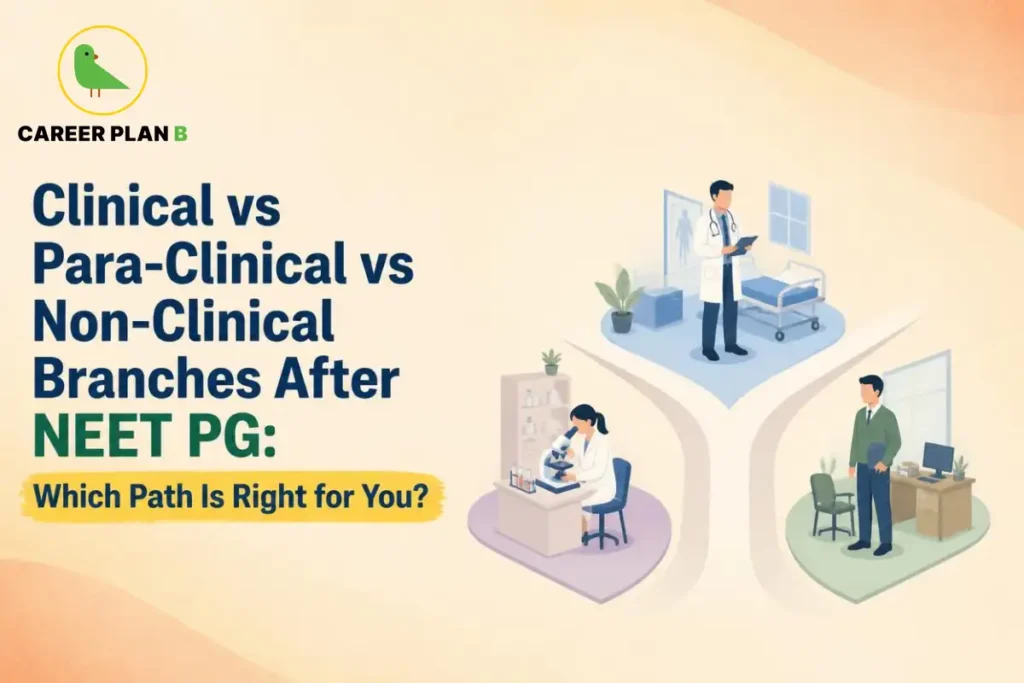
Introduction
Clearing NEET PG is a massive accomplishment for every doctor. However, choosing your postgraduate speciality presents a complex decision. Aspirants constantly debate the merits of different medical streams during counselling. Evaluating clinical vs para-clinical vs non-clinical branches after NEET PG helps candidates match their personal goals with real-world opportunities.
Furthermore, postgraduate medical education shapes your daily routine, emergency duties, and financial trajectory. Therefore, understanding clinical vs paraclinical vs non-clinical branches after NEET PG requires thorough evaluation rather than hasty decisions. Candidates must balance direct patient care against diagnostic expertise and academic research. Meanwhile, official seat details and regulatory notifications are maintained by the National Medical Commission (NMC) and the Medical Counselling Committee (MCC). This comprehensive guide analyses clinical vs paraclinical vs non-clinical branches after NEET PG to help you make an informed choice.
Clinical vs Para-Clinical vs Non-Clinical Branches After NEET PG
Deciding which MD/MS branch is right for me demands a clear understanding of speciality classifications. Each category offers unique training environments and patient interaction levels. A detailed clinical, paraclinical and non-clinical branch comparison highlights these core operational differences.
Clinical vs Para-Clinical vs Non-Clinical: A Comparative Breakdown
First, clinical disciplines focus on direct patient diagnosis, bed-side treatment, and surgical procedures. Second, para-clinical fields form the diagnostic backbone of modern healthcare delivery. Third, non-clinical specialities drive foundational medical education, research, and healthcare administration. Additionally, analysing clinical vs non-clinical branches’ salary and scope helps doctors set realistic career expectations.
| Parameter | Clinical Branches | Para-Clinical Branches | Non-Clinical Branches |
|---|---|---|---|
| Patient Interaction | High direct clinical contact | Moderate to low patient contact | Minimal to zero patient contact |
| Work-Life Balance | High emergency load, hectic | Predictable hours, rare emergencies | Fixed working hours, zero night emergencies |
| Primary Income | Consultations, surgeries, private practice | Diagnostic centers, lab setups | Teaching salary, administrative roles |
| Key Advantage | High earnings, strong public recognition | Balanced lifestyle, strong diagnostic role | Low stress, academic stability |
Note – Workload and earnings vary based on private practice and institutional setups
Top Clinical Branches for MD/MS: Direct Patient Care and Surgery
Many candidates actively seek out the best clinical branches for MD/MS during choice filling. These fields involve active patient management and emergency care responsibilities.
High-Demand Clinical Disciplines
Clinical streams divide into surgical and non-surgical categories. MD General Medicine, MD Paediatrics, and MD Dermatology represent top non-surgical choices. Meanwhile, MS General Surgery, MS Orthopaedics, and MS Obstetrics & Gynaecology demand intense physical stamina. Consequently, doctors asking which is better, the clinical or non-clinical branch, after NEET PG must decide if they enjoy fast-paced clinical environments.
Patient Exposure and Earning Potential
Clinical specialities offer immense financial growth through corporate hospital salaries and independent clinics. However, these branches demand long working hours, night shifts, and unpredictable emergency calls. Therefore, evaluating clinical vs. clinical branches’ NEET PG choices requires assessing your stress tolerance.
Read More – College vs Branch After NEET PG: What to Prioritise?
Para-Clinical MD Branches: The Diagnostic and Research Hub
Exploring paraclinical MD branches provides an ideal balance between patient care and manageable working hours. These disciplines bridge basic medical sciences with active clinical medicine.
List of Paraclinical Branches in NEET PG
Candidates should review the full list of paraclinical branches in NEET PG before finalising their option entry:
- MD Pathology: Focuses on tissue diagnostics, blood banking, and lab management.
- MD Radio-Diagnosis: Utilises advanced imaging technology to diagnose complex clinical conditions.
- MD Microbiology: Manages hospital infection control, serology, and culture evaluations.
- MD Pharmacology: Studies drug interactions, clinical trials, and pharmaceutical development.
- MD Forensic Medicine: Handles medicolegal cases, autopsies, and legal medical testimony.
Scope and Career Options After Para Clinical MD Branches
There are diverse career options after paraclinical MD branches in both private and government sectors. Pathologists and radiologists can establish lucrative diagnostic centres or join corporate hospital chains. Moreover, pharmacologists find lucrative roles in clinical research organisations and pharmaceutical companies. Therefore, learning how to choose between clinical and paraclinical branches often comes down to your lifestyle preferences.
Non-Clinical MD Branches: Academics, Research, and Corporate Scope
Candidates considering non-clinical MD branches often prioritise structured work routines. These foundational branches focus on teaching medical undergraduates and conducting biomedical research.
Major Non-Clinical Specialties
The primary non-clinical disciplines include MD anatomy, MD physiology, and MD biochemistry. These fields build the fundamental framework of medical science. Consequently, they represent the best non-clinical branches after MBBS for doctors passionate about medical academics.
Work-Life Balance and Non-Clinical Scope
Doctors frequently wonder which MD MS branch has better work-life balance during counselling. Non-clinical specialities offer fixed working hours, no emergency night calls, and minimal medicolegal stress. Furthermore, specialists in non-clinical branches after NEET PG work as medical college professors, research scientists, or healthcare administrators. Thus, evaluating clinical vs non-clinical branches after NEET PG depends heavily on your desired lifestyle.
Have Any Doubts?
How to Choose the Right MD/MS Branch After NEET PG
Understanding how to choose the right MD/MS branch after NEET PG requires honest self-reflection. Candidates must balance their entrance rank against long-term career aspirations.
- Assess Lifestyle Priorities: Decide whether you prefer high-intensity emergency work or predictable office hours.
- Evaluate Long-Term Financial Goals: Clinical and diagnostic fields generally yield higher peak earnings than academic non-clinical roles.
- Analyse NEET PG Rank Realities: Align your speciality choices with realistic opening and closing rank trends.
Furthermore, analysing NEET PG branch comparison metrics prevents post-admission burnout. Finding your ideal fit requires evaluating patient interaction levels alongside personal interests.
How Career Plan B Helps
Choosing between clinical, para-clinical, and non-clinical branches after NEET PG requires careful evaluation of your rank, interests, lifestyle preferences, and long-term career goals. Career Plan B helps medical aspirants make informed postgraduate decisions through personalised guidance.
- Personalised Career Counselling: Helps you compare clinical, paraclinical, and non-clinical branches based on your NEET PG rank, interests, career goals, and preferred work style.
- Psychometric & Career Assessment Tests: Helps identify suitable medical specialities by evaluating your aptitude, interests, and professional preferences.
- Career Roadmapping: Helps plan your journey from NEET PG results to branch selection, college choice, counselling, and postgraduate admission.
- Admission & Academic Profile Guidance: Supports you with rank analysis, college comparison, choice filling, fee and bond evaluation, and counselling decisions.
Get In Touch With Us
Frequently Asked Questions
Q1. Which medical branch offers the best work-life balance?
Non-clinical branches like anatomy, physiology, and biochemistry offer fixed working hours with zero emergency calls. Paraclinical fields like Pathology and pharmacology also provide excellent work-life balance.
Q2. Are non-clinical MD branches good for career growth?
Yes. Non-clinical branches open doors to academic professorships, medical writing, research roles, and administrative positions in medical institutions and pharmaceutical firms.
Q3. Can I open a private setup with a paraclinical branch?
Yes. Specialists in MD Pathology and MD Radio-Diagnosis can establish independent diagnostic laboratories, imaging centres, or blood banks with strong revenue potential.
Q4. What is the main difference between clinical and paraclinical branches?
Clinical branches involve direct patient diagnosis and treatment in wards or OPs. Paraclinical branches support patient care primarily through diagnostic testing, imaging, and laboratory analysis.
Q5. How should I choose my branch if I have a low NEET PG rank?
Evaluate top para-clinical and non-clinical branches in well-equipped government colleges, or consider clinical options in private or DNB institutes based on your budget.
Conclusion
Making the final call between clinical vs. paraclinical vs. non-clinical branches after NEET PG requires balancing personal interest, lifestyle preferences, and career goals. Clinical specialities offer direct patient care and high financial returns, while paraclinical and non-clinical branches provide diagnostic authority, academic stability, and predictable working hours.
Moreover, evaluating all three streams carefully prevents career dissatisfaction later on. Assessing clinical vs paraclinical vs non-clinical branches after NEET PG thoroughly ensures a fulfilling professional journey. To simplify your PG admission journey, expert guidance from platforms like Career Plan B provides personalised rank analysis and choice-filling strategies to help you lock in your ideal specialisation seamlessly. By staying informed about market demands and getting expert support, young doctors can confidently secure a successful future in the medical field.