Deepti · October 23, 2026
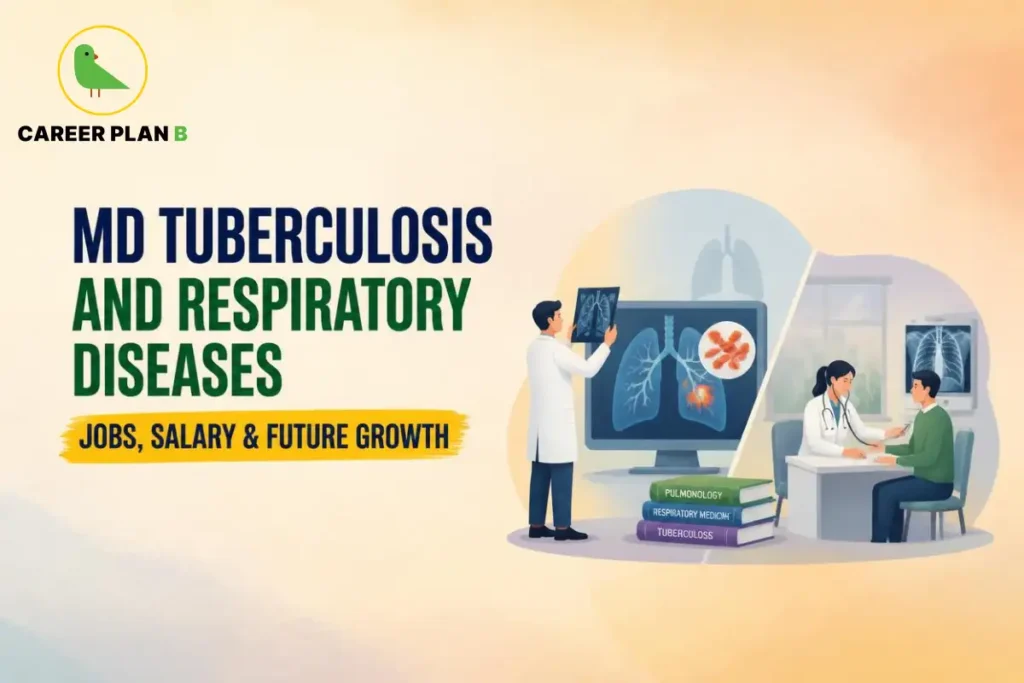
The MD Tuberculosis and Respiratory Diseases Career Scope in India includes hospital jobs, government services, private practice, medical teaching and advanced clinical training. Doctors can build careers in pulmonary medicine, critical care and respiratory disease management. NEET PG aspirants can explore these options to decide whether this specialty matches their interests and long-term goals.
What Is MD Tuberculosis and Respiratory Diseases?
MD Tuberculosis and Respiratory Diseases focuses on diagnosing and treating diseases that affect the lungs and respiratory system. Doctors manage tuberculosis (TB), asthma, chronic obstructive pulmonary disease (COPD), respiratory infections and other lung conditions.
The National Medical Commission (NMC) lists course names such as MD – Pulmonary Medicine and MD – Tuberculosis & Respiratory Diseases / Pulmonary Medicine. Medical institutions may also use the terms TB & Chest, Respiratory Medicine and Pulmonary Medicine. Candidates can check the NMC list of postgraduate medical courses to verify course nomenclature.
What Are the Career Options After MD Tuberculosis and Respiratory Diseases?
The MD Tuberculosis and Respiratory Diseases Career Options cover clinical practice, specialist hospital roles, government employment, academic work and research.
1. Hospital Jobs
Hospitals offer opportunities for qualified respiratory medicine specialists. Doctors can work in multispecialty hospitals, government medical colleges, private hospitals and dedicated chest institutes.
Common responsibilities include:
- Diagnosing and treating respiratory diseases.
- Managing patients with asthma, COPD and tuberculosis.
- Performing or interpreting pulmonary function tests.
- Assessing patients with complex respiratory problems.
- Providing respiratory support and critical care within their training and clinical role.
- Performing procedures such as bronchoscopy when appropriately trained.
These roles suit doctors who enjoy clinical problem-solving, patient care and diagnostic procedures.
2. Government Jobs
Government jobs provide opportunities in public hospitals, medical colleges and eligible public health programmes. Doctors can apply for specialist positions when they meet the recruitment authority’s qualifications and experience requirements.
Potential roles include specialist physician, senior resident, medical college faculty and respiratory disease specialist in relevant public health institutions.
The Central Tuberculosis Division’s National Tuberculosis Elimination Programme provides a public health pathway for professionals interested in tuberculosis diagnosis, treatment and disease-control activities. Individual positions may require different qualifications, so candidates must check each recruitment notice.
3. Private Jobs
Private employment offers opportunities in corporate hospitals, respiratory care centres, chest clinics, intensive care units and sleep laboratories. Some doctors combine hospital appointments with outpatient consultations.
Employers may value expertise in bronchoscopy, pulmonary function testing, sleep-related breathing disorders and respiratory critical care. Additional training and clinical experience can help doctors qualify for specialised positions.
4. Teaching and Research Careers
Medical colleges and research institutions offer paths for doctors interested in medical education and scientific work. Qualified candidates can pursue teaching positions according to applicable faculty eligibility rules.
Research opportunities include respiratory infections, tuberculosis, chronic lung diseases, clinical trials and public health interventions. Doctors who enjoy academic work can build their careers through research projects, publications and further qualifications.
MD Tuberculosis and Respiratory Diseases Private Practice
MD Tuberculosis and Respiratory Diseases Private Practice allows doctors to establish a chest clinic, offer specialist consultations or work with hospitals alongside independent practice.
Doctors can develop services around asthma, COPD, tuberculosis follow-up, allergy-related respiratory complaints and sleep disorders. Advanced diagnostic procedures require suitable equipment, training and facilities.
A successful clinic depends on clinical expertise, patient trust, referral networks, location and operating costs. Doctors should gain adequate clinical experience and understand local registration requirements before setting up independent practice.
MD Tuberculosis and Respiratory Diseases Salary and Stipend
The MD Tuberculosis and Respiratory Diseases Salary depends on the employer, location, experience, clinical skills, job responsibilities and working hours. Postgraduate residents also receive a stipend during their MD training.
MD Tuberculosis and Respiratory Diseases Stipend
The NMC’s Post-Graduate Medical Education Regulations, 2023 require postgraduate students to receive a stipend at the level paid to government medical institution residents in the state or union territory where the institution operates.
For a current official example, Lakhimpur Medical College, Assam lists the following monthly MD/MS resident stipends for 2025–26:
| Training year | Monthly stipend |
|---|---|
| First year | ₹55,200 |
| Second year | ₹56,925 |
| Third year | ₹58,650 |
These figures represent the institution’s published rates, not a uniform stipend across India.
Candidates must also distinguish the MBBS internship stipend from the MD residency stipend. The MBBS internship takes place before postgraduate training.
For Personalized Guidance
MD Tuberculosis and Respiratory Diseases Salary
Official recruitment notices provide useful salary benchmarks. An ESIC Hospital Bibvewadi, Pune recruitment advertisement dated April 30, 2026 lists a Level 11 starting basic pay of ₹67,700 per month plus applicable allowances for full-time specialists. The advertisement also lists ₹60,000 per month for part-time specialists working 16 hours per week. Its eligibility conditions include relevant postgraduate qualifications and experience requirements.
This example provides an official government-sector benchmark, not a guaranteed salary for every pulmonologist. Private hospital earnings, academic pay and consultation income vary by employer and experience. Independent practitioners must also account for clinic expenses.
MD Tuberculosis and Respiratory Diseases Future Scope
The MD Tuberculosis and Respiratory Diseases Future Scope includes opportunities in hospital care, chronic disease management, public health, critical care and advanced respiratory procedures.
India’s respiratory healthcare needs create several areas for specialist work. The Ministry of Health and Family Welfare reported more than 26 lakh tuberculosis notifications in 2024, highlighting the continuing need for diagnosis, treatment and follow-up services. The India TB Report and annual reports provide official information on the country’s TB control efforts.
The growing demand for pulmonologists also relates to chronic respiratory illnesses and complex hospital cases. Actual vacancies and compensation depend on healthcare infrastructure, location and employer requirements. Doctors who develop strong diagnostic skills and appropriate procedural expertise can explore a wider range of roles as their experience grows.
Further Studies and Fellowships After MD Tuberculosis and Respiratory Diseases
Doctors can pursue advanced training after MD to develop specialist skills or move towards academic and leadership roles.
Fellowship After MD Tuberculosis and Respiratory Diseases
Potential training areas include:
- Interventional Pulmonology: Bronchoscopy, airway procedures and pleural interventions.
- Pulmonary Critical Care: Management of severe respiratory illness and complex intensive care cases.
- Sleep Medicine: Diagnosis and management of sleep-related breathing disorders.
- Allergy and Asthma: Advanced assessment and treatment of allergic and obstructive airway conditions.
The King George’s Medical University Pulmonary & Critical Care Medicine department lists DM Pulmonary Medicine, PDCC Interventional Pulmonology, PDCC Pulmonary Critical Care and training in sleep medicine. The Amrita Vishwa Vidyapeetham fellowship programme also describes a one-year fellowship in interventional pulmonology and respiratory critical care.
Super Specialization After MD Tuberculosis and Respiratory Diseases
Eligible doctors can explore DM Pulmonary Medicine and other recognised advanced-training routes listed by the NMC and individual institutions. Candidates should confirm current eligibility, entrance requirements and course recognition before applying.
Fellowships, post-doctoral certificate courses and formal super-specialty degrees may have different recognition and career implications. Doctors should choose a pathway that matches their intended clinical or academic role.
Also explore the Top 5 Deemed MD Tuberculosis & Respiratory Diseases Colleges in India to compare fees, seats and admission details.
How Career Plan B Helps
Career Plan B helps NEET PG aspirants and doctors compare career paths with their interests and goals.
- Personalized Career Counselling supports informed branch decisions;
- PsycheIntel and Career Assessment Tests help explore personal preferences;
- Admission and Academic Profile Guidance helps candidates assess college options;
- Career Roadmapping connects training, fellowships and long-term career plans.
Get In Touch With Us
FAQs
Q1. What is the career after MD Tuberculosis and Respiratory Diseases in India?
Doctors can work as pulmonologists, hospital specialists, medical teachers, researchers or private practitioners, subject to role requirements.
Q2. What is the salary after MD Tuberculosis and Respiratory Diseases?
Salary depends on the employer, experience, location and role. Official ESIC recruitment notices provide government-sector pay benchmarks.
Q3. What is the stipend during MD Tuberculosis and Respiratory Diseases?
Stipends vary by institution and state. Candidates should check the college’s official stipend disclosure before accepting admission.
Q4. Are government jobs available after MD Tuberculosis and Respiratory Diseases?
Doctors can apply for eligible specialist, senior resident and teaching positions in government institutions. Each recruitment notice specifies qualifications and experience.
Q5. Which specialization after MD Tuberculosis and Respiratory Diseases offers further growth?
Doctors can explore interventional pulmonology, pulmonary critical care, sleep medicine and other relevant advanced-training pathways.
Q6. Can I start private practice after MD Tuberculosis and Respiratory Diseases?
Yes, doctors can establish a respiratory clinic after obtaining the required registration, clinical experience and facilities.
Conclusion
The MD Tuberculosis and Respiratory Diseases Career Scope extends across clinical practice, hospital jobs, government services, research, private practice and advanced training. Your interests and long-term goals should guide the choice. Explore the available pathways and seek personalised career guidance from Career Plan B before deciding your next step.