Team5 · July 31, 2026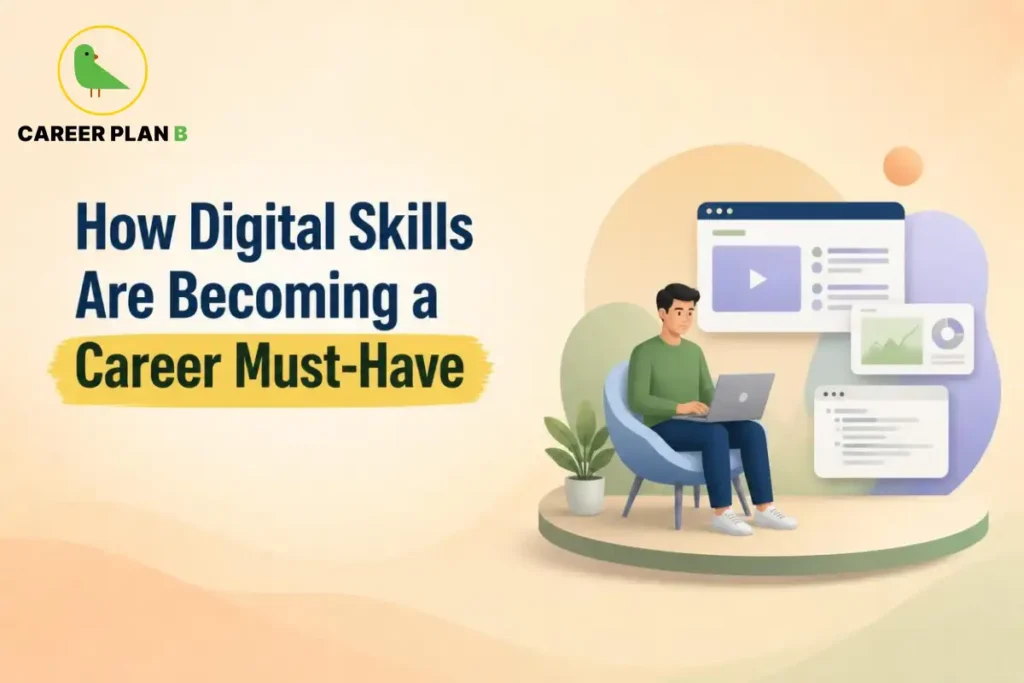
Introduction
Can you genuinely picture a career today that involves zero digital skills?
Across almost every field, digital tasks now sit alongside traditional responsibilities. This shift has moved quietly but steadily, changing what employers expect by default.
This guide covers how digital skills are becoming a career must-have in India. You will learn what is driving this shift, and which official platforms can help you build these skills.
Why Digital Skills are becoming a Career and Are No Longer Optional?
Digital tasks have quietly expanded into roles that once seemed purely non-technical. Even fields like healthcare, finance, and design now require basic digital fluency.
This shift is not just anecdotal. Government platforms and policy frameworks increasingly treat digital skills as a core, expected competency. Employers across sectors are following this same direction in their hiring expectations.
The Policy Push Behind Digital Skilling
India’s approach to education has shifted structurally to support this need. The National Education Policy (NEP) 2020 explicitly promotes digital and technological solutions as part of undergraduate education.
This means digital skill-building is increasingly built into formal academic pathways, not treated as a separate, optional add-on. Students across streams, including arts and commerce, can now access digital coursework more easily.
Digital Skills Now Show Up in Non-Tech Fields Too
Digital fluency has spread well beyond traditional IT roles. Finance professionals increasingly use digital tools for analysis, while healthcare workers manage digital patient records.
The FutureSkills Prime initiative, backed by the Ministry of Electronics and Information Technology, reflects this shift directly. It offers courses spanning AI, cloud computing, data analytics, and UX design for learners across backgrounds.
This spread shows digital skills are becoming foundational, not specialised.
Certification Platforms Are Making Digital Skills Accessible
Building digital skills no longer requires an expensive private course or a full degree. The Skill India Digital Hub and SWAYAM offer structured, government-backed courses across digital fields.
These platforms let students build verified digital skills alongside their existing academic path. This makes digital competence achievable regardless of your specific stream or background.
Digital Skills Are Reshaping How Job Matching Works
Career guidance itself has become more digital and data-driven. The National Career Service (NCS) portal has been rolling out AI-supported job matching features.
This means students with strong, verified digital profiles are increasingly matched more effectively to relevant opportunities. Passive, generic applications are becoming less effective by comparison.
Digital Skills Matter at Every Career Stage, Not Just Entry-Level
This shift is not limited to students entering the workforce for the first time. Working professionals also increasingly need to update their digital skills to stay relevant.
Mid-career professionals often benefit from the same government-backed platforms as students. Courses on Skill India Digital Hub and FutureSkills Prime are designed for varied experience levels, not just beginners.
This means digital upskilling is becoming a continuous habit throughout a career, rather than a one-time requirement early on.
How to Build Digital Skills Without Feeling Overwhelmed
Building digital competence works best as a gradual, structured process rather than an overwhelming overhaul.
- Start with one foundational skill. Pick something broadly useful, like basic data analysis or digital tools proficiency. Trying to learn everything at once usually leads to giving up early.
- Use official, verified platforms. Explore Skill India Digital Hub, SWAYAM, or FutureSkills Prime based on your interest.
- Apply skills to real tasks. Use what you learn in coursework, projects, or part-time work immediately.
- Add complexity gradually. Move to more specialised digital skills once your foundation feels solid.
- Keep your NCS profile updated. Reflect your growing digital skills there as you build them.
This turns digital upskilling into a manageable habit rather than a daunting task.
Benefits, Challenges, and What the Data Says
Digital skilling platforms have expanded significantly, reflecting genuine institutional priority. NEP 2020’s structural reforms further embed digital learning into mainstream education.
However, no single official dataset tracks exactly how much digital skills improve individual career outcomes across every field. Instead of estimating this impact, this guide draws on verified platform growth and policy direction as supporting evidence.
Challenges include keeping skills updated as tools evolve, and avoiding the trap of learning passively without applying skills practically. Simply completing a course without using its skills in real tasks rarely translates into genuine competence.
Have Any Doubts?
The Outlook for Digital Skills Beyond 2026
Digital skill requirements are expected to keep expanding across both technical and non-technical fields. Policy support through NEP 2020 and platforms like FutureSkills Prime shows no sign of slowing down.
This suggests digital fluency will keep shifting from a competitive advantage to a baseline expectation across most careers. Students who build this fluency early are likely to adapt more comfortably as expectations continue rising.
How Career Plan B Helps
Understanding which digital skills genuinely matter for your specific field can feel overwhelming without guidance. Career Plan B simplifies this through:
- Personalised Career Counselling: identifying which digital skills matter most for your academic stream and goals
- Psycheintel Career Assessment Tests: confirming whether technical or applied digital roles suit your strengths
- Admission and Academic Profile Guidance: connecting your interests to recognised digital skilling platforms
- Structured Career Roadmapping: a clear, step-by-step plan for building digital competence over time
For Latest Information
Frequently Asked Questions
Q1.Do I need digital skills even in a non-technical field?
Yes. Fields like finance and healthcare increasingly require basic digital fluency alongside traditional expertise.
Q2.Which platform should I start with for digital skills?
Skill India Digital Hub and SWAYAM both offer accessible, government-backed starting points across digital fields.
Q3.Is a formal degree necessary to build digital skills?
No. Certification-based platforms let you build verified digital competence without committing to a full degree.
Q4.How does NEP 2020 support digital skill-building?
It embeds digital and technological coursework into undergraduate education, making it accessible across streams.
Q5.Will digital skills keep mattering after 2026?
Yes. Policy support and platform growth suggest continued, expanding relevance well beyond the immediate future.
Q6.How do I avoid feeling overwhelmed while building these skills?
Start with one foundational skill, apply it practically, and add complexity gradually rather than all at once.
Conclusion
Digital skills are becoming a career which is steadily shifting from a nice-to-have into a genuine career requirement.
Policy support through NEP 2020 makes building these skills more accessible than ever. Platforms like Skill India Digital Hub, SWAYAM, and FutureSkills Prime add further support. This shift spans far beyond traditional tech roles alone.
Start with one foundational digital skill, then build outward using verified, official platforms.
Ready to build the digital skills your career actually needs? Talk to a Career Plan B counsellor and get a personalised roadmap today.