Team Career Plan B · August 7, 2026
Introduction
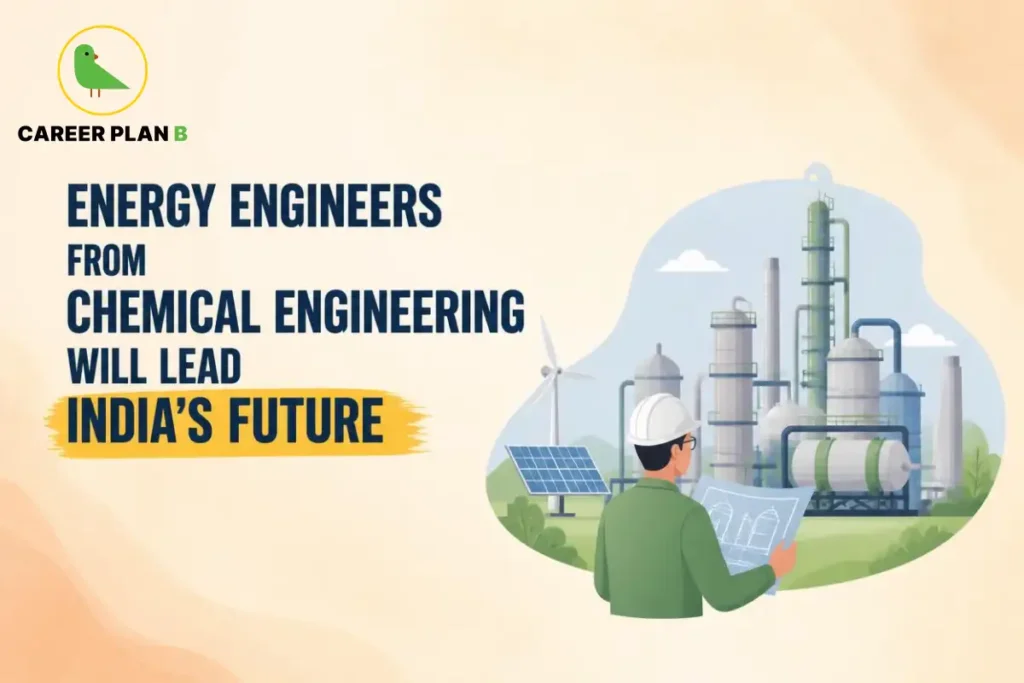
The world is undergoing the biggest energy transformation in modern history, and energy engineers from chemical engineering are right at the centre of it. India has set an ambitious target of achieving 500 GW of renewable energy capacity by 2030, according to the Ministry of New and Renewable Energy (MNRE). To reach that goal, the country needs engineers who understand not just electricity or machines but also the deep science of energy conversion, chemical processes, and large-scale system design. That is exactly what chemical engineers are trained for. If you have a chemical engineering background and are wondering where your career is headed, the answer might be cleaner, greener, and more powerful than you think.
What Does an Energy Engineer from Chemical Engineering Actually Do?
Most people still picture chemical engineers standing next to oil refineries or working in pharmaceutical plants. That picture is changing fast.
Beyond Oil Refineries: The New Energy Landscape
Today, a chemical engineer working in the energy sector might be designing a green hydrogen production unit, optimising a lithium-ion battery manufacturing process, or developing carbon capture technology for a thermal power plant. The job titles have evolved: process engineer, energy systems engineer, fuel cell engineer, and sustainability engineer, but the foundation remains the same: a strong grip on thermodynamics, reaction kinetics, mass transfer, and process design.
This combination of skills is rare, and the energy sector is actively looking for it.
Why Chemical Engineering Is the Perfect Foundation for Energy Careers
The Science of Energy Conversion Is Chemical at Its Core
Every stage of the energy cycle depends on chemical processes. Energy may be stored in a battery, produced through electrolysis, or released through combustion. In each case, chemistry drives the process.
Electrochemistry controls how batteries charge and discharge. Catalysis enables green hydrogen production through electrolysers. Chemical engineering programmes also teach heat exchanger design, distillation, reactor design, and other core subjects. Engineers apply these skills directly in energy plant operations.
This is why energy transition careers in the chemical branch are growing faster than in almost any other engineering stream.
Process Design Skills That Power Plants Actually Need
Scaling up a laboratory experiment to an industrial plant is one of the hardest challenges in engineering. Chemical engineers are specifically trained for this. Whether it is a 10 MW hydrogen production facility or a utility-scale biofuel refinery, the skills needed process simulation, safety analysis, efficiency optimisation, and equipment sizing come straight from the chemical engineering curriculum.
The future scope of chemical engineering is no longer just about fossil fuels. It is about applying the same rigorous process thinking to cleaner energy systems.
Top Energy Sectors Hiring Chemical Engineers Right Now
Here is where the opportunities are building up the fastest:
| Sector | Key Roles | Top Recruiters in India |
|---|---|---|
| Green Hydrogen | Process Engineer, Electrolyser Design Engineer | NTPC, GAIL, Indian Oil |
| Battery & Energy Storage | Cell Design Engineer, Manufacturing Engineer | Amara Raja, Exide, BHEL |
| Carbon Capture | Process Simulation Engineer, CCU Engineer | ONGC, BPCL R&D |
| Biofuels & Biomass | Biorefinery Engineer, Fuel Quality Engineer | IOCL, BPCL Biofuels Division |
| Solar Thermal & Fuel Cells | Thermal Systems Engineer, Fuel Cell Engineer | NTPC Solar, MNRE-Funded Projects |
Clean energy career opportunities in India are expanding across both the public and private sectors. Companies like Reliance New Energy, Adani Green Energy, and Greenko are building large teams of process and energy engineers from chemical backgrounds.
Government Push: India’s Energy Policies Are Creating Massive Demand
India’s energy transition is not happening by accident. It is being driven by policy, and that policy is creating thousands of new engineering jobs.
The National Green Hydrogen Mission, launched by the Government of India, has set a target of producing 5 million metric tonnes of green hydrogen annually by 2030. This mission alone is expected to generate over 6 lakh jobs across the value chain.
The PM-KUSUM Scheme is pushing solar energy into agriculture and rural areas, requiring large-scale process and energy systems engineers for installation and operations.
The FAME India Scheme (Phase II) under the Ministry of Heavy Industries is accelerating EV adoption, which directly increases demand for battery engineers and energy storage specialist roles where chemical engineers are highly competitive.
NITI Aayog’s national EV and energy storage roadmap further outlines the scale of investment going into battery manufacturing under the PLI (Production Linked Incentive) scheme.
The petrochemical-to-renewable-energy shift is real, it is funded, and it needs chemical engineers to execute it.
Have Any Doubts?
Salary and Career Growth for Energy Engineers in India
Here is a realistic look at what chemical engineers can expect in the energy sector:
| Experience Level | Approximate Annual Salary (INR) |
|---|---|
| Entry Level (0–2 Years) | ₹4–7 LPA |
| Mid Level (3–6 Years) | ₹8–15 LPA |
| Senior Level (7–12 Years) | ₹16–28 LPA |
| Specialist / Leadership | ₹30 LPA and Above |
PSUs like NTPC, ONGC, IOCL, GAIL, BPCL, and HPCL continue to recruit chemical engineers for energy roles through GATE scores. In the private sector, renewables companies and EV battery manufacturers are offering competitive packages with strong growth trajectories.
Renewable energy jobs for engineers in India are no longer limited to metro cities either; large-scale green energy projects in Rajasthan, Gujarat, Tamil Nadu, and Andhra Pradesh are creating demand across the country.
How Career Plan B Helps
If you are a chemical engineering student or graduate unsure how to enter the energy sector, Career Plan B can help you find your direction. Through personalised career counselling, psychometric assessments, and career roadmapping, Career Plan B helps you understand which energy roles match your strengths and how to build the right profile to get there.
For Latest Information
Frequently Asked Questions (FAQs)
- Can a chemical engineer become an energy engineer without additional qualifications?
Yes. Many core energy roles in green hydrogen, process engineering, and biofuels directly use the chemical engineering curriculum. Additional certifications in energy systems or a relevant M.Tech can accelerate growth but are not always mandatory for entry-level roles.
- Which PSUs hire chemical engineers for energy sector roles?
NTPC, ONGC, IOCL, BPCL, GAIL, and HPCL are among the major public sector employers. Most recruit through GATE scores under the chemical engineering paper.
- Is green hydrogen a viable long-term career for chemical engineers in India?
Yes. India’s National Green Hydrogen Mission has committed significant investment to scale green hydrogen production by 2030. This creates sustained demand for process and design engineers with chemical engineering backgrounds.
- What is the role of chemical engineers in battery and EV energy storage?
Chemical engineers contribute to cell chemistry design, electrode material development, electrolyte formulation, and manufacturing process optimisation all critical areas in battery production for EVs and grid storage.
- How can I use my GATE score for energy sector jobs?
PSUs in the energy sector, including NTPC, GAIL, and IOCL, recruit through GATE scores. A strong score in the chemical engineering paper qualifies you for technical officer and engineer trainee roles in energy operations and process design.
Conclusion
The energy sector is not just looking for electrical engineers or mechanical engineers; it is actively searching for professionals who understand the chemistry of energy at a molecular and process level. Energy engineers from chemical engineering bring exactly that. From green hydrogen and battery storage to carbon capture and biofuels, chemical engineers are not just participating in India’s energy transition; they are leading it.
If you are a chemical engineering student planning your next career move, consider the energy sector. The demand for skilled professionals is growing. Salaries are competitive, and the work has a meaningful impact. Start planning your chemical engineering career in the energy sector today. The future of energy depends on engineers who understand processes at the molecular level.