Deepti · August 12, 2026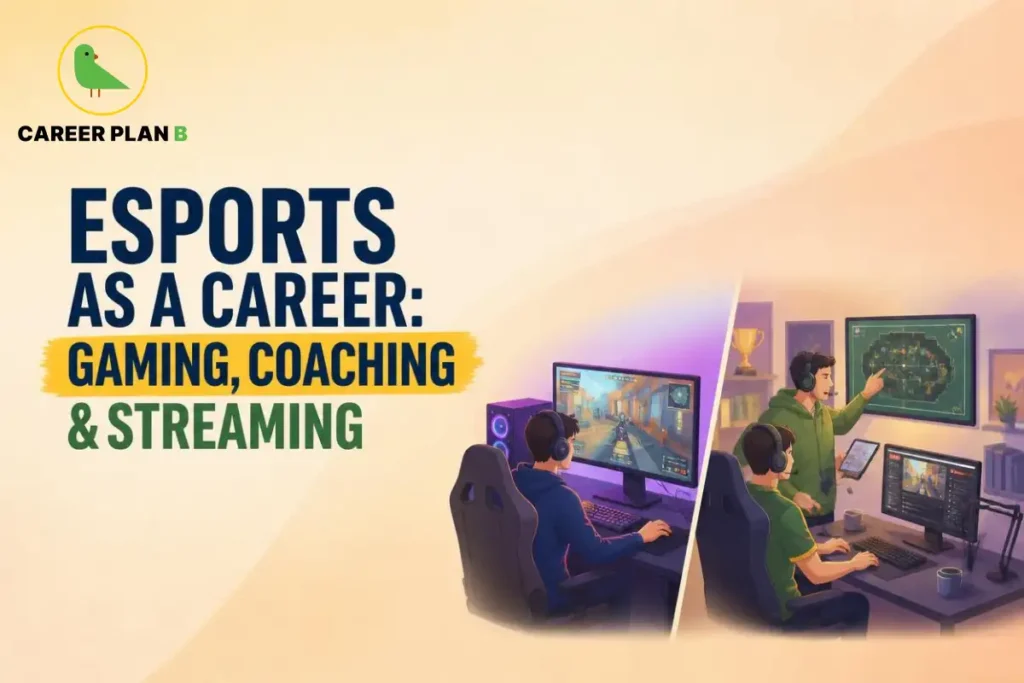
Introduction
Esports as a career has moved from a niche hobby into a recognised, if still-evolving, professional path in India — one that goes well beyond just being a great player. Between competitive gaming, coaching, and streaming, the ecosystem now offers multiple distinct entry points, each with its own skill demands and income structure. Importantly, this field has also gained real institutional traction: the Government of India officially distinguished esports from online gaming and gambling in January 2023, a meaningful step toward legitimacy that most students and parents aren’t fully aware of. This blog walks through exactly how the esports career landscape works today.
Is Esports Officially Recognised in India?
Esports occupies a genuinely interesting middle ground in India’s regulatory landscape. The Esports Federation of India (ESFI) functions as the primary governing body for competitive esports, holding full membership in the International Esports Federation (IESF), the Global Esports Federation (GEF), and the Asian Electronic Sports Federation (AESF), and has represented India at multi-sport events including the Asian Games and Commonwealth Esports Championships. In January 2023, the Government of India officially recognised “electronic sports” as a category distinct from online gaming and gambling — a distinction that also meant esports winnings are treated differently from gaming/betting-related taxation. That said, as of recent years, no single federation has received official, exclusive recognition from the Ministry of Youth Affairs and Sports as the sole national esports authority, meaning the governance landscape is still evolving even as the sector’s legitimacy has grown substantially.
Three Distinct Career Tracks in Esports
1. Competitive Player
This is the most visible but also the most competitive and short-career-window track, requiring exceptional reflexes, game-specific mastery, and team coordination for team-based titles. Competitive players typically rise through amateur tournaments, regional qualifiers, and events like ESFI’s National Esports Championships (NESC) before reaching professional team rosters or international representation.
2. Coaching and Team Management
As Indian esports has matured, dedicated coaching roles have emerged — focused on strategy development, player performance analysis, and team management, often for professional franchises or organisations preparing for domestic and international tournaments. This track suits players with strong game knowledge and analytical ability who may not have the reflexes or age profile for competitive play but understand strategy deeply.
3. Streaming and Content Creation
A significant share of esports-adjacent income in India now comes from streaming and content creation on platforms rather than tournament winnings alone. Streamers build audiences through regular gameplay broadcasts, commentary, and community engagement, monetising through platform revenue sharing, sponsorships, and brand partnerships — a track that rewards personality and consistency as much as raw gaming skill.
For Personalized Guidance
Esports Career Tracks: Quick Comparison
| Track | Core Skill | Career Window | Income Source |
|---|---|---|---|
| Competitive player | Reflexes, game mastery, team coordination | Short, peaks early | Tournament prize money, team salary, sponsorships |
| Coach/team manager | Strategic analysis, player management | Longer, often follows a playing career | Team/organisation salary |
| Streamer/content creator | Personality, consistency, community engagement | Long, less physically demanding | Platform revenue, sponsorships, brand deals |
Training and Skill-Building Pathways
Amateur tournaments and online ladders — The primary route for aspiring competitive players to build a track record and get noticed by organisations, similar to how traditional sports scouting works.
Esports coaching certification programmes — A newer but growing offering, sometimes run in partnership with international esports organisations, focused on structured coaching methodology rather than just game knowledge.
NSDC/AVGC-linked skilling initiatives — India’s broader push around the Animation, Visual Effects, Gaming, and Comics (AVGC) sector, supported by the Ministry of Information and Broadcasting, has increasingly included gaming-adjacent skilling programmes, which can support entry into esports-related technical and content roles.
Self-driven streaming practice — Most successful streamers build their following through consistent, long-term content creation rather than formal training, similar to other digital content careers.
Realistic Income Expectations
Prize money for top-tier competitive players can be substantial for major tournament wins, but this level of earning is limited to a very small percentage of highly skilled, often team-affiliated players — it isn’t a reliable baseline income for most aspiring competitors. Coaching and team management roles tend to offer more stable, salaried income once secured, though these positions are still relatively limited in number as the Indian esports organisational ecosystem continues to grow. Streaming income varies enormously and typically builds slowly, with meaningful, stable earnings usually arriving only after a creator has built a substantial, consistent audience over a year or more of regular content.
Who Should Consider an Esports Career
This path suits students who combine genuine competitive gaming skill or gaming knowledge with discipline around practice schedules, since professional esports — much like traditional sports — requires structured, often gruelling practice regimens rather than casual play. For those more drawn to the analytical or community-building side, coaching and streaming offer longer, more sustainable career windows than competitive play alone, and are worth considering even for students who love gaming but aren’t at an elite competitive level themselves.
How Career Plan B Helps
Esports offers genuinely different career tracks — competing, coaching, and streaming — each demanding a different mix of skills and figuring out which one actually fits your strengths (rather than defaulting to “pro player” because it’s the most visible) makes a real difference to long-term outcomes. Career Plan B uses Psycheintel and Career Assessment Tests to help identify whether your aptitude leans toward competitive performance, strategic/analytical coaching work, or content-driven streaming. Our Personalised Career Counselling helps families have grounded conversations about balancing serious gaming pursuits with academics, and Career Roadmapping lays out a realistic multi-year plan for whichever esports track fits best, including how to build a parallel safety net given the field’s still-evolving professional structure.
Get In Touch With Us
FAQs
Q1. Is esports officially recognised as a sport in India?
The Government of India recognised “electronic sports” as a distinct category from online gaming and gambling in January 2023, and the Esports Federation of India represents the country at international multi-sport events, though a single exclusive national governing body has not been formally designated by the sports ministry.
Q2. Do I need to be a competitive player to have an esports career?
No — coaching, team management, and streaming/content creation are all legitimate, longer-lasting career tracks within esports that don’t require elite competitive playing ability.
Q3. How much can a professional esports player earn in India?
Top competitive players can earn substantial prize money and sponsorships, but this applies to a very small percentage of highly skilled players; it isn’t a reliable income baseline for most aspiring competitors.
Q4. Is streaming a more stable esports career than competitive play?
Streaming can offer a longer career window since it’s less dependent on peak physical reflexes, but income still builds slowly and requires consistent, long-term audience-building.
Q5. What skills matter most for esports coaching?
Deep game knowledge, strategic analysis, and the ability to manage and develop player performance matter most — reflexes and playing ability are less critical than for competitive roles.
Conclusion
Esports as a career now offers genuinely distinct paths through competitive play, coaching, and streaming, each rewarding different strengths and offering different career timelines. With growing institutional recognition in India — including the government’s 2023 distinction between esports and online gaming/gambling — the field is more legitimate than many parents assume, but it still requires realistic planning around income timelines and career longevity. Identifying which track — playing, coaching, or streaming — genuinely fits your skills is the most important first step.