Team6 · September 22, 2026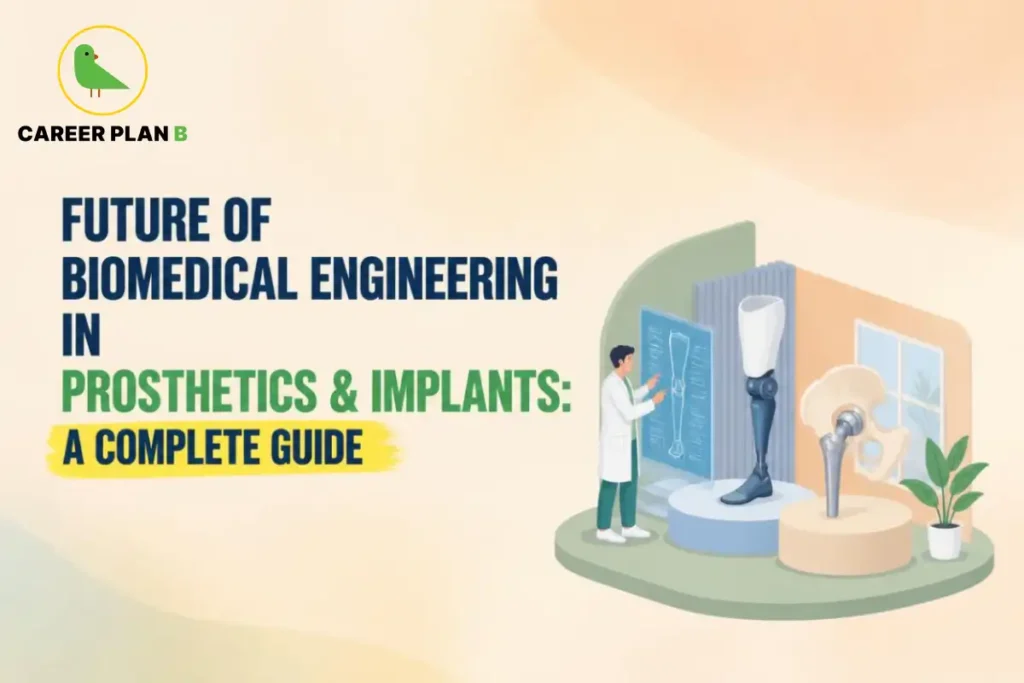
Introduction
What if a prosthetic arm could not just move but actually feel?
That question, which once belonged only to science fiction, is now sitting on the workbenches of biomedical engineers around the world. The future of biomedical engineering in prosthetics is unfolding faster than most students realize, and it is one of the most exciting frontiers in all of healthcare.
Prosthetics have come a long way from carved wooden limbs used centuries ago. Today, we have myoelectric arms controlled by muscle signals, smart implants that communicate with the body, and bionic limbs that respond in real time to the brain’s commands. And we are only getting started.
In this blog, we explore what is driving this revolution, where India stands in it, what biomedical implant future trends look like, and most importantly, what this means for your career as a biomedical engineering student.
How Far Have Prosthetics and Implants Come?
To understand where we are going, it helps to see how far we have already come.
Early prosthetics were passive; they replaced the shape of a limb but had no function. By the mid-20th century, myoelectric prosthetics arrived, using electrical signals from residual muscles to drive movement. These were revolutionary for their time.
Implants followed a similar arc. Early joint replacements used basic metal and plastic components. Over time, materials became more biocompatible, designs became more anatomical, and outcomes improved dramatically.
Today, we are entering a third era, one defined by smart materials, artificial intelligence, sensor networks, and direct neural communication. The leap from the second era to this one is arguably the biggest in the history of prosthetics and implants.
What Is Driving the Future of Biomedical Engineering in Prosthetics?
Several powerful forces are converging to reshape this field. Each one alone would be significant. Together, they are transformative.
AI and Robotics in Smart Prosthetics Technology
Smart prosthetics technology is no longer about simple open-and-close hand movements. Modern bionic limbs use embedded sensors and machine learning algorithms that study a user’s movement patterns and predict the next intended motion, often in milliseconds.
Companies and research labs are developing prosthetic legs that automatically adjust their gait on stairs, slopes, and uneven terrain. Prosthetic hands can now distinguish between different grip types, picking up an egg without crushing it or holding a pen with precision. AI is making this possible by processing real-time sensory data and continuously learning from user behaviour.
For biomedical engineers, this means the field now sits at the intersection of mechanical engineering, electronics, data science, and biology – a genuinely multidisciplinary career space.
3D Printed Prosthetics: Affordable and Personalised
One of the most democratizing developments in this space is 3D-printed prosthetics in India and globally. Traditional prosthetics are expensive, time-consuming to produce, and difficult to customize. 3D printing changes all three of these problems at once.
A prosthetic hand that might cost ₹5–10 lakhs through conventional manufacturing can now be printed for a fraction of that cost. More importantly, it can be tailored to a child’s exact measurements and reprinted as they grow. Indian institutions and startups are already exploring this. IIT Delhi and several health tech companies have run pilot programmes offering 3D-printed prosthetic solutions for underserved communities across India.
Neuroprosthetics: Where the Brain Meets the Machine
Perhaps the most remarkable area in this entire field is neuroprosthetics and brain-computer interface technology. This is where biomedical engineering stops being just about the body and starts engaging directly with the mind.
‘Neuroprosthetics’ refers to devices that interface with the nervous system either to restore lost sensory or motor function or to bypass damaged neural pathways entirely. Cochlear implants, which restore hearing by directly stimulating the auditory nerve, are among the most successful neuroprosthetic devices in history, with over 700,000 users worldwide.
Retinal implants are helping patients with degenerative blindness regain partial vision. Deep brain stimulators are transforming the treatment of Parkinson’s disease and severe depression. And brain-computer interface systems that allow direct communication between the brain and an external device are enabling paralyzed individuals to control robotic arms, type on computers, and even experience tactile feedback through their prosthetic limbs.
In India, institutions like AIIMS New Delhi and DRDO are actively involved in research on neural interfaces and advanced implant systems. These are real career destinations for biomedical engineers who want to work at the frontier of human capability.
Biomedical Implants: The Next Frontier
While prosthetics replace what is missing externally, implants work from the inside, and future trends in biomedical implants point toward devices that are smarter, safer, and far more integrated with the body than anything currently in use.
Smart Implants with Embedded Sensors
The next generation of cardiac implants will not just pace the heart; they will monitor blood chemistry, detect irregularities, and send alerts to a physician’s phone in real time. Glucose-monitoring implants will replace the need for daily finger-prick tests for diabetic patients. These are not distant possibilities; many are in advanced clinical trials today.
Osseointegration and Implant Technology
Osseointegration, the direct structural bonding of an implant to living bone, represents one of the most significant developments in implant science. Originally developed for dental implants, this technology now supports prosthetic limb attachment. Instead of using a socket that fits over a residual limb, clinicians anchor the prosthetic directly to the bone through a titanium implant. This approach dramatically improves stability, comfort, and sensory feedback. Osseointegration and implant technology represent specialized niches with significant career potential for biomedical engineers.
Biodegradable and Biocompatible Implants
Another exciting trend is biodegradable implants, devices designed to do their job and then dissolve harmlessly into the body. These are particularly useful in orthopaedic and cardiovascular applications where a temporary scaffold is needed during healing. Materials like hydrogels, bioabsorbable polymers, and even graphene-based composites are being studied for their potential in next-generation implantable devices.
Have Any Doubts?
India’s Role in the Future of Prosthetics and Implants
India is not just a consumer of these technologies; it is increasingly becoming a contributor.
The Government of India’s Make in India initiative has identified medical devices as a priority sector. The Production Linked Incentive (PLI) scheme for medical devices is encouraging domestic manufacturing of everything from basic surgical tools to advanced implantable systems.
The Ayushman Bharat Digital Mission is building the digital health infrastructure that will eventually connect smart implants and prosthetics to a patient’s health record, enabling seamless, data-driven care.
The Department of Biotechnology funds research in biomedical engineering, including prosthetics and implant innovation, through grants to IITs, NITs, and research institutions.
Additionally, organizations like the Artificial Limbs Manufacturing Corporation of India (ALIMCO) are working to make assistive devices, including prosthetics, accessible and affordable for persons with disabilities across India. These are government-backed opportunities that biomedical engineering students can directly target.
The combination of government support, growing domestic demand, and cost-competitive manufacturing is positioning India as a significant player in bionic limbs in India and the broader global MedTech landscape.
Career Scope for Biomedical Engineers in Prosthetics and Implants
If you are a biomedical engineering student, this field offers some of the most meaningful and technically stimulating career paths available today.
Here is what the career landscape looks like:
| Role | Where You Can Work |
|---|---|
| Prosthetics Design Engineer | MedTech startups, rehabilitation centres |
| Implant R&D Engineer | Medical device companies, IITs, DRDO |
| Neuroprosthetics Researcher | AIIMS, international universities |
| Clinical Engineer (Implants) | Private hospitals, government hospitals |
| Regulatory Affairs Specialist | Medical device firms, CDSCO-linked roles |
The biomedical engineering scope in prosthetics is still a niche in India, which is actually a good thing for students entering now. Early movers in a growing field consistently command better roles, better pay, and faster career growth. For those interested in higher studies, MS and PhD programmes in neural engineering, biomechatronics, and rehabilitation engineering at universities in the USA, Germany, and Canada are well-funded and actively recruiting Indian graduates.
You can refer to CDSCO for regulatory frameworks governing medical devices and implants in India, useful knowledge for any biomedical engineer working in this space.
How Career Plan B Helps
Prosthetics and implants is a specialized path, and choosing it requires clarity about your interests, strengths, and long-term goals. Career Plan B offers the PsycheIntel career assessment to help biomedical engineering students identify whether R&D, clinical engineering, or MedTech entrepreneurship is the right fit. With personalized career counselling and academic profile guidance, Career Plan B helps you build a focused roadmap whether you want to work at DRDO, join a health-tech startup, or pursue a research degree abroad in neuroprosthetics.
Get In Touch With Us
Frequently Asked Questions
1. What is the future of prosthetics in India?
India is investing in affordable, domestically manufactured prosthetics through initiatives like Make in India and organizations like ALIMCO. The combination of 3D printing, AI, and government support is making advanced prosthetics more accessible than ever before.
2. What do biomedical engineers do in the field of prosthetics?
Biomedical engineers design, develop, test, and improve prosthetic devices and implants. They work on everything from the mechanical structure and materials to the electronics, sensors, and software that make smart prosthetics function.
3. Are 3D printed prosthetics available in India?
Yes. Several startups and academic institutions in India are developing and distributing 3D printed prosthetics, particularly for children and underserved populations. Costs are significantly lower than conventional prosthetics.
4. What are neuroprosthetics, and how do they work?
‘Neuroprosthetics’ refers to devices that interface directly with the nervous system to restore or enhance function. Examples include cochlear implants for hearing loss, retinal implants for vision, and brain-computer interfaces that allow patients to control prosthetic limbs using neural signals.
5. Which course should I take to specialize in prosthetics and implants?
After a B.Tech. in Biomedical Engineering, you can pursue an M.Tech. in Biomedical Engineering, Biomechatronics, or Rehabilitation Engineering. Abroad, MS programmes in Neural Engineering or Biomedical Engineering at universities in the USA and Germany are strong options. DBT India also funds postgraduate research in this area.
Conclusion
The future of biomedical engineering in prosthetics is not just about replacing what the body has lost; it is about redefining what the human body can do. From AI-powered bionic limbs in India to brain-computer interfaces, from smart cardiac implants to biodegradable bone scaffolds, the pace of innovation in this field is breathtaking.
For biomedical engineering students in India, this is one of the most promising directions you can take your career. The research is real, the government support is growing, and the need is urgent. Millions of people around the world are waiting for the solutions that your generation of engineers will build.
If you are ready to take the next step but are not sure which path within biomedical engineering is right for you, visit Career Plan B and take the PsycheIntel career assessment today. Your career plan deserves as much thought as the technology you want to build.