Team6 · September 22, 2026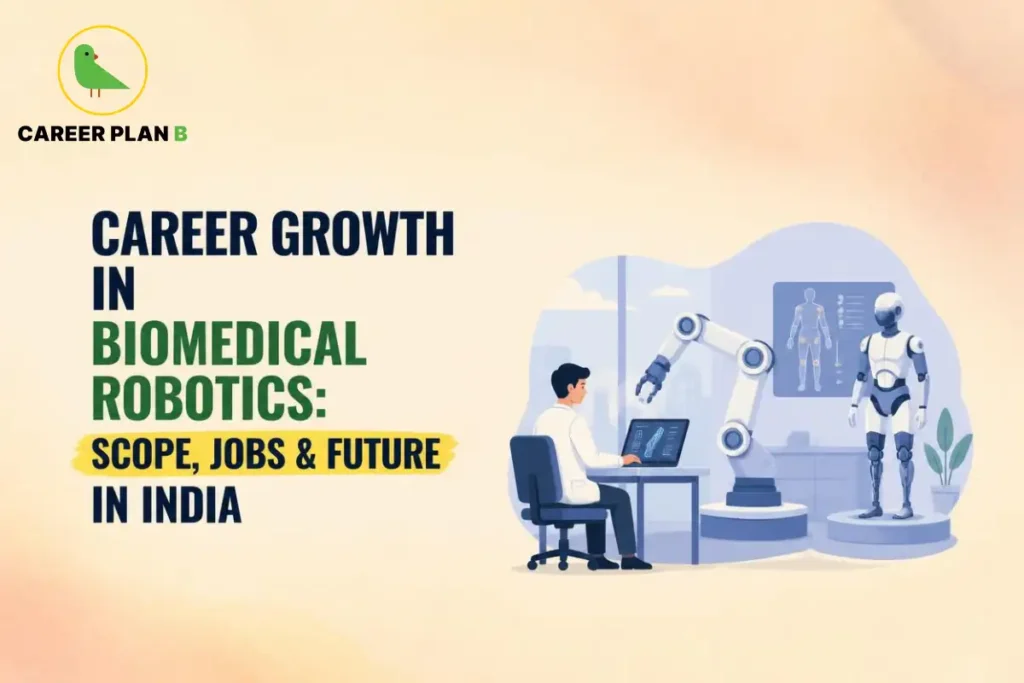
Introduction
What if the surgeon operating on you tomorrow is part human, part machine, and that is actually a good thing?
That is not a distant future. It is already happening in hospitals across India and around the world. Robotic arms are assisting in complex cardiac surgeries. Exoskeletons are helping stroke patients walk again. AI-powered diagnostic robots are detecting diseases faster than the human eye. And at the centre of all of this sits one of the most exciting fields in modern healthcare: biomedical robotics.
Career growth in biomedical robotics is accelerating at a pace few other engineering fields can match right now. For biomedical engineering students in India, this is not just a trend to watch; it is a career opportunity to actively pursue.
In this blog, we break down what biomedical robotics actually is, what career paths it opens, what skills you need, what you can earn, and how to get started whether you want to work in India or take your expertise global.
What Is Biomedical Robotics and Why Does It Matter?
Biomedical robotics sits at the intersection of robotics, biology, medicine, and engineering. In simple terms, it involves designing and developing robotic systems that assist in healthcare from surgery and rehabilitation to diagnostics and patient care.
Key application areas include:
- Surgical robots assisting surgeons with precision during minimally invasive procedures
- Rehabilitation robots and exoskeletons helping patients recover motor function after strokes or spinal injuries
- Diagnostic robots automating lab tests, imaging analysis, and patient monitoring
- Assistive robots supporting elderly or disabled individuals in daily tasks
- Nano-robots an emerging area being researched for targeted drug delivery inside the body
The medical robotics future scope is enormous. According to global industry reports, the medical robotics market is expected to cross $20 billion by 2030, driven by ageing populations, the demand for minimally invasive procedures, and rapid advances in AI and sensor technology. For biomedical engineers, this means the demand for skilled professionals in this field will only grow stronger over the next decade.
How Is Biomedical Robotics Changing Healthcare in India?
India is not sitting on the sidelines of this revolution. The adoption of robotic surgery technology India-wide is growing steadily, with leading hospitals in Mumbai, Delhi, Bengaluru, and Chennai investing in robotic surgical systems.
The Da Vinci Surgical System, the world’s most widely used robotic surgery platform, is now operational in several major Indian hospitals, including Apollo and Manipal. These systems allow surgeons to perform complex procedures through tiny incisions with greater precision and faster patient recovery times.
On the research side, DRDO and AIIMS New Delhi are actively pursuing projects in medical robotics, rehabilitation engineering, and assistive technologies. IIT Kanpur, IIT Bombay, and IIT Madras have dedicated robotics and biomedical engineering labs working on homegrown solutions for the Indian healthcare context.
The Government of India’s Make in India initiative has identified medical devices, including robotic surgical systems, as a priority manufacturing sector. This policy push is encouraging Indian companies and research institutions to develop cost-effective robotic healthcare solutions that can serve not just India but also be exported to other developing nations.
This combination of hospital adoption, institutional research, and government support is creating a genuine and growing ecosystem for biomedical robotics engineering jobs in India.
What Are the Career Paths in Biomedical Robotics?
One of the biggest advantages of biomedical robotics as a career is its breadth. You are not locked into one type of role. Depending on your interests and specialization, you can go in several very different directions.
Core Engineering Roles
These roles focus on the design, development, and testing of robotic systems for medical applications:
- Robotics Design Engineer develops mechanical and electronic components of medical robots
- Systems integration engineers ensure robotic hardware and software work seamlessly together in clinical environments
- A mechatronics engineer works on the combined mechanical, electronic, and software systems that drive robotic devices
Clinical and Research Roles
These roles place you closer to the patient and the hospital environment:
- Clinical Robotics Specialist trains surgeons and hospital staff on robotic systems, provides technical support during procedures
- Rehabilitation Robotics A researcher develops and tests robotic devices for patient recovery in collaboration with physiotherapists and neurologists
- Surgical robotics trainers work with medical device companies to educate clinical teams on new robotic surgery platforms
Emerging Roles in AI and Data
AI in medical robotics is one of the fastest-growing sub-specializations in this field. Roles here include:
- Machine Learning Engineer (Medical Robotics) develops AI models that allow robots to learn from surgical data and improve precision over time
- Computer vision engineers build image recognition systems that help diagnostic and surgical robots interpret visual information in real time
- Data Scientist (MedTech) analyses data generated by robotic systems to improve device performance and patient outcomes
Here is a snapshot of career roles with approximate salary ranges in India:
| Role | Industry | Avg. Salary India (LPA) |
|---|---|---|
| Robotics Design Engineer | MedTech / R&D | ₹5 – ₹12 |
| Clinical Robotics Specialist | Hospitals / Device Companies | ₹6 – ₹14 |
| AI Engineer (Medical Robotics) | Health-Tech Startups / MNCs | ₹8 – ₹18 |
| Rehabilitation Robotics Researcher | DRDO / IITs / AIIMS | ₹5 – ₹10 |
| Senior Robotics Engineer | Global MNCs | ₹18 – ₹30 |
The surgical robotics career India pathway is especially promising as more hospitals invest in robotic surgery infrastructure and need qualified engineers to support and maintain these systems.
What Skills Do You Need to Build a Career in Biomedical Robotics?
Biomedical engineering and robotics specialization require a mix of technical depth and interdisciplinary thinking. Here is what you need to develop:
Technical Skills:
- Robotics programming proficiency in ROS (Robot Operating System), Python, C++, and MATLAB
- Embedded systems working with microcontrollers, sensors, and actuators
- Mechatronics: understanding the integration of mechanical, electrical, and software systems
- Computer vision image processing and object recognition for robotic guidance systems
- AI and machine learning, especially for roles in AI in medical robotics
Biomedical Knowledge:
- Basic understanding of human anatomy and physiology
- Familiarity with medical device regulations in India governed by CDSCO under the Medical Devices Rules 2017
- Understanding of clinical workflows and hospital environments
Soft Skills:
- Interdisciplinary collaboration working with doctors, physiotherapists, and software teams simultaneously
- Problem-solving under real-world clinical constraints
- Clear technical communication with non-engineering stakeholders
Higher Study Options: An M.Tech in Biomedical Engineering, Robotics, or Mechatronics significantly strengthens your profile. Abroad, MS programmes in Biomedical Robotics, Neural Engineering, or Medical Device Innovation at universities in the USA, Germany, and Canada are well-funded options. The Department of Science and Technology in India also funds robotics and biomedical research through fellowships and grants that students can apply for.
Have Any Doubts?
Biomedical Robotics Salary in India and Abroad
Let us talk numbers. The biomedical robotics salary in India varies significantly based on experience, specialization, and employer type.
| Career Stage | Salary in India (LPA) | Salary Abroad USA (USD/year) |
|---|---|---|
| Fresher (0–2 years) | ₹3.5 – ₹6 | $65,000 – $80,000 |
| Mid-Level (3–6 years) | ₹8 – ₹15 | $85,000 – $105,000 |
| Senior / Specialist (7+ years) | ₹18 – ₹30 | $110,000 – $140,000 |
Roles in AI in medical robotics and surgical robotics career pathways in India tend to command the higher end of these ranges, particularly when working with global MedTech companies or in research institutions with international collaborations.
It is also worth noting that government research roles at DRDO or IIT research labs may offer slightly lower CTC figures but come with significant non-monetary benefits: research exposure, publications, patents, and strong credentials for postgraduate study abroad.
Top Recruiters and Where to Find Biomedical Robotics Jobs
Knowing where to look is half the battle. Here are the major employers in this space:
Global Companies Operating in India:
- Intuitive Surgical (makers of the Da Vinci system)
- Medtronic
- Stryker
- Siemens Healthineers
- Johnson & Johnson MedTech
Indian Companies and Institutions:
- Narayana Health and Apollo Hospitals (clinical robotics roles)
- Tata Medical and Diagnostics
- DRDO research and defence medical robotics
- IIT research labs’ project-based and faculty research roles
- Health-tech startups in Bengaluru, Hyderabad, and Pune
Government Funding and Fellowship Opportunities: The Department of Science and Technology runs programmes like the National Science and Technology Entrepreneurship Development Board (NSTEDB) and INSPIRE fellowships that support young engineers pursuing research in emerging technologies, including biomedical robotics.
How Career Plan B Helps
Biomedical robotics is a highly specialized field, and figuring out whether it is the right direction for you and which specific path within it suits your strengths requires more than just enthusiasm. Career Plan B offers the PsycheIntel career assessment, which helps biomedical engineering students identify their aptitude for technical R&D, clinical roles, or AI-driven specializations. With one-on-one career counselling and academic profile guidance, Career Plan B helps you build a clear roadmap whether you are aiming for an M.Tech in robotics, a research role at DRDO, or an MS in surgical robotics abroad. Stop guessing and start planning with a strategy that fits you.
Get In Touch With Us
Frequently Asked Questions
1. Is biomedical robotics a good career in India?
Yes, absolutely. With hospitals adopting robotic surgery systems, government investment in medical device manufacturing under Make in India, and a growing health-tech startup ecosystem, career growth in biomedical robotics in India is on a strong upward trajectory.
2. What qualifications do I need to work in surgical robotics?
A B.Tech. in Biomedical Engineering, Electronics, or Mechatronics is a strong starting point. Adding an M.Tech or gaining certifications in robotics programming and medical device regulations under CDSCO will significantly strengthen your profile for a surgical robotics career India employers value.
3. Which companies hire biomedical robotics engineers in India?
Top employers include Intuitive Surgical, Medtronic, Stryker, Siemens Healthineers, Apollo Hospitals, and Narayana Health on the private side. On the government and research side, DRDO and IIT research labs are key destinations.
4. Can a biomedical engineering student work in robotics without a robotics degree?
Yes. Biomedical engineering and robotics specialization overlaps significantly. Students who develop skills in ROS, embedded systems, and mechatronics alongside their biomedical curriculum are well-positioned for robotics roles in the medical domain without a standalone robotics degree.
5. What is the future of medical robotics in India?
The medical robotics future scope in India is very promising. Government initiatives, rising hospital infrastructure, and increasing domestic R&D investment are all pointing in the same direction. India is expected to become both a major consumer and manufacturer of medical robotic systems over the next decade.
Conclusion
Career growth in biomedical robotics is not just a possibility for Indian engineering students; it is a genuine, well-supported, and fast-expanding path. From AI in medical robotics to rehabilitation exoskeletons and surgical systems, the field is generating roles that are technically demanding, financially rewarding, and deeply meaningful in their human impact.
India is building its own robotic healthcare ecosystem, and the engineers who invest in the right skills and specializations today will be the ones leading it tomorrow.
If you are a biomedical engineering student trying to figure out whether robotics is the right direction for you or which specific path within this field aligns with your strengths, visit Career Plan B and take the PsycheIntel career assessment. Your career in biomedical robotics deserves a plan as precise as the robots you will one day build.