Team5 · July 10, 2026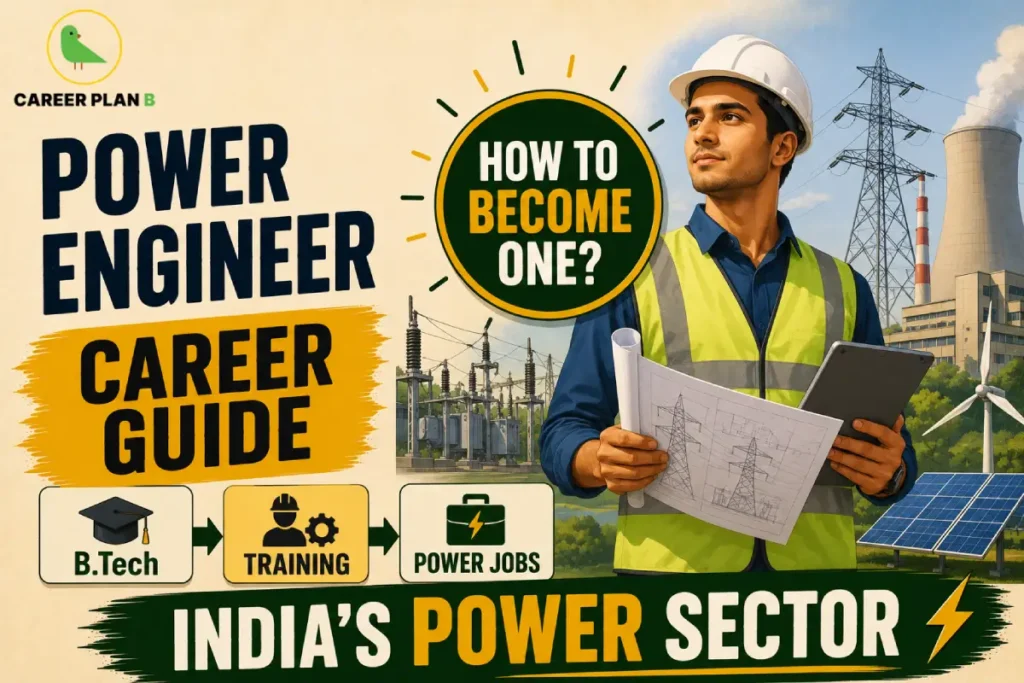
Introduction
India is on a mission. The country has set an ambitious target of achieving 500 GW of renewable energy capacity by 2030, as outlined by the Ministry of New and Renewable Energy (MNRE). That is not just a policy goal; it is a massive opportunity for engineers who want to be at the heart of India’s energy revolution. If you have ever wondered how to become a power engineer in India, this is the right time to find out.
Power engineers are the backbone of India’s electricity ecosystem. From designing power grids to managing energy distribution and working on solar or nuclear plants, they keep the lights on across the country. In this guide, you will get a clear, step-by-step roadmap from the right subjects in school to landing a job at India’s top energy companies.
What Does a Power Engineer Actually Do?
Before diving into the path, it helps to understand what the job actually looks like. A power engineer designs, develops, and maintains systems that generate, transmit, and distribute electrical energy.
Depending on their specialisation, they may work in:
- Thermal power plants (coal, gas, steam-based generation)
- Renewable energy (solar, wind, hydro)
- Nuclear power (design and safety systems)
- Transmission and distribution (power grids and substations)
- Energy management (optimising usage and reducing losses)
The role combines technical depth with real-world problem-solving, making it one of the most impactful electrical engineering jobs in India.
What Qualifications Do You Need? Power Engineer Eligibility and Qualifications
After 10th Standard
Choose the science stream with physics, chemistry, and mathematics (PCM) in classes 11 and 12. This is the non-negotiable foundation for any engineering career.
After 12th Standard
You need to qualify for a recognised engineering entrance exam to pursue a B.Tech or BE degree. The most important ones are the following:
- JEE Main for NITs, IIITs, and government-funded technical institutes. Register at jeemain.nta.ac.in
- JEE Advanced for IITs. Details at jeeadv.ac.in
- State-level entrance exams Such as MHT-CET, WBJEE, KCET, etc.
Minimum eligibility is typically 60–75% marks in PCM in class 12, depending on the institution.
Diploma Route
If you prefer a shorter path, a 3-year diploma in electrical or power engineering after Class 10 through a recognised polytechnic is also a valid entry point. You can later pursue a lateral entry B.Tech programme.
Top Power Engineering Courses After 12th
Undergraduate (UG):
- B.Tech / BE in Electrical Engineering
- B.Tech in Power Engineering
- B.Tech in Energy Technology
Postgraduate (PG):
- M.Tech in Power Systems
- M.Tech in Energy Science and Engineering
- MBA in Energy Management
Top Institutes:
- IIT Bombay, IIT Delhi, IIT Roorkee, IIT Kharagpur
- NITs across India (Trichy, Warangal, Surathkal)
- BITS Pilani
- Jadavpur University, VNIT Nagpur
You can explore engineering programmes at IITs through the Joint Seat Allocation Authority (JoSAA) portal.
Step-by-Step Roadmap: Energy Sector Career Path India
Here is a clear, actionable roadmap for anyone looking to build a power engineering career in India:
Step 1: Score well in Class 12 with PCM. Aim for at least 75% to be eligible for top engineering colleges.
Step 2: Crack a national or state engineering entrance exam. JEE Main is your primary target. Prepare at least 12–18 months in advance.
Step 3 Pursue a B.Tech. in Electrical or Power Engineering. Choose a branch that aligns with your interest: electrical, energy systems, or electronics and power.
Step 4: Build hands-on skills through internships. Apply for internships at PSUs (Public Sector Undertakings) like NTPC or BHEL during your second or third year.
Step 5: Appear for the GATE Exam The Graduate Aptitude Test in Engineering (GATE) is conducted by IITs and IISc. A good GATE score opens doors to the following:
- PSU recruitment (NTPC, PGCIL, BHEL)
- M.Tech admissions at IITs and NITs
- Central government jobs
Step 6: Apply to top power sector companies or pursue higher studies. With a B.Tech and GATE score in hand, you are ready for the job market or postgraduate studies.
Have Any Doubts?
Which are the top power sector companies in India?
India’s power sector has a mix of public sector giants and fast-growing private players. Here are the key employers:
Public Sector Units (PSUs):
- NTPC Limited India’s largest power generation company
- Power Grid Corporation of India (PGCIL) Manages the national transmission grid
- BHEL Manufactures power plant equipment
- NHPC Limited Focused on hydroelectric power
- Nuclear Power Corporation of India (NPCIL) Manages nuclear energy plants
Private Sector:
- Tata Power, Adani Power, Torrent Power, JSW Energy
State-Level:
- State Electricity Boards and Distribution Companies (DISCOMs) across all states
What Is the Salary of a Power Engineer in India?
| Experience Level | Average Annual Salary |
|---|---|
| Entry-Level (0–2 Years) | ₹3.5 – ₹6 LPA |
| Mid-Level (3–7 Years) | ₹7 – ₹12 LPA |
| Senior-Level (8+ Years) | ₹14 – ₹25+ LPA |
| PSU (via GATE, NTPC / PGCIL) | ₹8 – ₹16 LPA + Additional Perks & Benefits |
How Career Plan B Helps
Choosing the right energy sector career path in India can be overwhelming, especially when you are unsure whether to go for a PSU job, a private sector role, or higher studies. Career Plan B simplifies this with personalised career counselling, Psycheintel-based career assessment tests, and a structured career roadmap built around your strengths. Whether you are in Class 12, a B.Tech student, or a fresher exploring power engineering courses after 12th, Career Plan B helps you make confident, informed decisions every step of the way.
For Latest Information
Frequently Asked Questions (FAQs)
- Is power engineering a good career in India?
Absolutely. With India’s push for 500 GW of clean energy and massive grid upgrades underway, demand for power engineers is higher than ever. It is one of the most stable and well-paying electrical engineering jobs in India.
- Can I become a power engineer after completing a diploma?
Yes. A diploma in electrical engineering qualifies you for junior engineer roles and allows you to pursue a lateral entry B.Tech programme to advance further.
- Is GATE compulsory to become a power engineer?
Not compulsory, but highly recommended. A good GATE score significantly improves your chances of getting into top PSUs like NTPC and PGCIL, as well as premium M.Tech programmes.
- What is the difference between electrical engineering and power engineering?
Electrical engineering is a broader field covering electronics, communications, and control systems. Power engineering is a specialised branch focused specifically on energy generation, transmission, and distribution.
- Which entrance exam should I prepare for for power engineering admissions?
JEE Main for B.Tech admissions and GATE for PSU jobs and M.Tech.
Conclusion
Building a power engineering career in India is one of the most future-proof decisions a science student can make today. The demand is real, the salaries are competitive, and the work genuinely matters because every power engineer contributes to keeping India’s homes, hospitals, and industries running.
To recap: start with PCM in Class 12; crack JEE or a state entrance exam; pursue B.Tech in Electrical or Power Engineering; build experience through internships; and use GATE to access PSU jobs or postgraduate programmes.
If you are unsure where to begin or which path fits you best, visit Career Plan B for personalised guidance. The right career decision made early can save you years and unlock a lifetime of opportunity.