Deepti · August 12, 2026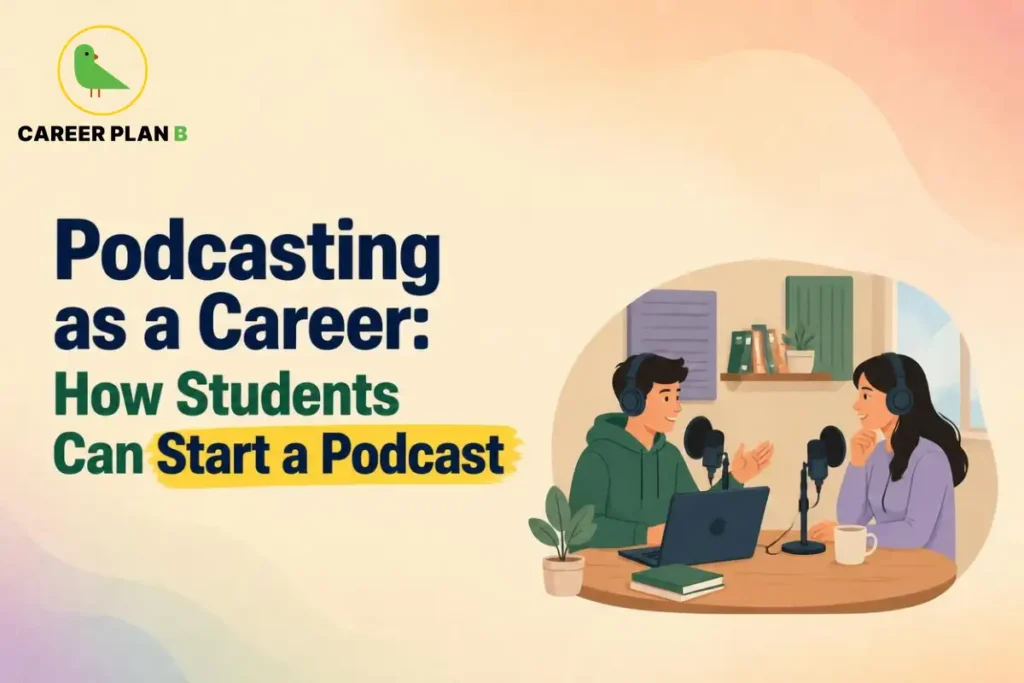
Introduction
Podcasting as a career has quietly gone from a hobbyist’s side project to a genuine media profession — in India and globally. You don’t need a studio, a media house’s backing, or years of broadcast experience to start; you need a clear idea, consistency, and a willingness to learn as you go. This guide is written specifically for students wondering how to start a podcast while still in school or college, without pretending it’s an overnight path to fame or income.
Why Podcasting Is a Genuinely Viable Starting Point
Unlike YouTube or Instagram, podcasting has a lower production barrier — no video editing, no elaborate sets, often no camera at all. This makes it one of the more accessible entry points into content creation for a student working with a limited budget and limited free time. It also builds a transferable skill set — research, scripting, interviewing, and audio storytelling — that’s valuable even if you eventually move into journalism, marketing, or a completely different field.
How to Start a Podcast: The Practical First Steps
- Pick a specific niche, not a broad topic: “A podcast about movies” is too broad; “a podcast reviewing one classic film per week for students” is specific enough to attract a loyal audience.
- Plan your format: Solo commentary, co-hosted conversation, or interview-based — each demands different skills and preparation.
- Script a rough outline, not a word-for-word script: Most successful podcasts sound conversational because hosts work from bullet points, not a full script.
- Record a pilot episode before committing publicly: Listen back critically — pacing, filler words, and audio clarity are usually the first things to fix.
- Choose a hosting platform: (Spotify for Podcasters, Anchor, or similar free options) to distribute your episodes across platforms without needing your own website.
Podcasting Equipment for Beginners: What You Actually Need
The good news for students is that genuinely useful podcasting equipment for beginners doesn’t require a big budget. A decent USB microphone (many reliable options exist well under ₹5,000), free editing software like Audacity or GarageBand, and a quiet room with soft furnishings to reduce echo will get you a respectable starting sound. Upgrading to studio-grade equipment only makes sense once you have a consistent listener base — spending heavily before that point is usually a mistake.
For Personalized Guidance
Building the Skills That Actually Matter
The technical side (recording, basic editing) is the easy part to learn. The skills that separate a podcast that grows from one that fades are: consistency (publishing on a predictable schedule), genuine curiosity (asking good follow-up questions if you interview guests), and editing discipline (cutting a 40-minute ramble down to a tight 15-minute episode). These are the podcasting skills worth deliberately practising from your very first episode, not something to “figure out later.”
Podcast Career for Students: What This Can Realistically Look Like
A genuine podcast career for students doesn’t have to mean quitting studies to podcast full-time — for most students, it starts as a serious extracurricular that builds real-world communication and media skills, which colleges and employers increasingly value. Some students build a niche podcast around their school or college community; others use it as a portfolio project to demonstrate genuine interest when applying to media, journalism, or communications courses later.
How Podcast Monetization Actually Works in India
Understanding realistic podcast monetization India options matters before you set expectations too high. The common routes are sponsorships from brands relevant to your niche (once you have a meaningful, consistent listener base), platform-based ad revenue sharing (available on some hosting platforms once you cross specific listenership thresholds), and using the podcast as a lead generator for other paid work (freelance writing, voice work, or consulting). Early-stage podcasts — the first 6–12 months for almost everyone — typically earn little to nothing directly; the real value at this stage is skill-building and audience formation, not income.
Common Mistakes Student Podcasters Make
- Over-investing in equipment before finding an audience — content quality and consistency matter far more early on than microphone quality
- Choosing a topic too broad to build a loyal audience around
- Publishing inconsistently, which is one of the most reliable ways to lose whatever audience you’ve built
- Ignoring show notes and discoverability — a podcast without a clear title, description, and keywords is hard for new listeners to find
How Career Plan B Helps
If podcasting has sparked a genuine interest in media, communication, or content creation as a longer-term direction, it’s worth exploring that systematically rather than guessing. Career Plan B’s Psycheintel and Career Assessment Tests can help clarify whether this interest points toward journalism, mass communication, marketing, or something else entirely. Our Personalised Career Counselling helps you weigh whether to pursue it as a serious hobby alongside academics or explore it as a full academic direction. And our Career Roadmapping service helps connect a podcasting habit built in school to relevant undergraduate courses and career paths later.
Get In Touch With Us
FAQs
Q1. Do I need expensive equipment to start a podcast?
No, A basic USB microphone and free editing software are enough to start; better equipment should follow audience growth, not precede it.
Q2. Can podcasting actually become a full-time career?
For a small number of highly consistent, well-niched podcasters, yes — but for most, it works better as a serious skill-building extracurricular or a stepping stone into media-adjacent careers.
Q3. How long does it take to start earning from a podcast in India?
There’s no fixed timeline, but meaningful monetization typically requires a consistent, sizeable listener base built over many months to a couple of years, not weeks.
Q4.What topic should I choose for my first podcast?
Something specific enough to build a loyal niche audience and genuinely sustainable for you to talk about episode after episode without running out of material.
Q5. Does having a podcast help with college or job applications?
It can, particularly for media, communication, or marketing-related courses and roles, since it demonstrates initiative and a real communication skill set beyond a resume line.
Conclusion
Podcasting as a career starts realistically as a low-cost, high-learning extracurricular — one that builds genuine communication, research, and editing skills whether or not it ever becomes your main income source. Focus on a specific niche, consistent publishing, and steadily improving audio quality before worrying about monetization. If you’d like help figuring out whether this interest points toward a media-related academic path, Career Plan B’s counsellors can help you think it through.