Team6 · August 12, 2026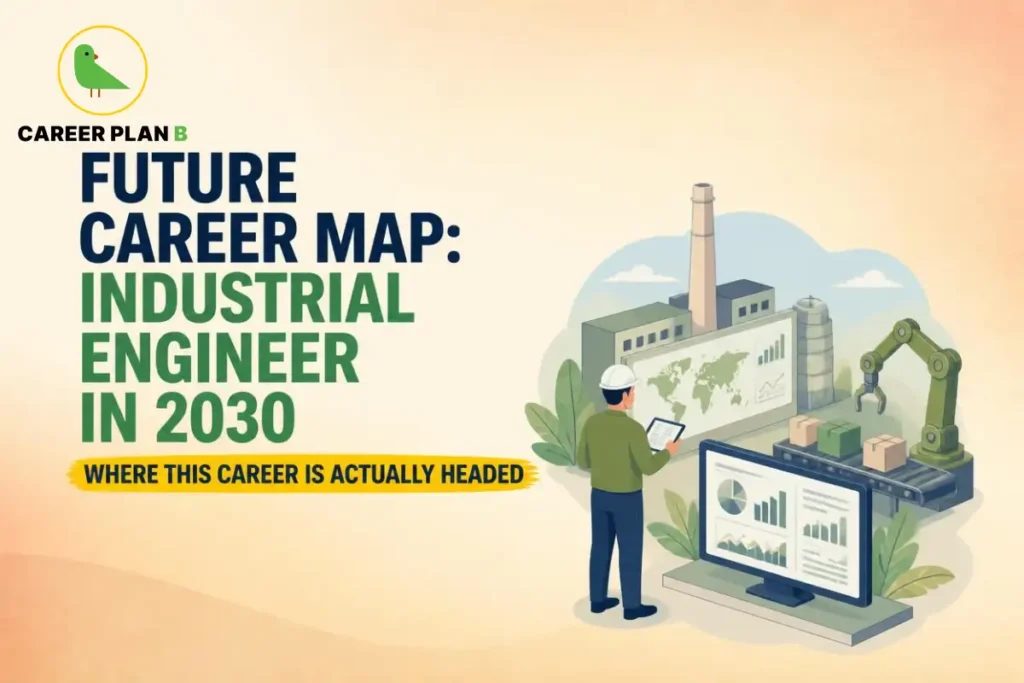
Introduction
The National Manufacturing Mission targets raising manufacturing’s share of India’s GDP from roughly 16 to 17 per cent today to 25 per cent by 2030, backed by a specific, five-theme implementation roadmap rather than a vague aspiration. Building a genuine future career map: being an industrial engineer in 2030 requires grounding your planning in these actual government timelines and targets, rather than relying on loose assumptions about “the future of manufacturing”. Most students planning a long career rarely map their trajectory against real policy milestones, missing valuable signals about where demand is genuinely headed over the next several years. This blog builds that map for you, tying real government targets to concrete career milestones you can actually plan around.
What Does India’s Manufacturing Sector Actually Look Like by 2030?
The National Manufacturing Mission’s Five Core Themes
According to the Press Information Bureau, the National Manufacturing Mission, introduced in the 2025-26 budget, structures its approach around five clear themes: easing and cutting the cost of doing business, preparing a future-ready workforce, strengthening the MSME sector, providing access to better technology, and ensuring high-quality output. This structured framework matters enormously for career planning, since it tells you precisely where government investment and attention will concentrate over the coming years, rather than leaving you to guess. Notably, this 25 per cent GDP target has already been revised twice, from 2022 to 2025 and now to 2030, reflecting genuinely persistent structural effort rather than a single quick policy push.
Job Creation Targets Behind This Push
Beyond the mission itself, related infrastructure initiatives are compounding this growth story considerably. Large infrastructure projects guided by the National Infrastructure Pipeline and PM Gati Shakti Master Plan are projected to create over 25 million jobs by 2030, with particularly strong growth expected in electric vehicles, renewable energy, and advanced manufacturing. Consequently, manufacturing jobs’ 2030 projections paint a picture of sustained, multi-sector demand rather than growth concentrated in just one narrow segment.
How Will the Day-to-Day Role of an Industrial Engineer Change by 2030?
Is this really going to reshape daily work, or will industrial engineering largely stay the same with a few new tools added? The evidence points toward genuine transformation rather than superficial change. The National Manufacturing Mission explicitly promotes Industry 4.0 adoption, including AI, IoT, and automation, as a core modernization strategy, meaning industrial engineers by 2030 will likely spend considerably more time interpreting data-driven insights and managing automated systems than earlier generations did. Therefore, this industrial engineering scope is genuinely widening to include digital and analytical skills alongside traditional systems optimization knowledge.
Three Career Milestones on the Path to 2030
2026-2027: Building Core Technical and Digital Foundations
In the early years, the priority is building strong industrial engineering fundamentals alongside digital literacy. The National Manufacturing Mission is already advancing workforce readiness through skilling initiatives led by the National Skill Development Corporation. Engineers entering the field should focus on internships and certifications that combine process optimization with basic data analytics. This combination builds a strong foundation for future Industry 4.0 roles.
2028-2029: Specializing as Industry 4.0 Adoption Accelerates
As the mission progresses, Industry 4.0 adoption is expected to accelerate across PLI-supported sectors. This shift will increase demand for industrial engineers with specialized technical skills. Areas such as predictive maintenance, digital twin modelling, and automated quality control will become especially valuable. At this stage, developing deep expertise will matter more than remaining a generalist. It can also lead to stronger career opportunities and higher earning potential.
2030: Leading Green and Technology-Integrated Manufacturing Systems
By the mission’s target year, green manufacturing is expected to become the industry standard rather than an emerging trend. The National Manufacturing Mission strongly supports renewable energy adoption and circular economy practices. Industrial engineers who combine technology integration with sustainability expertise will have a clear advantage. These skills can open opportunities for senior roles in modern, technology-driven manufacturing operations.
Which Sectors Will Need Industrial Engineers Most as 2030 Approaches?
The mission’s expanded Production Linked Incentive coverage across 14 sectors, including electronics, pharmaceuticals, and electric vehicles, signals where hiring demand will concentrate most heavily through 2030. Additionally, Make in India 2.0 specifically encourages Industry 4.0 investment through tax incentives for automation, alongside state-level initiatives like the Tamil Nadu Precision Engineering Mission and Maharashtra EV Mission, both of which are creating regional pockets of concentrated industrial engineering career demand in India. Green manufacturing initiatives, particularly around solar cells, EV batteries, and high-voltage transmission equipment, represent another genuinely fast-growing area worth watching closely as 2030 approaches.
Skills That Will Matter Most on This 2030 Career Map
Technical Skills: AI, IoT, and Green Manufacturing Practices
The mission places a strong emphasis on advanced technology adoption. Industrial engineers should build practical skills in AI-assisted process optimization, IoT-based monitoring systems, and green manufacturing practices such as circular economy design. By 2030, these industrial engineering skills will no longer be optional. They will become essential for modern manufacturing. This shift reflects the government’s vision for a more efficient, sustainable, and technology-driven manufacturing sector.
Why Skilling Initiatives Are Central to This Mission
Workforce readiness is one of the National Manufacturing Mission’s five core themes, not just a supporting initiative. The government is advancing this goal through the Skill India Mission and NSDC. These programmes provide vocational training and industry-focused certifications for both existing workers and new entrants. This strong institutional focus gives engineering students real support to develop emerging skills. As a result, they don’t have to build these competencies entirely on their own.
Career Roles and Growth Path Toward 2030
| Timeline | Typical Role | Focus Area |
|---|---|---|
| 2026-2027 | Junior Industrial Engineer | Core process optimization, basic digital literacy |
| 2028-2029 | Industry 4.0 Specialist / Process Engineer | Predictive maintenance, digital twin modeling, automation |
| 2030 | Manufacturing Excellence Lead / Green Operations Manager | Technology-integrated, sustainability-focused operations leadership |
Given the mission’s structured, multi-year timeline through 2030 and its explicit workforce-readiness priority, professionals who build strong industrial engineering careers in India’s foundations now, layered with digital and sustainability skills over time, are positioned for genuinely sustained demand.
How Career Plan B Helps
Career Plan B helps students and professionals make informed career decisions through personalized guidance, career assessments, and structured planning aligned with future industry trends.
Personalized Career Counselling: Provides expert guidance based on individual interests, skills, career goals, and industry opportunities. It helps students understand how industrial engineering can align with emerging sectors like Industry 4.0, green manufacturing, automation, and advanced manufacturing.
Psychometric & Career Assessment Tests: Identify strengths, personality traits, technical interests, and suitable career opportunities to help students choose the right specialization and build a career path that matches their abilities.
Career Roadmapping: Creates a clear step-by-step plan for achieving academic and professional goals by identifying required skills, certifications, internships, and specialization areas needed for future roles in industrial engineering and manufacturing.
Admission & Academic Profile Guidance: Helps students select suitable courses, colleges, certifications, and learning pathways while improving their academic profile for better opportunities in industrial engineering careers, manufacturing jobs, and technology-driven industries.
Get In Touch With Us
Frequently Asked Questions
Q1. Is industrial engineering a good long-term career bet through 2030?
Yes, particularly given the National Manufacturing Mission’s structured, multi-year timeline and its explicit focus on workforce readiness as a core priority.
Q2. What skills should I start building now for this 2030 trajectory?
Basic AI and IoT literacy, alongside strong traditional process optimization fundamentals, offer the most practical starting point for this evolving career path.
Q3. Which sectors will need the most industrial engineers by 2030?
Electronics, EVs, pharmaceuticals, and green manufacturing sectors under PLI coverage are expected to drive the strongest demand through this period.
Q4. Is green manufacturing a real part of this future, or just a talking point?
It’s a genuine mission priority, with specific policy support for renewable energy adoption and circular economy practices built into the National Manufacturing Mission’s framework.
Q5. How reliable are these government manufacturing targets?
The 25 per cent GDP target has already undergone two revisions, reflecting real but challenging progress. Therefore, treat these figures as directional priorities rather than guaranteed outcomes.
Conclusion
Building a genuine future career map as an industrial engineer in 2030 starts with the National Manufacturing Mission’s five-theme roadmap, not assumptions about where manufacturing is headed. As India works toward its 25% GDP target, Industry 4.0 adoption and green manufacturing will reshape the sector. Industrial engineers who develop digital and sustainability skills alongside their technical expertise will be well-positioned to lead this transformation by 2030. This roadmap also offers a rare advantage. It lets you align your skills with real government priorities instead of relying on guesswork.
If you’d like help building your own personalized career roadmap, a Career Plan B counsellor can help you plan the right path forward.