Team6 · August 12, 2026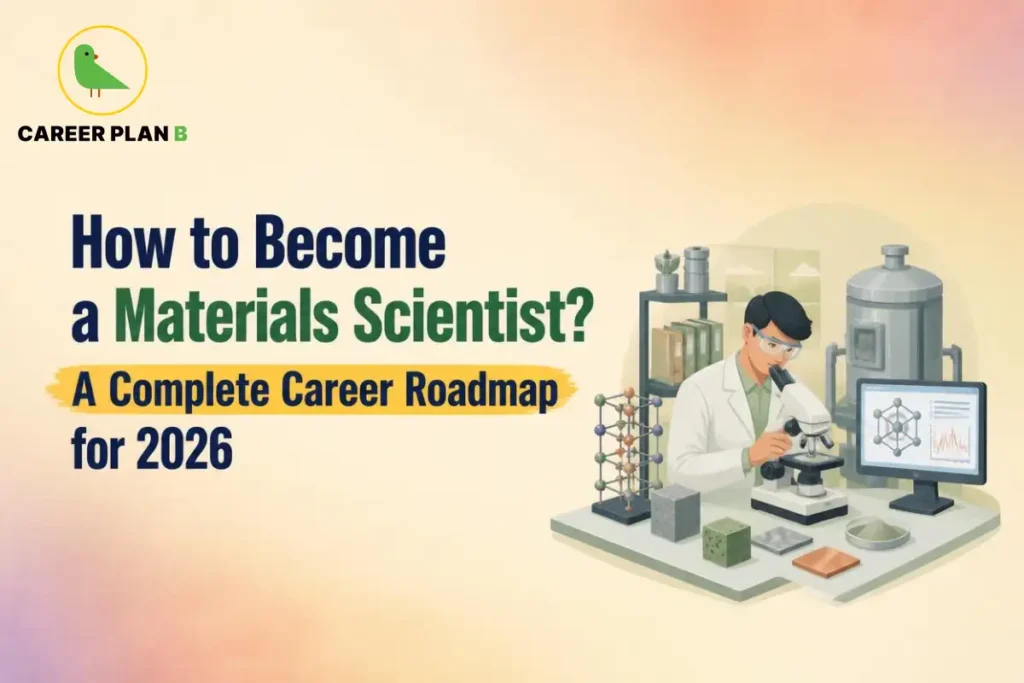
Introduction
Materials scientists sit behind nearly every major technology shift happening right now, from the batteries powering electric vehicles to the alloys used in fighter jets and the substrates inside semiconductor chips, yet most students never actually hear about how to become a materials scientist while planning their engineering path. Many students confuse this field with general mechanical or chemical engineering, completely missing its distinct educational route and highly specialized scope. This is genuinely unfortunate, since materials science sits at the technical core of India’s defence, semiconductor, and clean energy ambitions simultaneously. This blog walks through exactly what this role involves, the education path required, the skills that matter, and the real career scope waiting on the other side.
What Does a Materials Scientist Actually Do?
A materials scientist develops, tests, and improves the physical materials that go into nearly everything engineered around us: metals, polymers, ceramics, composites, and increasingly, semiconductor and battery materials. Rather than designing a finished product, materials scientists work one level deeper, figuring out which alloy composition resists corrosion best, which polymer withstands extreme heat, or which battery chemistry balances energy density with safety. This work sits at the intersection of chemistry, physics, and engineering, requiring both laboratory-based experimentation and, increasingly, computational simulation to predict how new materials will behave before they’re physically tested.
Educational Path to Becoming a Materials Scientist
Undergraduate Route: Metallurgical and Materials Engineering
The most direct path into this career starts with a bachelor’s degree in metallurgical and materials engineering, typically pursued after Class 12 with physics, chemistry, and mathematics, followed by entrance exams like JEE Main or JEE Advanced. Programmes in this discipline need approval from the All India Council for Technical Education (AICTE), the Government of India’s apex technical education regulator, ensuring your materials engineering eligibility and degree are properly recognized by employers and research institutions alike. Alternatively, students from mechanical, chemical, or even physics backgrounds can pivot into this field through targeted postgraduate specialization, since the fundamentals overlap considerably across these disciplines.
Postgraduate Specialization and Research Routes
For students genuinely interested in research-heavy roles, an M.Tech or M.S. in Materials Science, Nanotechnology, or a closely related specialization considerably strengthens your profile, particularly for roles at premier research institutions. Many of India’s top research bodies specifically prefer candidates with postgraduate research experience, since much of the actual value in this field comes from deep, specialized expertise rather than broad undergraduate knowledge alone.
Is This Career Actually Growing in India?
Is this a genuinely growing field or a niche specialization with limited scope? The evidence strongly suggests real, structural growth. India’s push toward domestic semiconductor manufacturing, battery cell production for electric vehicles, and indigenous defence alloys under the Atmanirbhar Bharat initiative all depend fundamentally on materials science expertise. Consequently, materials science career opportunities in India are expanding well beyond traditional metallurgy roles into cutting-edge areas like battery chemistry and semiconductor substrate development, sectors receiving significant government investment right now.
Government Research Routes Through GATE
DRDO’s Materials Science Recruitment via GATE
One of the most prestigious entry points into this field runs through the Defence Research and Development Organisation (DRDO), which recruits Scientist ‘B’ positions specifically in materials-related disciplines through the Graduate Aptitude Test in Engineering. Selected candidates join at Level-10 of the 7th Pay Commission matrix, with a basic pay of ₹56,100 and total emoluments reaching approximately ₹100,000 per month in metro cities, reflecting genuinely strong compensation for a research-focused government role. DRDO materials scientist positions specifically support the organization’s work across missiles, aeronautics, combat vehicles, and special materials research, making this route particularly attractive for students interested in defence applications.
Other Research Bodies Hiring Materials Scientists
GATE official website, maintained by the IIT hosting the exam that year, which conducts the dedicated metallurgical engineering paper relevant to this specialization.
Have Any Doubts?
Skills That Matter for This Career
Technical Skills: Characterization Techniques and Simulation Tools
nanotechnology careers and India-relevant techniques is becoming valuable too, as materials research pushes toward nanoscale engineering for applications in electronics and energy storage.
Research and Analytical Thinking
Career Roles and Growth Path
| Career Stage | Typical Role | Where You Might Work |
|---|---|---|
| Entry-Level | Junior Materials Engineer / Research Associate | DRDO labs, CSIR institutes, materials testing firms |
| Mid-Level | Materials Scientist / Research Scientist | ISRO, BARC, semiconductor or battery manufacturing companies |
| Senior-Level | Principal Scientist / Materials R&D Lead | Premier research institutions, large industrial R&D centers |
Given DRDO’s Scientist ‘B’ starting emoluments of approximately ₹100,000 per month in metro cities, alongside structured, merit-based promotion through its Flexible Complementing Scheme, this materials scientist salary India trajectory offers genuinely strong long-term growth for those who build deep research expertise early.
How Career Plan B Helps
Career Plan B helps students and professionals make informed career decisions through personalized guidance, career assessments, and structured planning for specialized career paths.
Personalized Career Counselling: Provides expert guidance based on individual interests, academic background, skills, and career goals. It helps students understand whether a research-oriented field like materials science aligns with their interests and long-term aspirations.
Psychometric & Career Assessment Tests: Identify strengths, personality traits, analytical abilities, and suitable career opportunities in areas such as materials engineering, nanotechnology, defence research, semiconductor technology, and advanced manufacturing.
Career Roadmapping: Creates a clear step-by-step plan covering degree selection, specialization choices, certifications, research opportunities, and skill development required to build a successful career as a materials scientist.
Admission & Academic Profile Guidance: Helps students select the right courses, colleges, entrance exam preparation strategies, and academic pathways while improving their profile for opportunities in research institutions, government organizations, and technology-driven industries.
Get In Touch With Us
Frequently Asked Questions
Q1. What subjects should I take in Class 12 to become a materials scientist?
Physics, Chemistry, and Mathematics are essential, since they form the foundation for both Metallurgical and Materials Engineering degree programs.
Q2. Is materials science the same as metallurgical engineering?
They overlap significantly, and most Indian universities offer them as a combined degree, though materials science extends further into polymers, ceramics, and semiconductor materials specifically.
Q3. Can I become a materials scientist without a PhD?
Yes, many entry and mid-level roles are accessible with a bachelor’s or master’s degree, though a PhD strengthens prospects considerably for senior research leadership positions.
Q4. Which industries hire materials scientists in India?
Defence, aerospace, semiconductor manufacturing, EV battery production, and various CSIR research laboratories all actively hire materials scientists.
Q5. What is the salary for a materials scientist in India?
DRDO’s Scientist ‘B’ role starts with total emoluments of approximately ₹1,00,000 per month in metro cities, with private sector pay varying by industry and specialization.
Conclusion
Understanding how to become a materials scientist reveals a specialized, research-driven career at the technical core of India’s strategic industries, including defence, semiconductors, and clean energy.
The path requires deliberate choices from an early stage. Start with the right undergraduate degree and consider postgraduate research specialization. This route can lead to prestigious research institutions and strong compensation through opportunities such as DRDO’s GATE-based recruitment.
For students fascinated by how materials behave at a fundamental level, this field offers a unique opportunity to contribute to cutting-edge national priorities.
If you want to know whether this specialized career suits your interests, a Career Plan B counsellor can help you plan the right educational route.