Team6 · September 30, 2026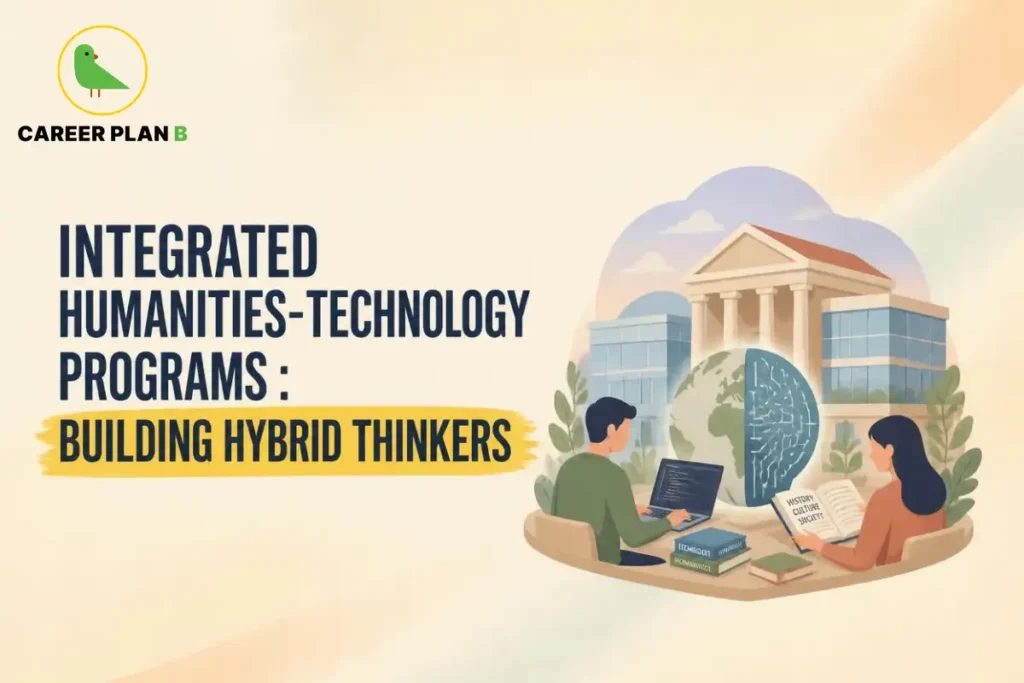
Introduction
Engineering and the humanities used to sit in separate boxes in India. That’s changing now. Integrated humanities-technology programs now exist at some of India’s top technical schools. They train what people call hybrid thinkers.
This guide covers where these programs actually exist, what makes them genuinely different, and how to get into one. It also covers real career scope for graduates. You can judge if it fits your own goals.
Why IITs Are Building These Programs Now
This shift didn’t happen by chance. The National Education Policy 2020 pushes hard for broad, mixed-subject learning, even at core tech schools.
Global rankings also reward schools that teach many subjects well. This adds real pressure for tech colleges to grow past pure engineering alone.
Real Examples of Integrated Humanities-Technology Programs
IIT Madras’s HSS Department
IIT Madras runs one of its oldest units in this space, the Department of Humanities and Social Sciences. It currently runs Master’s courses in Development Studies, Economics, and English Studies.
Students here also work next to engineering peers. HSS classes stay open to B.Tech and M.Tech students too.
IIT Guwahati’s Liberal Arts Programme
IIT Guwahati launched its own Master’s in Liberal Arts. It aims for cross-subject training in clear thinking and creativity. This aligns with NEP 2020’s own goals.
This programme mixes digital tools with humanities research directly.
What Makes a “Hybrid Thinker” Different
A hybrid thinker isn’t just someone with two unrelated degrees. It’s someone who moves between tech thinking and human-focused thinking with ease. They can do this in the same project.
This matters more now. Tech touches ethics, policy, and culture more directly than before. Pure tech skill alone often needs this wider view to work well in the real world.
How to Get Into These Programs
IIT Madras uses its own test, called HSEE, for its Master’s courses. Other schools set their own entry paths and rules.
Check each course’s exact entrance test and rules directly. These change by school and by department.
Career Scope for Hybrid Thinkers
Grads from these courses often move into policy work, research, publishing, and business strategy roles. Some also work in tech-linked fields, where knowing both users and systems matters directly.
This mix suits roles in tech ethics, UX research, and policy work tied to technology. Pure tech skill or pure humanities training alone often falls short here.
Step-by-Step Roadmap to Explore This Path
This path works best with real research, not a quick guess. Here’s a simple way to start.
- Research specific programmes at IITs and IIITs offering humanities-technology combinations.
- Check each programme’s entrance exam, like HSEE, along with its eligibility rules.
- Speak with current students or faculty about the actual day-to-day coursework.
- Consider whether you want research, policy, or tech-adjacent roles after graduating.
- Build a portfolio or writing sample that shows genuine cross-disciplinary thinking already.
Have Any Doubts?
Benefits, Challenges, and What the Data Says
These courses offer real, school-backed training that spans both tech and human-focused thinking. This is not just branding. NEP 2020 itself pushes this direction directly.
However, no official source tracks exact job demand for “hybrid thinkers” as a named group. Claims about specific market demand for this skill mix usually come from opinion pieces, not real data. Treat such claims as indicative only.
A real problem is that these stay newer, smaller courses next to standard engineering degrees. Fewer seats and less known branding can make them harder to explain to family or hiring staff.
How Career Plan B Helps
Figuring out if integrated humanities-technology programs fit your goals can feel unfamiliar territory. Career Plan B makes this easier through:
- Personalised Career Counselling: helping you weigh this path against more traditional single-discipline routes
- Psycheintel Career Assessment Tests: checking whether you genuinely lean toward cross-disciplinary thinking
- Admission and Entrance Exam Guidance: helping you understand HSEE and other specific entrance routes
- Structured Career Roadmapping: a clear plan from admission to a genuine hybrid-thinking career
Get In Touch With Us
Frequently Asked Questions
Q1.What is an integrated humanities-technology programme?
It’s a course combining humanities or social science training with a technical institute’s environment and resources.
Q2. Do I need an engineering background to apply?
Not usually. Most of these programmes admit students through their own specific entrance exams, not engineering ones.
Q3. What is HSEE?
It’s IIT Madras’s own entrance exam for its Humanities and Social Sciences Master’s programmes.
Q4. Are these programmes only available at IITs?
No. IIITs and some central universities also offer similar cross-disciplinary humanities-technology combinations.
Q5. Is there official data on job demand for hybrid thinkers?
No official dataset tracks this specifically. Treat such demand claims from other sources as indicative only.
Q6. What careers suit graduates of these programmes best?
Policy work, research, UX research, and tech-adjacent strategy roles all suit this kind of training well.
Conclusion
Integrated humanities-technology programs reflect a real, policy-backed shift in Indian higher education. NEP 2020 and institutes like IIT Madras and IIT Guwahati are building genuine paths for hybrid thinkers.
This path suits students who don’t want to choose between technical depth and human-centred thinking. Checking each programme’s specific entrance route and coursework helps you judge if it truly fits.
Connect with Career Plan B today to explore whether this hybrid path matches your own goals.