Team Career Plan B · September 30, 2026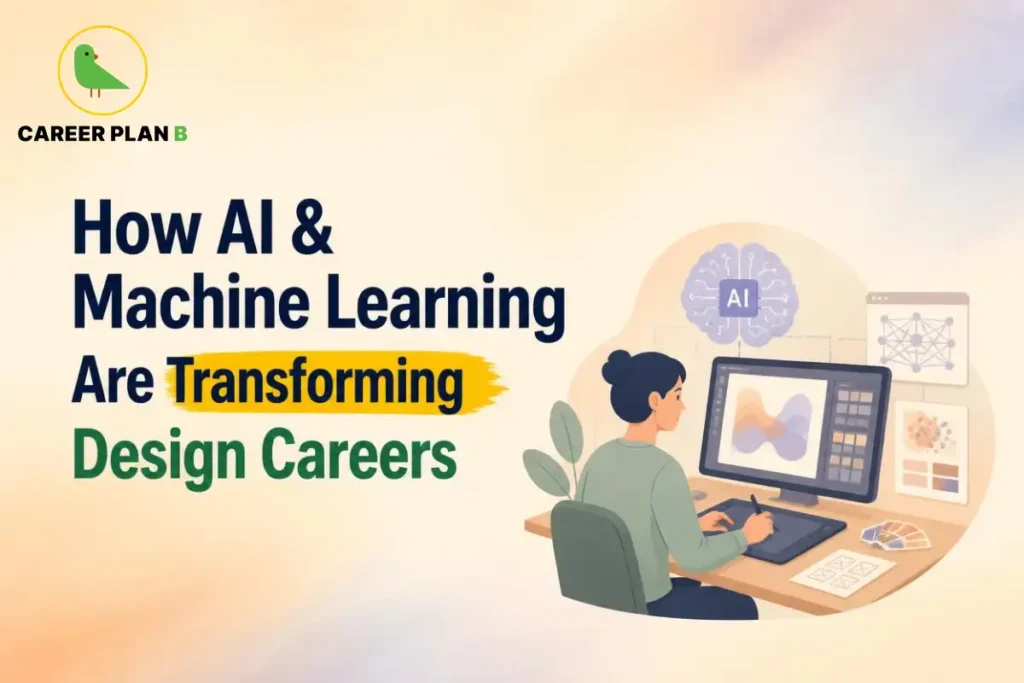
Introduction
Design work looks different than it did even two years ago. AI in design careers now shapes daily tasks, from first drafts to final polish. This isn’t a distant trend. It’s already changing how designers work in India today.
This guide covers what’s actually changing, and what isn’t. It looks at new roles this shift is creating. It covers the skills that matter more now, and real limits AI still has. By the end, you’ll have a grounded view, not just hype.
Why This Shift Is Backed by Real Policy, Not Just Hype
This isn’t just industry buzz. The Union Budget 2026-27 set aside ₹250 crore to build AVGC Content Creator Labs in 15,000 schools and 500 colleges. These labs teach AI-powered design tools directly.
The IndiaAI Mission backs this further, now supporting thousands of students in AI-related study. This is real, funded infrastructure, not just talk.
How AI Is Changing Day-to-Day Design Work
Faster First Drafts, Not Final Decisions
AI tools now generate rough drafts, layout options, and image variations in seconds. This speeds up the early stage of a project a lot.
The final judgement call, what actually looks right and works for the brand, still sits with the designer.
New Tools, Same Core Design Thinking
Tools like Adobe Firefly now come free to students through official partnerships tied to the Content Creator Labs. These tools change the process, not the core design thinking behind good work.
New Roles Emerging From This Shift
Roles like AI-assisted motion designer, prompt-based visual artist, and creative technologist are growing fast. These roles blend traditional design skill with new, AI-specific tool knowledge. Government-backed labs now support students building exactly this mix.
India’s creative and media sector could generate close to 20 lakh jobs by 2030. Many of these are new, hybrid roles.
Skills That Matter More Now
Prompt writing has become a real, practical design skill, not just a technical trick. Knowing how to ask an AI tool for the right result saves real time.
Post-production judgement matters more too, since raw AI output almost always needs a trained eye to refine and finish properly.
What AI Still Can’t Replace in Design
AI struggles with true originality tied to lived experience, culture, and specific brand history. It also can’t make final judgement calls about what genuinely resonates with a real audience.
Client relationships, creative direction, and strategy all remain firmly human tasks. The tools around them keep changing fast.
For Personalized Guidance
Step-by-Step Roadmap to Stay Relevant
- Learn at least one major AI design tool relevant to your specific creative field.
- Practice prompt writing as a real, standalone skill worth developing deliberately.
- Keep strengthening core design thinking, since tools change faster than good judgement does.
- Look into free resources like Content Creator Labs if you’re still in school or college.
- Build a portfolio that shows both AI-assisted work and your own creative judgement clearly.
Benefits, Challenges, and What the Data Says
Real government investment through IndiaAI and Content Creator Labs shows this shift is genuinely backed, not just a passing trend. New roles are emerging alongside real funding.
However, no official source tracks exact job-loss or job-creation percentages specifically for design roles due to AI. Claims about precise numbers usually come from private reports, not one verified government dataset. Treat such figures as indicative only.
A real challenge is that tools change faster than most training can keep up with. Staying current takes ongoing effort, not a one-time course.
How Career Plan B Helps
Figuring out how AI in design careers affects your own path can feel uncertain. Career Plan B makes this easier through:
- Personalised Career Counselling: helping you see how AI is reshaping your specific creative field
- Psycheintel Career Assessment Tests: checking whether your strengths lean toward tool skill or creative direction
- Admission and Academic Profile Guidance: helping you find AI-design training resources like Content Creator Labs
- Structured Career Roadmapping: a clear plan to build both AI tool skill and lasting design judgement
Get In Touch With Us
Frequently Asked Questions
Q1.Will AI replace design jobs entirely?
Unlikely soon. AI speeds up drafts and production, but human judgement and creative direction remain essential.
Q2. What skills should designers build for an AI-driven future?
Prompt writing, post-production judgement, and strong core design thinking all matter more now.
Q3. Are there free resources to learn AI design tools in India?
Yes. Content Creator Labs, backed by Budget 2026-27, offer free tools and training at partner schools and colleges.
Q4. Is there official data on how many design jobs AI will affect?
No official dataset tracks exact percentages for design specifically. Treat such figures from other sources as indicative only.
Q5. What new roles are emerging from this shift?
Roles like AI-assisted motion designer, prompt-based visual artist, and creative technologist are growing fast.
Q6. Does using AI tools replace the need for design skill?
No. AI speeds up drafts, but real design judgement still shapes the final, working result.
Conclusion
AI in design careers is a real, government-backed shift, not just hype. Tools now speed up drafts and production, but human judgement, culture, and creative direction still shape what actually works.
Designers who build both AI tool skill and strong creative thinking will likely do best. Ignoring the shift, or over-relying on tools alone, both carry real risk.
Connect with Career Plan B today to build a design career ready for this AI-driven shift.