Careerplanb · July 30, 2026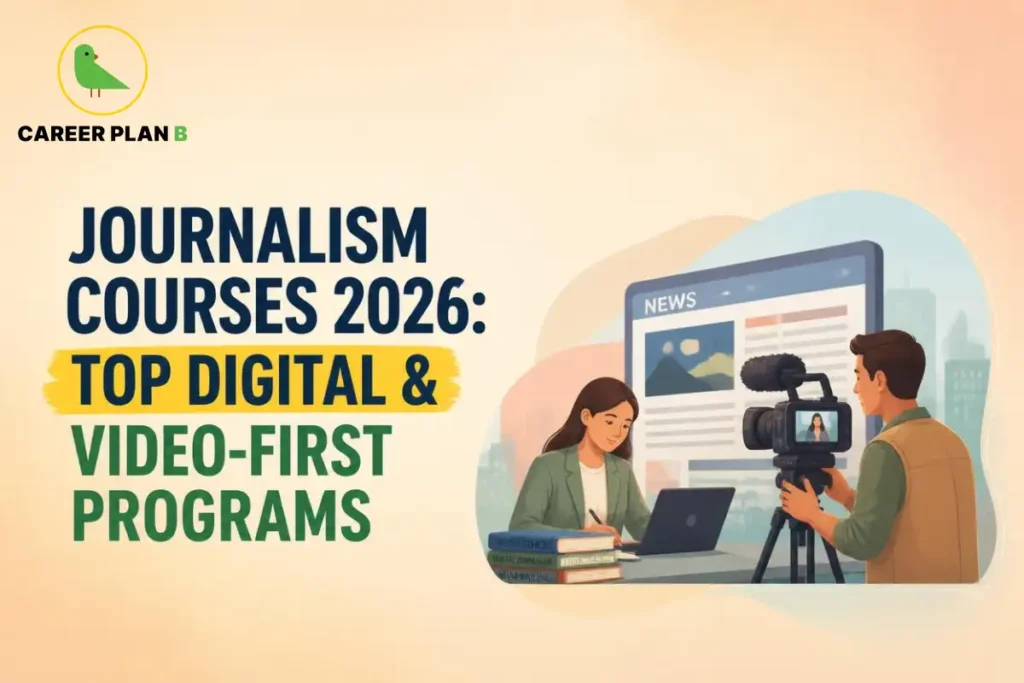
Introduction
Journalism today rarely means simply reporting for a newspaper. Instead, it spans mobile journalism, podcasts, video storytelling, and online newsrooms, alongside traditional print and broadcast work. This genuine shift is exactly why Journalism Courses After 12th now look considerably different than they did even five years ago.
So, which specific path actually suits you, digital, broadcast, or a broader combination? This guide breaks down real course options, eligibility, and honest salary data. By the end, Journalism Courses After 12th will feel like a clear, well-informed choice rather than a confusing list of options.
Why Has Journalism Genuinely Expanded Beyond Print and TV?
India’s media and entertainment industry is projected to reach 3.65 lakh crore rupees by 2028, driven significantly by digital platforms. Consequently, journalism education has genuinely evolved to include digital storytelling, content strategy, and multimedia formats, not just traditional reporting alone.
Furthermore, students today can specialise in current affairs, sports, mobile journalism, podcasts, or social media reporting, all under the broader journalism umbrella. Therefore, this field offers considerably more genuine choice than it did for previous generations of aspiring journalists.
Is Journalism Still Worth Pursuing Given So Much Digital Disruption?
Yes, genuinely so. While specific formats have changed, the core need for verified information, storytelling, and public communication remains stronger than ever. Therefore, students who adapt to digital-first skills alongside traditional journalism training remain genuinely well-positioned for this evolving field.
For Personalized Guidance
What Are the Eligibility Requirements for Journalism Courses After 12th?
Eligibility remains genuinely accessible across most institutes. Students from Arts, Commerce, and Science backgrounds can typically apply, provided they meet each university’s specific admission criteria.
| Course Type | Duration | Typical Eligibility |
|---|---|---|
| Certificate Course | 3 months to 1 year | Class 12 pass, any stream |
| Diploma in Journalism | 6 months to 1 year | Class 12 pass, often 45–50% aggregate |
| BA Journalism / BJMC | 3 years | Class 12 pass, merit or entrance-based |
| PG Diploma (Broadcast or Digital) | 1 year | Bachelor’s degree in any discipline |
Notably, admission processes vary considerably by institute. Some universities admit based purely on Class 12 merit, while others require entrance exams like CUET, GMCET, or institute-specific tests such as the JAIN Entrance Test.
Which Entrance Exams Actually Matter for Top Colleges?
The Indian Institute of Mass Communication conducts its own entrance exam for diploma and PG diploma courses. Additionally, CUET now covers many undergraduate journalism programmes broadly, while some private universities offer direct admission based on Class 12 marks alone.
Digital Journalism Course: What Does It Actually Teach?
Digital journalism has genuinely become one of the most in-demand specialisations within this field. Programmes focused here build skills specifically suited to online-first news consumption.
- Writing for Online News – crafting content optimised for digital reading habits and SEO visibility
- Mobile Journalism (MoJo) – reporting, shooting, and editing entirely using smartphone technology
- Social Media Reporting – breaking and covering news specifically for social platforms
- Multimedia Storytelling – combining text, video, and interactive elements within a single story
Consequently, students interested in online storytelling, content creation, and multimedia formats increasingly choose a PG Diploma in Digital Media specifically, rather than a purely traditional print-focused programme.
Broadcast Journalism Course: What Does It Actually Involve?
Broadcast journalism remains a genuinely strong specialisation for students drawn to on-camera and audio-based storytelling. This path trains students specifically for television and radio environments.
What Skills Does Broadcast Training Actually Build?
- News Anchoring – presenting news clearly and confidently on camera
- Field Reporting – gathering and delivering live, on-location news coverage
- Studio Production – understanding the technical side of TV and radio news production
- Script Writing for Broadcast – crafting concise, spoken-word news scripts distinct from written articles
Notably, students interested specifically in broadcast media can pursue a PG Diploma in TV and Radio Journalism, a focused, one-year programme combining theoretical knowledge with genuine hands-on studio and field training.
What Career Opportunities Do These Courses Actually Lead To?
This field offers genuinely diverse roles, extending well beyond the traditional “reporter” title alone. Depending on your specific specialisation, several distinct directions exist.
- Print or Digital Reporter – covering news for newspapers, magazines, or online publications
- News Anchor or Broadcast Journalist – presenting and reporting for television and radio
- Content Writer or Digital Editor – producing and refining written content for online platforms
- Photojournalist – capturing news through compelling, ethical photography
- Public Relations Officer – managing organisational communication and media relationships
Which Colleges Are Genuinely Worth Considering?
Reputed institutions include Delhi University, the Indian Institute of Mass Communication, Symbiosis Institute of Media and Communication, and Xavier Institute of Communication. Consequently, researching each institute’s specific specialisation strengths genuinely helps match your interest, whether broadcast, digital, or print, to the right programme.
What Salary Can You Actually Expect in Journalism?
Compensation varies considerably based on role, organisation, and experience level. However, current data offers a realistic picture for planning your career path.
How Does Salary Actually Grow With Experience?
Fresh graduates typically begin between two and a half and five lakh rupees annually, particularly in entry-level editorial, digital, or communication roles. However, salaries grow considerably over time, especially in digital media, public relations, and broadcast communication, particularly for professionals who combine strong skill with genuine field experience.
How Should You Actually Choose the Right Journalism Course?
Not every journalism course delivers equal practical training. Therefore, evaluate your options carefully before committing.
- Check for genuine hands-on practice, since writing reports, shooting video, and editing matter more than theory alone
- Match the specialisation to your genuine interest, whether broadcast, digital, or print journalism specifically
- Research internship and studio access, since practical exposure genuinely accelerates real-world readiness
- Compare faculty industry experience, prioritising instructors with genuine newsroom or studio backgrounds
A Word of Caution Before You Apply
Always verify an institute’s genuine accreditation and current curriculum details directly through its official website before applying. Additionally, confirm current CUET or institute-specific entrance exam details through official sources, since these processes and deadlines change every academic year.
How Career Plan B Helps
Deciding whether Journalism Courses After 12th, and specifically which specialisation, genuinely fit your interests takes more than a love for current affairs alone.This is where Career Plan B can help by offering:
- Personalised Career Counselling: Provides expert guidance based on individual interests, skills, and career goals, helping you decide between digital, broadcast, or print journalism specialisations.
- Psychometric & Career Assessment Tests: Identifies strengths, personality traits, and suitable career opportunities, useful for confirming genuine aptitude for reporting, writing, or on-camera work.
- Career Roadmapping: Creates a clear step-by-step plan to achieve academic and professional goals, including which journalism specialisation to pursue first.
- Admission & Academic Profile Guidance: Helps in selecting the right courses and colleges and improving academic profiles, so your journalism course choice is genuinely outcome-driven.
Get In Touch With Us
Frequently Asked Questions
1. What is the eligibility for Journalism Courses After 12th?
Most courses require Class 12 completion from any stream, Arts, Commerce, or Science, with some institutes requiring a minimum aggregate of 45 to 50 percent.
2. What is the difference between a Digital Journalism Course and a Broadcast Journalism Course?
A digital journalism course focuses on online writing, mobile journalism, and multimedia storytelling, while broadcast journalism specifically trains students for television and radio reporting.
3. Do I need to clear an entrance exam for journalism courses?
Not always. While some top institutes require exams like CUET or GMCET, many universities admit students based purely on Class 12 merit.
4. What is the average starting salary after a journalism course?
Fresh graduates typically start between two and a half and five lakh rupees annually, depending on role, organisation, and location.
5. Can I specialise in sports or mobile journalism specifically?
Yes, several institutes now offer focused programmes in sports journalism, mobile journalism, and digital media alongside traditional, broader journalism degrees.
Conclusion
Journalism today offers genuinely diverse paths, spanning digital storytelling, broadcast reporting, and traditional print work, all under one evolving profession. For students who care about accurate storytelling and public communication, this field provides real, expanding opportunities across India’s rapidly growing media landscape.
If you are still weighing which journalism specialisation genuinely suits you, thoughtful guidance can bring real clarity before you commit years of study. The right course, chosen carefully, can turn genuine curiosity about the world into a meaningful, sustainable career. Talk to a Career Plan B counsellor today to see which journalism path is right for you.