Team6 · July 17, 2026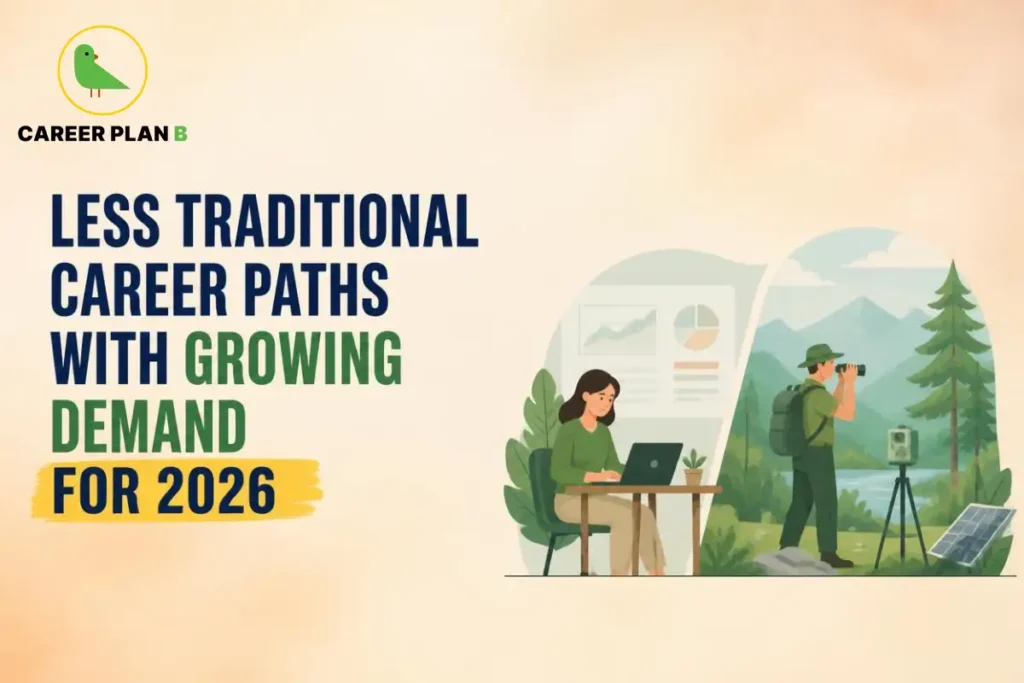
Introduction
What if your dream career is not one your school ever talked about and is a less traditional career? Today, career opportunities extend far beyond engineering, medicine, and management. Every year, more students are choosing professions that barely existed a decade ago. Flying certified drones, managing renewable energy systems, designing video games, creating immersive digital experiences, and working with emerging technologies have all become recognised career paths in India.
This guide explores some of the most promising unconventional careers in India for 2026. You will discover what each profession involves, the recognised education and certification pathways, essential skills, career prospects, and the factors driving demand. Whether you are a student planning your future or considering a career change, these emerging fields offer exciting opportunities with strong long-term growth.
Why Less Traditional Careers Are Gaining Ground?
India’s job market is diversifying quickly, supported by targeted government programmes. New sectors like drones, renewable energy, and gaming now have structured, official skilling routes.
This shift means students no longer need to choose only between a handful of conventional degrees. Government-backed certification paths are making niche fields more accessible and more credible.
Drone Piloting: A Licensed, Fast-Growing Career
Drone piloting has moved from a hobby to a regulated profession. The Directorate General of Civil Aviation (DGCA) requires a Remote Pilot Certificate for anyone flying drones commercially in India.
To get certified, candidates train at a DGCA-approved Remote Pilot Training Organisation. Training covers airspace rules, safety protocols, and practical flying skills before the final DGCA assessment.
Common roles after drone certification include:
- Agricultural drone operator
- Aerial mapping and survey pilot
- Infrastructure inspection pilot
- Drone service entrepreneur
Solar and Renewable Energy: Green Jobs with Government Backing
India’s renewable energy push has created a completely new skilled workforce category. The Ministry of New and Renewable Energy runs the Suryamitra Skill Development Programme for solar PV technicians.
This three-month residential programme is implemented through the National Institute of Solar Energy. It covers classroom training, lab practicals, and hands-on solar plant exposure.
Common roles after solar technician training include:
- Solar PV installation technician
- Solar operations and maintenance technician
- Solar water pumping system technician
- Renewable energy site supervisor
Gaming and the AVGC Sector: A Recognised Growth Industry
Gaming and animation careers are no longer seen as unconventional in India. The AVGC Promotion Task Force was set up by the Ministry of Information and Broadcasting. It has projected around 20 lakh jobs in this sector.
The task force has recommended a national curriculum framework for animation, gaming, and related degrees. This points toward stronger, more standardised education pathways in the coming years.
Common roles in this space include:
- Game designer
- Game artist
- Animation and VFX artist
- Narrative designer
Digital Skilling Paths for Other Emerging Roles
Beyond these three fields, several other emerging roles are supported through government skilling platforms. The Skill India Digital Hub hosts structured bootcamps across design, digital tools, and technology.
These programmes give students a faster, more accessible entry point into growing digital fields. Pairing a bootcamp certificate with real project work strengthens your profile significantly.
The Space Sector: India’s Newest Frontier for Careers
India’s space sector has opened up considerably to private players and new talent in recent years. This shift has created fresh, less conventional career opportunities beyond traditional aerospace engineering roles.
Opportunities are emerging in satellite data analysis, space-tech startups, ground station operations, and space policy research. Students with backgrounds in engineering, data science, or even policy studies can explore this space.
Common roles in this emerging space include:
- Satellite data analyst
- Ground station operations associate
- Space-tech startup associate
- Space policy and regulatory researcher
How to Start: A Step-by-Step Roadmap
Building a career in a less traditional field works best with a structured approach.
- Identify your field of interest. Choose between drones, renewable energy, gaming, or another emerging area.
- Check certification requirements. Some fields, like drone piloting, have mandatory government certification.
- Use official training platforms. Explore DGCA-approved RPTOs, NISE-run Suryamitra centres, or Skill India Digital Hub bootcamps.
- Gain hands-on exposure. Look for internships, on-the-job training, or apprenticeship components.
- Track policy updates. Sectors like AVGC and drones are evolving quickly with new rules and opportunities.
Benefits, Challenges, and What the Data Says
These fields offer genuine growth backed by active government investment and policy support. The AVGC sector alone is projected to create significant employment over the next decade.
However, official sources do not publish a single consolidated salary dataset across all these fields. Instead of estimating figures, this guide encourages you to verify current compensation trends directly. Check official training platforms and industry placement records.
Challenges include contractual or project-based work in some roles, and evolving regulations in newer sectors like drones. Some fields also require residential training, which may involve relocation for a few months. Staying updated on official guidelines helps you navigate these changes confidently.
Have Any Doubts?
The Future of Less Traditional Career Paths Toward 2030
Government support for these sectors continues to expand steadily. Drone regulations are becoming clearer, and solar skilling programmes are scaling up. The AVGC sector is also moving toward a national mission.
This points toward less traditional careers becoming mainstream, structured options by 2030. Early movers who build certified, practical skills now stand to benefit the most.
How Career Plan B Helps
Understanding which non-traditional career path fits you can feel overwhelming without guidance. Career Plan B simplifies this through:
- Personalised Career Counselling: matching your academic stream and interests to the right emerging field
- Psycheintel Career Assessment Tests: determining whether your strengths align better with technical, hands-on, or creative non-traditional roles
- Admission and Academic Profile Guidance: helping you identify recognised certification and training platforms for your chosen field
- Structured Career Roadmapping: a clear step-by-step plan toward your target role, including certification and skilling milestones
For Latest Information
Frequently Asked Questions
Q1. Is drone piloting a legally recognised career in India?
Yes. DGCA regulates commercial drone piloting, and a Remote Pilot Certificate is mandatory for commercial operations.
Q2. Do I need a science background for solar technician training?
Not necessarily. The Suryamitra programme accepts candidates with Class 12 or ITI and diploma qualifications.
Q3. Is the gaming industry considered a stable career option in India?
It is growing steadily, backed by the AVGC Promotion Task Force and projected job creation over the next decade. Government-recommended curriculum standards are also expected to add more structure to this career path.
Q4. Can students without an engineering degree enter these fields?
Yes. Many of these paths rely on certification and hands-on training rather than a specific degree.
Q5. Are these careers recognised by the government?
Yes. Each field discussed here is backed by a specific ministry, regulator, or dedicated task force.
Q6. How is demand expected to change by 2030?
Demand is expected to grow as policy support, national missions, and skilling infrastructure continue to expand across these sectors.
Conclusion
Less traditional career paths are becoming credible, structured options in India for 2026.
Fields like drone piloting, solar technology, and gaming each offer official certification routes. DGCA, MNRE, and the AVGC Task Force make this possible. These paths combine growing demand with real government backing.
Start by identifying your field of interest, checking certification requirements, and gaining hands-on training.
Ready to explore a career path beyond the conventional? Connect with a Career Plan B counsellor for personalised career guidance, expert recommendations on certification programmes, and a customised roadmap to help you build a successful career in one of India’s fastest-growing industries.