Team Career Plan B · July 17, 2026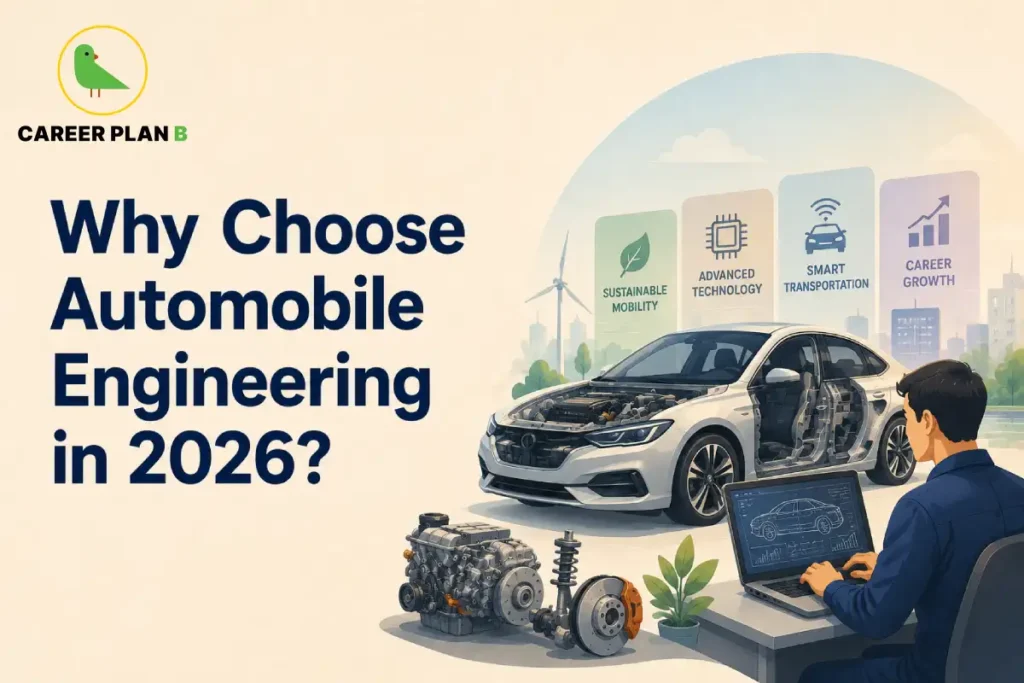
Introduction
If you’re finishing school and weighing your engineering options, you might be wondering: why choose automobile engineering in 2026, especially when so many students are drawn towards newer, trendier fields? It’s a fair question, but here’s the thing: automobile engineering hasn’t stayed still. It has grown alongside electric vehicles, automation, and sustainable mobility, making it a genuinely exciting field right now. This blog walks through why this branch still makes sense today, what career paths look like, and how to know if it’s the right choice for you.
Is Automobile Engineering Still Relevant in 2026?
It’s a common doubt: with so much talk about EVs and AI, does a “traditional” branch like automobile engineering still hold up? The answer is yes, but the field itself looks quite different from a decade ago. Rather than declining, automobile engineering has expanded to include electric vehicle systems, automation in manufacturing, and sustainability-focused design. This evolution reflects the broader automobile engineering scope of 2026, which now spans far more than traditional combustion-engine vehicles.
Top Reasons to Choose Automobile Engineering in 2026
Here are some of the strongest reasons to study automobile engineering this year and beyond.
Growing EV and Sustainable Mobility Sector
Electric vehicles continue to expand globally and in India, creating demand for engineers skilled in battery systems, EV architecture, and sustainable design.
Rising Automation and Robotics Integration
Modern vehicle manufacturing increasingly relies on robotics and automated systems, opening up newer, technology-driven roles within the field.
Strong Government Push for Domestic Manufacturing
India’s push toward becoming a global manufacturing hub for vehicles and components is creating fresh opportunities for automobile engineers across the country.
Diverse Career Paths Across Traditional and Emerging Roles
From vehicle design and testing to EV systems and automation, this field offers a wide variety of specializations to explore based on your interests.
Global Demand Alongside Domestic Growth
Automobile engineering skills are valued internationally, giving students the flexibility to explore opportunities both within India and abroad.
What Does a Career in Automobile Engineering Look Like After 12th?
For students exploring automobile engineering after 12th, the typical path involves pursuing a bachelor’s degree in automobile or mechanical engineering, often with automobile-specific specializations available at many institutions. From there, students can choose to specialize further in areas like EV systems, vehicle design, manufacturing, or automation, either through electives during their degree or postgraduate specialization.
Entry-level roles typically include positions like graduate engineer trainee, design engineer, or quality engineer, with opportunities to move into more specialized roles as experience grows.
Is Automobile Engineering Worth It in 2026?
This depends largely on your interests, but the broader signs are encouraging. With India’s strong push toward EV manufacturing, sustainable transport, and automation, automobile engineering job prospects are closely tied to sectors that are actively expanding rather than shrinking.
That said, like any field, success depends on staying updated with evolving technologies and building relevant skills beyond just classroom learning. Students who combine core automobile engineering knowledge with newer skills like EV systems or automation tend to have stronger, more adaptable career prospects.
Have Any Doubts?
How India Is Supporting This Field
Several government initiatives reflect why this remains a promising time to enter automobile engineering. AICTE has been updating technical curricula to include emerging areas like electric vehicles, automation, and sustainable mobility, ensuring students graduate with industry-relevant skills. The Ministry of Heavy Industries continues to support domestic vehicle and component manufacturing through various schemes aimed at strengthening India’s automotive ecosystem. ARAI also plays a key role in setting testing and safety standards, ensuring that vehicles, including newer EV and automated systems, meet national benchmarks. These combined efforts point toward continued growth in the future of automobile engineering, both in terms of technology and career opportunities.
How Career Plan B Helps
Still unsure if automobile engineering is the right choice for you in 2026? Career Plan B can help you decide with confidence. Through personalised career counselling, PsycheIntel and career assessment tests, and admission and academic profile guidance, we help you understand whether this field matches your interests and strengths. Our career roadmapping process also guides you on choosing the right college, specialization, and skills to build a strong, future-ready career.
For Latest Information
Frequently Asked Questions
- Is automobile engineering a good choice right after 12th?
Yes, especially for students interested in vehicles, mechanical systems, and emerging technologies like EVs and automation. It offers a strong foundation with diverse specialization options later on.
- Does automobile engineering have good job prospects in 2026?
Yes, supported by growing EV adoption, manufacturing expansion, and automation trends across the automotive sector in India and globally.
- Is automobile engineering different from mechanical engineering?
Yes, while there’s overlap in core subjects, automobile engineering focuses specifically on vehicle systems, design, and technologies, whereas mechanical engineering covers a broader range of industries.
- Do I need to specialize in EVs to have good career prospects?
Not necessarily, though building some EV-related knowledge alongside your core skills can improve your career flexibility, given the sector’s growth.
- Is this field only about mechanical design, or does it include technology like automation?
It includes both. Modern automobile engineering blends traditional mechanical design with newer areas like automation, robotics, and electric vehicle systems.
- Should I choose automobile engineering if I’m also interested in AI or software?
Yes, this can actually be an advantage, since automation and AI are increasingly integrated into modern vehicle design and manufacturing processes.
Conclusion
So, why choose automobile engineering in 2026? Because the field has evolved into something far broader and more dynamic than its traditional image, blending vehicle design with electric mobility, automation, and sustainability. For students genuinely interested in how vehicles work and where they’re headed, this remains a smart, future-ready choice. If you’d like personalized guidance on whether this path suits you, Career Plan B is here to help you plan the way forward.