Deepti · October 23, 2026
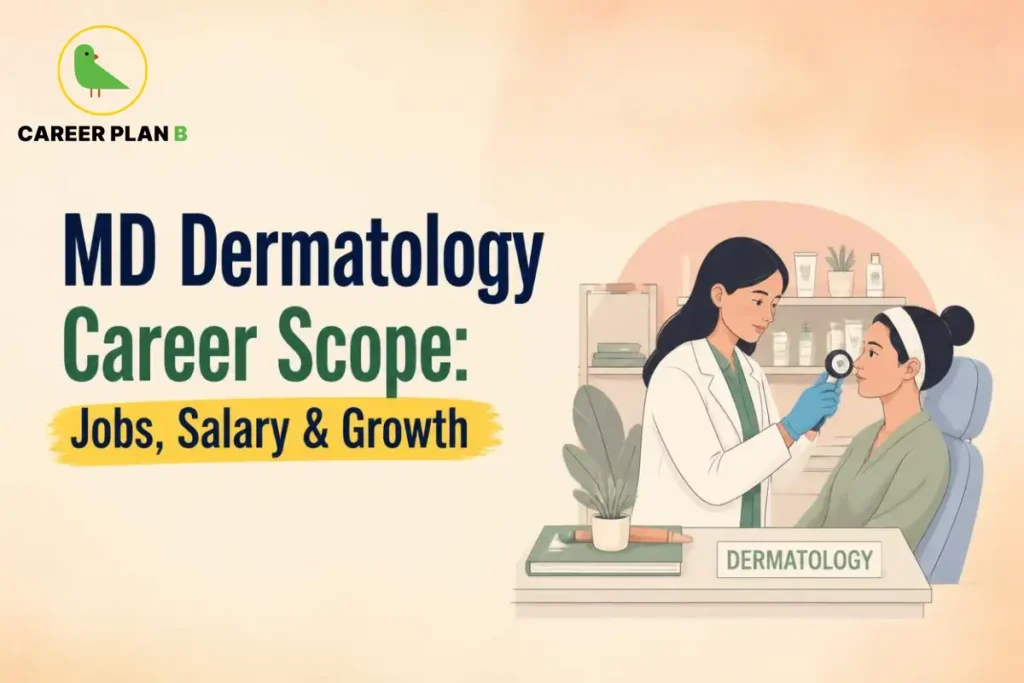
The MD Dermatology Career Scope in India covers clinical practice, government and private hospital jobs, aesthetic dermatology, research, teaching and independent practice. Doctors can build careers in medical dermatology or develop skills in specialized procedures and treatments. Your career path after MD Dermatology will depend on your clinical interests, experience, additional training and preferred work setting.
What Are the Career Options After MD Dermatology?
MD Dermatology, Venereology and Leprosy prepares doctors to diagnose and manage skin, hair and nail disorders, sexually transmitted infections and leprosy. The National Medical Commission’s postgraduate curriculum outlines clinical knowledge, diagnostic skills, treatment planning, procedural training and academic competencies for postgraduate specialists.
Graduates can explore several MD Dermatology Career Options:
| Career option | Main responsibilities |
|---|---|
| Clinical dermatologist | Diagnose and treat skin, hair and nail conditions. |
| Hospital consultant | Manage dermatology cases in multispecialty and specialty hospitals. |
| Government dermatologist | Provide specialist care in eligible public hospitals and health institutions. |
| Aesthetic dermatologist | Perform appropriate cosmetic and procedural treatments after relevant training. |
| Academic dermatologist | Teach medical students and residents, subject to institutional eligibility. |
| Clinical researcher | Participate in dermatology studies, clinical trials and treatment research. |
| Pharmaceutical professional | Explore medical affairs, scientific communication and dermatology-related drug research. |
| Private clinic owner | Build an independent practice and manage patient care and clinic operations. |
Doctors can work in government hospitals, medical colleges, corporate healthcare groups, skin clinics, research institutions and pharmaceutical companies. Their qualifications, experience and technical skills determine which positions they can pursue.
Medical graduates still comparing postgraduate specialties can explore Career Plan B’s guides to MD Radiation Oncology colleges in Uttarakhand and MD Respiratory Medicine colleges in Uttarakhand.
What Is the MD Dermatology Salary in India?
The MD Dermatology Salary varies by location, employer, experience, designation, working hours and practice model. Government pay structures, hospital employment contracts and private practice generate different earnings.
An official ESIC Hospital Jajmau recruitment notice dated January 7, 2026 provides a useful example of specialist compensation. The notice included a vacancy in Dermatology and STD and published the following contractual remuneration for full-time specialists.
| Position or contract | Published monthly remuneration |
|---|---|
| Junior specialist, Level 11 | ₹1,39,462 |
| Senior specialist, Level 12 | ₹1,62,328 |
| Part-time specialist, 16 hours per week | ₹60,000 |
The junior and senior specialist figures applied to the experience requirements specified in the notice: three years after a postgraduate degree for the junior role and five years for the senior role. Eligible specialists could receive transport allowance and applicable DA on transport allowance under the stated terms. The part-time arrangement included separate provisions for emergency visits and additional hours.
These figures represent a specific government hospital’s contractual pay structure, not a guaranteed starting salary or a national average. Fresh MD graduates may need to gain experience before qualifying for specialist positions with these terms.
What affects a dermatologist’s earnings?
- Experience and designation: Senior consultants and experienced specialists may qualify for different compensation structures.
- Location: Pay and patient demand vary across cities, towns and rural areas.
- Employment setting: Government institutions, corporate hospitals and private clinics follow different compensation models.
- Clinical skills: Relevant procedural training can expand the services a dermatologist provides.
- Practice model: Salaried doctors receive employment compensation, while clinic owners bear operating costs and business risks.
Private clinic revenue does not equal personal income. Rent, staff salaries, equipment, consumables, taxes and other expenses affect the owner’s earnings.
For Personalized Guidance
What Is the MD Dermatology Stipend During Training?
The MD Dermatology Stipend refers to the monthly payment a postgraduate resident receives during training. The amount depends on the institution, state rules, training year and applicable policies.
For example, Malankara Orthodox Syrian Church Medical College’s official stipend disclosure lists the following MD/MS resident stipends for the 2026–27 financial year.
| Training year | Monthly stipend |
|---|---|
| First year | ₹57,876 |
| Second year | ₹58,968 |
| Third year | ₹60,060 |
These figures provide an institutional example, not a nationwide MD Dermatology stipend rate. Students should check their allotted college’s current disclosure before estimating their income during residency.
Are Government Jobs After MD Dermatology Available?
Yes. Government Jobs After MD Dermatology can include specialist and senior resident positions in government hospitals, public medical institutions and eligible healthcare services.
The ESIC recruitment notice illustrates how public institutions recruit dermatology specialists and senior residents. The notice specified different qualifications, experience requirements and remuneration for each role.
Doctors can explore these government career routes:
- Specialist or consultant: Diagnose and treat patients in public hospitals.
- Senior resident: Gain clinical and teaching experience in a medical college or hospital.
- Medical faculty: Pursue academic roles that match the institution’s qualification and experience requirements.
- Research professional: Join eligible government-funded dermatology projects or clinical studies.
Candidates must check recruitment notices for vacancies, registration requirements, experience, pay levels and selection criteria. An MD degree does not automatically qualify a doctor for every faculty or senior specialist position.
What Are the Private Jobs After MD Dermatology?
Private Jobs After MD Dermatology offer options across corporate hospitals, multispecialty hospitals, skin clinics, aesthetic centres and research organisations.
Doctors can pursue the following roles:
- Hospital dermatologist: Manage outpatient consultations, inpatient referrals and complex skin conditions.
- Consultant dermatologist: Provide specialist services in established clinics or hospitals.
- Aesthetic dermatologist: Deliver appropriate cosmetic treatments within the doctor’s training and competence.
- Clinical research professional: Support clinical trials, treatment studies and research projects.
- Pharmaceutical professional: Explore medical affairs, scientific communication and dermatology-related drug development.
Private employers may assess clinical skills, patient management, procedural experience, communication and relevant additional training. Research and pharmaceutical roles may require knowledge of clinical trial processes, research methods or medical writing.
Is MD Dermatology Private Practice a Good Career Option?
MD Dermatology Private Practice suits doctors who want more control over their schedule, clinical services and long-term professional development.
A dermatologist can open an independent clinic, join an existing practice or gradually develop a patient base alongside suitable hospital work. A clinic may offer consultations, treatment for chronic skin conditions, hair and scalp care, and selected dermatological procedures.
What should you consider before opening a clinic?
- Clinical competence: Treat conditions within your training and refer patients when necessary.
- Location: Assess local patient needs, competition and access to healthcare facilities.
- Initial investment: Estimate rent, equipment, staff costs, consumables and other operating expenses.
- Patient trust: Build a reputation through safe treatment, clear communication and appropriate follow-up.
- Financial planning: Track revenue and expenses before estimating your take-home income.
Aesthetic services can expand a clinic’s offerings, but they require appropriate training, suitable equipment and patient-safety practices. Doctors should avoid investing in expensive procedures simply because another clinic offers them.
What Is the Future Scope of MD Dermatology?
The MD Dermatology Future Scope includes traditional clinical care, specialized treatments, procedural dermatology, teaching and research. The National Medical Commission’s curriculum covers clinical management, diagnostic and therapeutic procedures, and the skills needed to keep pace with advances in the specialty.
Dermatologists can build expertise in several areas:
- Dermatosurgery: Selected skin procedures and surgical management of suitable conditions.
- Aesthetic dermatology: Evidence-based cosmetic and procedural treatments.
- Trichology: Hair and scalp disorders.
- Paediatric dermatology: Skin conditions affecting infants, children and adolescents.
- Dermatopathology: The study of skin diseases through tissue examination and diagnostic collaboration.
- Clinical research: Evaluation of treatments, medicines and diagnostic approaches.
Aesthetic and procedural dermatology can offer additional career opportunities for doctors with relevant training. Actual demand and earnings depend on local competition, patient needs, clinical reputation and the services a doctor can safely provide.
What Further Studies Can You Pursue After MD Dermatology?
A Fellowship After MD Dermatology can help doctors gain focused experience in a particular clinical or procedural area. The right programme depends on the doctor’s career goals, eligibility and preferred type of practice.
For example, St. John’s Medical College’s official fellowship listings include programmes in dermatosurgery, paediatric dermatology and dermatopathology. The listed dermatosurgery fellowship runs for 18 months, while the paediatric dermatology and dermatopathology fellowships run for 12 months. The institution specifies separate eligibility requirements for each programme.
Doctors should distinguish formal qualifications from university-affiliated fellowships, institutional training programmes and short certificate courses. Not every focused area requires or offers a separate nationally recognised super-specialty degree. Candidates should verify the course’s recognition, eligibility, duration and clinical training before enrolling.
Further training can support career development in dermatosurgery, paediatric dermatology, dermatopathology and other focused areas. Doctors interested in teaching or research can explore relevant academic programmes and research experience based on institutional requirements.
How Career Plan B Helps
Choosing the right Career After MD Dermatology pathway requires a clear understanding of your interests, strengths and long-term goals.
Career Plan B offers Personalized Career Counselling, PsycheIntel and Career Assessment Tests, Admission and Academic Profile Guidance, and Career Roadmapping.
These services help medical graduates assess suitable career paths and plan their next professional steps.
Get In Touch With Us
FAQs
Q1. What are the best career options after MD Dermatology in India?
Doctors can pursue clinical practice, hospital jobs, government service, teaching, research, aesthetic dermatology and independent practice.
Q2. What is the starting salary after MD Dermatology?
The starting salary depends on the employer, location, role and experience. Check current recruitment notices for reliable pay details.
Q3. Are government jobs after MD Dermatology available in India?
Yes, government hospitals, ESIC institutions and eligible medical colleges recruit dermatology specialists and senior residents when vacancies arise.
Q4. Is a fellowship after MD Dermatology necessary?
No, doctors can practise within their qualifications and registration. A relevant fellowship can help them develop expertise in a focused area.
Q5. What is the career path after MD Dermatology for doctors interested in aesthetics?
Doctors can gain suitable procedural training, build clinical experience and develop an aesthetic practice within their competence and applicable professional regulations.
Conclusion
The MD Dermatology Career Scope extends from hospital practice and government service to private clinics, aesthetics, research and advanced training. Which path matches your skills and ambitions? Explore your options, verify the requirements and plan your next move with Career Plan B.