Deepti · October 23, 2026
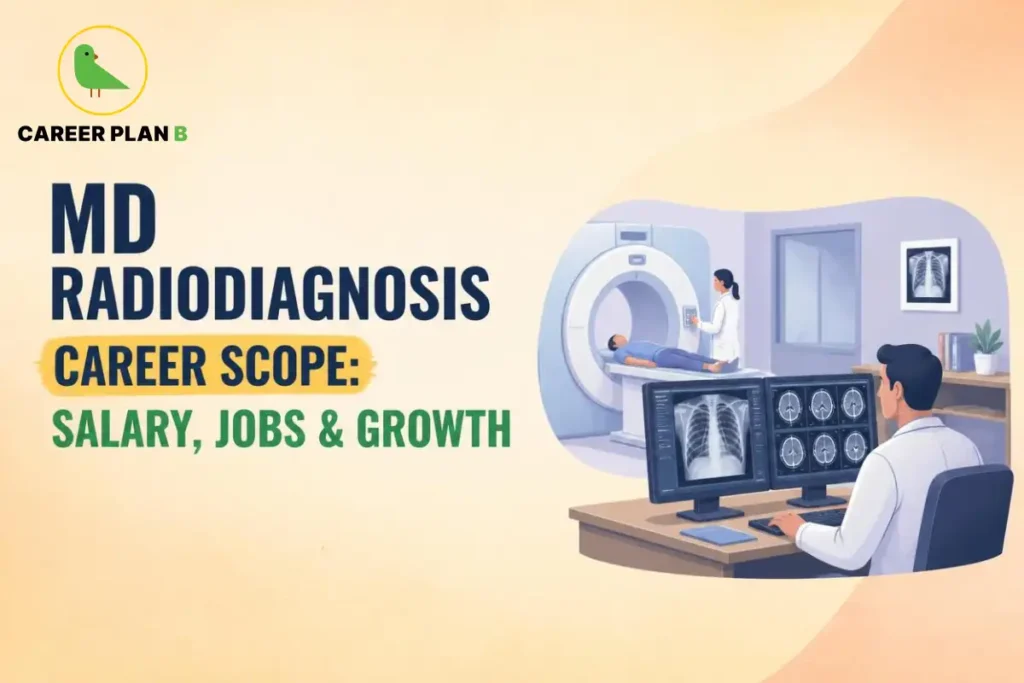
MD Radiodiagnosis career scope in India covers hospital jobs, diagnostic centres, government services, private practice, and advanced imaging specialisations. Doctors can build careers in clinical reporting, interventional radiology, medical teaching, or research.
The right path depends on your clinical interests, salary expectations, and long-term goals. Understanding the available options can help you choose a career that fits your skills and preferred work environment.
What Is the Career Scope After MD Radiodiagnosis?
MD Radiodiagnosis is a postgraduate medical specialisation that trains doctors to interpret medical images and support clinical diagnosis. Radiologists work with X-rays, ultrasound, computed tomography (CT), magnetic resonance imaging (MRI), and other imaging methods.
The NMC covers diagnostic and interventional imaging, research, teaching, and several subspecialties. These include neuroradiology, gastrointestinal imaging, musculoskeletal imaging, paediatric radiology, and women’s imaging.
People often use MD Radiology as shorthand for MD Radiodiagnosis. The official course nomenclature and the relevant recruitment notice should guide your academic and professional decisions.
MD Radiodiagnosis Career Options: Which Jobs Can You Choose?
Doctors can explore several career paths after completing MD Radiodiagnosis.
| Career option | Main responsibilities |
|---|---|
| Consultant radiologist | Interpret scans and prepare diagnostic reports for hospitals or imaging centres. |
| Hospital radiologist | Support clinical teams with imaging findings and diagnostic decisions. |
| Teleradiologist | Review and report medical images through remote reporting systems. |
| Interventional radiologist | Perform image-guided procedures after suitable training and competency development. |
| Academic radiologist | Teach medical students and residents, conduct research, and pursue eligible faculty positions. |
| Subspecialist radiologist | Develop expertise in areas such as neuroradiology, breast imaging, or musculoskeletal imaging. |
Your first job does not have to define your entire career. A doctor may begin with general diagnostic reporting, gain experience with advanced imaging, and pursue a subspecialty later.
Choosing a training institution also matters. Students still comparing postgraduate options can explore Career Plan B’s guides to Top 7 Deemed Medical Colleges in India for MD Radiodiagnosis 2026 and Top 3 Private MD Radiodiagnosis Colleges in Uttarakhand 2026.
Government Jobs After MD Radiodiagnosis vs Private Jobs
Doctors can pursue employment in both public and private healthcare settings. Each route offers a different mix of responsibilities, pay structures, and opportunities for growth.
Government employment
Government jobs after MD Radiodiagnosis may include senior resident, specialist, medical officer, and eligible medical college faculty positions. Recruitment notices from government institutions specify the required qualifications, experience, age limits, and pay scale.
For example, the Employees’ State Insurance Corporation (ESIC) published a 2025 Senior Resident recruitment notice listing a basic pay of ₹67,700 per month at Level 11, plus applicable allowances. The notice included a Radiology vacancy.
Private employment
Private jobs after MD Radiodiagnosis may include positions with multispecialty hospitals, corporate diagnostic networks, standalone imaging centres, and teleradiology services.
Doctors should compare fixed pay, reporting workload, duty hours, equipment access, and opportunities to develop specialist skills. A higher advertised salary may not always offer the best balance of income, training, and work-life preferences.
For Personalized Guidance
MD Radiodiagnosis Salary in India
MD Radiodiagnosis salary depends on experience, employer, city, clinical responsibilities, reporting volume, and specialist skills. Government recruitment notices provide useful reference points, while private employers set compensation according to their hiring needs.
The following official recruitment examples illustrate the published pay structures:
| Recruitment example | Published compensation |
|---|---|
| ESIC Senior Resident, 2025 notice | ₹67,700 monthly basic pay at Level 11, plus applicable allowances |
| Tata Memorial Centre Medical Officer ‘D’ (Radiodiagnosis) | ₹67,700 monthly basic pay at Level 11, plus applicable allowances |
The ESIC recruitment notice and Tata Memorial Centre’s recruitment listing provide the underlying details. The TMC role specified MD/DNB in Radiology or Radiodiagnosis and one year of post-qualification experience in a teaching hospital.
These figures are examples of advertised public-sector pay, not a national average or a guaranteed starting salary. Allowances, deductions, eligibility conditions, and recruitment dates affect the final offer. Private-sector compensation requires a separate assessment of the employer’s current terms.
Doctors can improve their career prospects by strengthening reporting accuracy, gaining exposure to advanced imaging, developing procedural skills, and building professional relationships with clinical teams.
MD Radiodiagnosis Stipend: Residency vs Fellowship
The MD Radiodiagnosis stipend during residency varies by state, college, and institution. Medical colleges publish their own stipend rules and payment schedules. Candidates should check the official notice from their allotted institution instead of relying on a single national figure.
A fellowship after MD Radiodiagnosis may offer a separate monthly stipend. The amount depends on the programme, training structure, and employment terms.
| Training stage | What determines payment? |
|---|---|
| MD residency | State policy, institution, and applicable stipend rules |
| Senior residency | Recruitment terms, pay level, and allowances |
| Post-MD fellowship | Programme-specific stipend, duration, and eligibility |
Compare the monthly payment with tuition or course fees, accommodation costs, duty hours, and learning opportunities before accepting a training offer.
Fellowship After MD Radiodiagnosis and Further Studies
Further studies after MD Radiodiagnosis can help doctors build advanced imaging skills or focus on a specific clinical area. Common options include:
- Neuroradiology: Brain, spine, and nervous system imaging.
- Musculoskeletal radiology: Imaging of bones, joints, muscles, and soft tissues.
- Breast imaging: Diagnostic imaging for breast conditions.
- Paediatric radiology: Imaging for infants, children, and adolescents.
- Interventional radiology: Image-guided procedures that require appropriate clinical training and experience.
- Advanced CT and MRI reporting: Detailed interpretation of cross-sectional images.
Doctors can also explore academic appointments, research opportunities, and eligible higher-training programmes. Check the programme’s recognised qualifications, clinical exposure, faculty support, and certification before enrolling.
A real fellowship example
Krsnaa Diagnostics’ Cross-Sectional Imaging Fellowship provides one example of structured post-MD training. Its published 2026 programme lists a one-year duration, eligibility for MD, DNB, and DMRD graduates in Radiodiagnosis, a monthly stipend of ₹55,000, and a one-time course fee of ₹1 lakh. The programme also includes supervised reporting and academic activities.
The 2026 cohort’s published application window has passed. Candidates should visit the official fellowship page for announcements about future batches. The programme states that outstanding fellows may receive consideration for career opportunities; it does not guarantee placement.
MD Radiodiagnosis Private Practice: Is It a Good Option?
MD Radiodiagnosis private practice can provide greater control over work arrangements and long-term business decisions. Doctors may work as visiting consultants, partner with existing diagnostic centres, provide reporting services, or establish their own imaging facility.
Each option requires careful financial and professional planning. An independent centre may involve substantial investment in equipment, premises, staffing, maintenance, and quality systems.
Doctors must also follow relevant legal requirements. The Atomic Energy Regulatory Board (AERB) explains licensing and safety requirements for diagnostic X-ray facilities. The Pre-Conception and Pre-Natal Diagnostic Techniques Act sets important legal requirements for covered prenatal diagnostic services.
Doctors should compare the financial risks and workload of private practice with the stability and professional development opportunities of hospital employment.
MD Radiodiagnosis Future Scope in India
The MD Radiodiagnosis future scope includes diagnostic reporting, advanced imaging, interventional procedures, academic work, research, and digital reporting services.
The NMC curriculum recognises several areas of radiology specialisation. Doctors can use these areas to plan further training around their clinical interests and career goals. Digital imaging systems and teleradiology also provide ways to work across different healthcare settings.
Artificial intelligence may support image analysis and reporting workflows. Doctors still need strong clinical judgement, accurate interpretation, patient safety awareness, and the ability to communicate findings clearly.
MD Radiodiagnosis career growth depends on the skills you develop, the work you choose, and the professional experience you gain. No specialisation or technology guarantees a particular salary or job outcome.
How Career Plan B Helps
Career Plan B supports career decisions through Personalized Career Counselling, PsycheIntel and Career Assessment Tests, Admission and Academic Profile Guidance, and Career Roadmapping.
These services help students and professionals assess their strengths, compare career paths, and plan their next steps.
Medical graduates can use this guidance to organise their long-term goals around their interests and preferred work settings.
Get In Touch With Us
FAQs
Q1. What is the scope of MD Radiodiagnosis in India?
MD Radiodiagnosis offers career paths in hospitals, diagnostic centres, government institutions, private practice, medical teaching, research, and specialised imaging.
Q2. What is the salary after MD Radiodiagnosis?
Employers offer different salaries based on experience, location, responsibilities, and work setting. Official recruitment notices provide useful pay-scale examples.
Q3. What is the stipend during MD Radiodiagnosis residency?
Each state and institution follows its applicable stipend rules. Check the official medical college notice for the relevant academic session.
Q4. Which fellowship can you pursue after MD Radiodiagnosis?
You can explore eligible fellowships in cross-sectional imaging, neuroradiology, musculoskeletal imaging, breast imaging, and interventional radiology.
Q5. Can an MD Radiodiagnosis graduate start a private practice?
Yes, doctors can explore independent reporting, consulting arrangements, or diagnostic centre ownership after assessing applicable qualifications, regulations, costs, and business requirements.
Conclusion
The MD Radiodiagnosis Career Scope extends across clinical practice, government employment, private hospitals, fellowships, and advanced imaging specialisations. Your salary and career growth will depend on your skills, experience, workplace, and professional goals.
Which path fits your ambitions? Explore your options, compare the requirements, and plan your next career move with informed guidance from Career Plan B.