Deepti · October 23, 2026
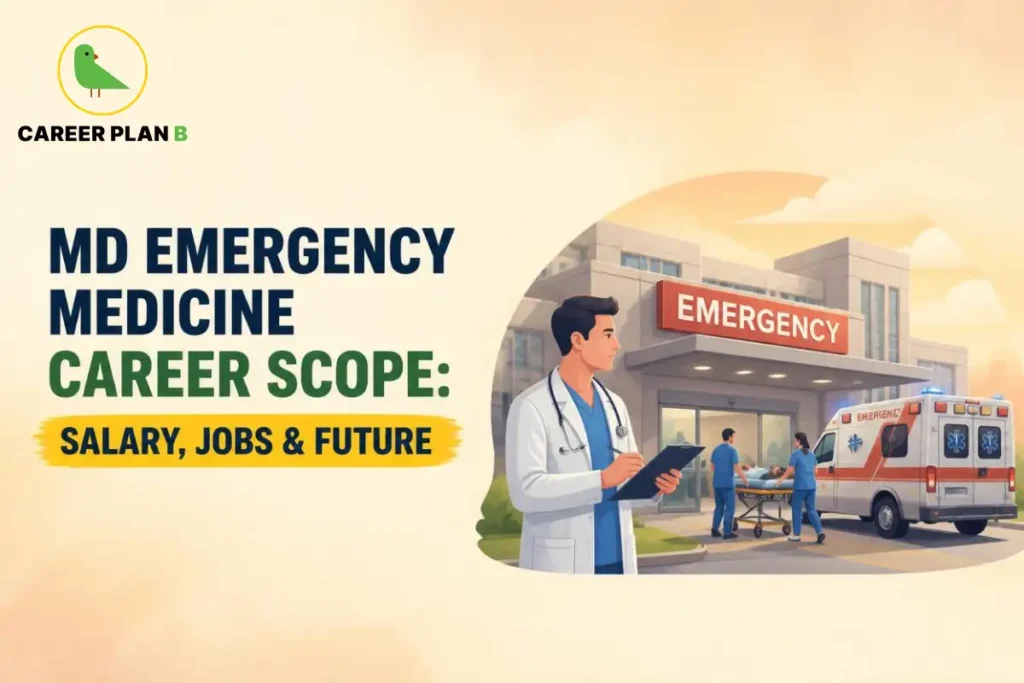
The MD Emergency Medicine Career Scope in India includes hospital consultancy, government medical services, teaching, trauma care and emergency department leadership. For NEET PG aspirants, the specialty offers a challenging clinical career with opportunities for professional growth. Salary, work hours and career progression depend on the employer, experience and location.
What Is the Scope of MD Emergency Medicine in India?
MD Emergency Medicine trains doctors to assess, stabilise and treat patients who need urgent medical attention. Emergency physicians handle serious injuries, cardiac emergencies, breathing difficulties, poisoning, acute infections and other life-threatening conditions.
The National Medical Commission’s MD Emergency Medicine curriculum covers emergency assessment, resuscitation, clinical decision-making, pre-hospital care, disaster preparedness and emergency department management.
The MD Emergency Medicine Scope in India extends beyond bedside care. Doctors can build careers in tertiary hospitals, public medical colleges, trauma centres, academic departments and emergency response services.
Career Opportunities After MD Emergency Medicine
Doctors can pursue several career paths after completing the postgraduate degree.
1. Emergency Medicine Consultant
Emergency medicine consultants assess incoming patients, lead resuscitation efforts, coordinate urgent treatment and work with specialists across departments. Large multispecialty hospitals often need doctors who can manage high-pressure emergency settings.
2. Senior Resident and Academic Roles
Government medical colleges, teaching hospitals and medical institutions recruit senior residents according to their staffing needs. Experienced doctors can pursue eligible faculty positions and academic work under applicable National Medical Commission requirements.
3. Trauma and Emergency Response Services
Doctors can explore trauma centres, ambulance-linked emergency systems, disaster response teams and pre-hospital care services. Some roles require additional training or experience in trauma management, critical care or emergency transport.
4. Emergency Department Leadership
Experienced specialists can move into clinical coordination, emergency department administration, patient safety, clinical audit and quality improvement. These positions suit doctors who combine strong clinical skills with team management.
The Emergency Medicine Career Path can begin with a hospital position and develop towards consultancy, teaching or departmental leadership.
Candidates still comparing training options can explore Career Plan B’s private MD Emergency Medicine colleges in Uttarakhand guide which covers approved seats, fees and cutoff information.
MD Emergency Medicine Hospital Jobs: Government vs Private Sector
Doctors can apply for roles in both public and private healthcare institutions. Each sector follows different recruitment rules and employment terms.
| Factor | Government sector | Private sector |
|---|---|---|
| Common roles | Senior resident, eligible specialist and faculty positions | Associate consultant, consultant and emergency department specialist |
| Employers | ESIC hospitals, government medical colleges and public hospitals | Corporate hospitals, multispecialty hospitals and private medical colleges |
| Pay structure | Pay level, basic pay and applicable allowances | Employer-defined salary, benefits and contract terms |
| Career growth | Depends on vacancies, eligibility and service rules | Depends on experience, clinical skills and organisational needs |
| Work conditions | Follow institutional duties and government service rules | Follow hospital policies, shift schedules and contractual terms |
The ESIC Medical College Hospital, Sanathnagar recruitment notice dated May 6, 2026 listed an Emergency Medicine senior-resident vacancy. Its recruitment circular specifies Level 11 basic pay of ₹67,700 for senior residents, plus applicable allowances.
Private hospitals also recruit emergency medicine specialists. Amrita Hospital, Faridabad lists an associate consultant/consultant position requiring MD/DNB Emergency Medicine and 0–3 years of experience.
Doctors should check each advertisement for qualification requirements, pay, contract duration, duties and application deadlines before applying.
MD Emergency Medicine Salary in India
The MD Emergency Medicine Salary in India varies with experience, hospital type, location, clinical responsibilities and employment terms. A single salary figure cannot represent every emergency medicine specialist.
Published recruitment details provide useful reference points.
| Employer or recruitment reference | Published monthly pay | Context |
|---|---|---|
| Amrita Hospital, Faridabad | ₹2–2.5 lakh | Listed consultant/associate consultant pay range; higher experience may attract negotiation |
| ESIC Medical College Hospital, Sanathnagar | ₹67,700 basic plus applicable allowances | Level 11 senior-resident pay specified in its 2026 recruitment circular |
The figures describe different positions and pay structures. The ESIC basic pay excludes applicable allowances. The Amrita figure represents an employer-published consultant pay range, not a guaranteed salary for every new graduate.
Doctors comparing offers should review fixed monthly pay, allowances, night-duty expectations, weekly hours, leave, insurance and professional development opportunities. Higher pay may come with heavier shifts or additional responsibilities.
For Personalized Guidance
What Is the MD Emergency Medicine Stipend During Residency?
The MD Emergency Medicine Stipend refers to the monthly amount a postgraduate resident receives during training. It differs from the salary a doctor may earn after completing MD Emergency Medicine.
The Government of Assam’s Lakhimpur Medical College and Hospital stipend page lists the following monthly MD/MS resident stipends for 2025–26:
| Residency year | Published monthly stipend |
|---|---|
| First year | ₹55,200 |
| Second year | ₹56,925 |
| Third year | ₹58,650 |
These figures represent one government medical college’s published rates, not a nationwide stipend scale. Candidates should confirm the latest stipend with their allotted institution before admission.
What Is the Future Demand for Emergency Medicine Doctors in India?
Emergency medicine supports time-sensitive care for acute illness, accidents, trauma and other serious conditions. Hospitals need trained clinicians who can rapidly assess patients and coordinate treatment across departments.
The National Health Mission’s Emergency Response Service page, updated in June 2026, reports emergency ambulance services across 35 States and Union Territories. It also lists 3,044 Advanced Life Support vehicles and 15,283 Basic Life Support vehicles supported under the programme.
This infrastructure shows the reach of India’s emergency transport network. It does not guarantee a particular number of specialist vacancies. Actual opportunities depend on hospital expansion, staffing requirements, recruitment budgets and local demand.
The future demand for emergency medicine doctors in India may interest aspirants who enjoy rapid clinical decisions, team-based treatment and acute patient care. Shift work, high patient loads and emotionally demanding situations also form part of the profession.
Further Specialisation Options After MD Emergency Medicine
Doctors can expand their skills through fellowships, focused clinical training, research or academic work. Potential areas include:
- Critical care: Managing severely ill patients who need close monitoring and advanced support.
- Paediatric emergency care: Assessing and treating urgent medical conditions in children.
- Trauma care: Developing advanced skills in injury assessment and coordinated trauma management.
- Clinical toxicology: Managing poisoning and other harmful substance exposures.
- Emergency ultrasound: Using point-of-care ultrasound to support urgent clinical decisions.
- Disaster medicine: Preparing for mass-casualty incidents and large-scale emergencies.
These options do not all represent separate, uniformly recognised super-specialty degrees. Doctors should verify each programme’s eligibility rules, accreditation, duration and clinical training before enrolling.
MD Emergency Medicine Private Practice: Is It Possible?
Emergency medicine usually centres on hospital-based care because severe emergencies require equipment, trained staff and access to multiple clinical departments.
A doctor may explore suitable outpatient services or other independent professional work within applicable registration and regulatory rules. Running a standalone emergency facility requires appropriate infrastructure, staffing and regulatory compliance. Doctors employed by an institution must also follow their employment contract; the cited ESIC notice explicitly prohibits private practice during that service.
Doctors seeking Emergency Medicine Consultant Jobs can build hospital experience before considering wider clinical, academic or leadership responsibilities.
How Career Plan B Helps
Career Plan B supports doctors and NEET PG aspirants through Personalized Career Counselling, PsycheIntel and Career Assessment Tests, Admission and Academic Profile Guidance, and Career Roadmapping.
These services help candidates assess their interests, compare postgraduate pathways, review admission choices, understand their strengths and plan practical career goals around their clinical interests, work preferences and long-term professional priorities.
Get In Touch With Us
Frequently Asked Questions
Q1. What are the career opportunities after MD Emergency Medicine in India?
Doctors can pursue consultant, senior-resident, eligible teaching, trauma care and emergency department leadership roles.
Q2. What is the MD Emergency Medicine salary per month in India?
Amrita Hospital lists ₹2–2.5 lakh per month for a specified consultant role. Actual salaries vary by employer, experience and location.
Q3. Are MD Emergency Medicine government jobs available?
Yes, Government medical colleges and institutions such as ESIC advertise relevant positions when vacancies arise. Candidates must meet the requirements in each recruitment notice.
Q4. Which hospitals hire emergency medicine specialists in India?
Amrita Hospital, Faridabad, publishes Emergency Medicine recruitment opportunities. Government teaching hospitals and other healthcare institutions also advertise relevant roles according to staffing needs.
Q5. What are the further specialisation options after MD Emergency Medicine?
Doctors can explore focused training in critical care, paediatric emergency care, trauma, clinical toxicology, emergency ultrasound and disaster medicine.
Q6. What to do after MD Emergency Medicine?
Choose a path that matches your goals. You can pursue hospital consultancy, eligible academic roles, focused clinical training, research or emergency department leadership.
Conclusion
The MD Emergency Medicine Career Scope offers several paths in clinical care, government service, hospital consultancy and academic work. Salary and career growth depend on your skills, experience and workplace. Which path best fits your goals? Explore current recruitment notices, compare training options and connect with Career Plan B to plan your next step.