Deepti · October 27, 2026
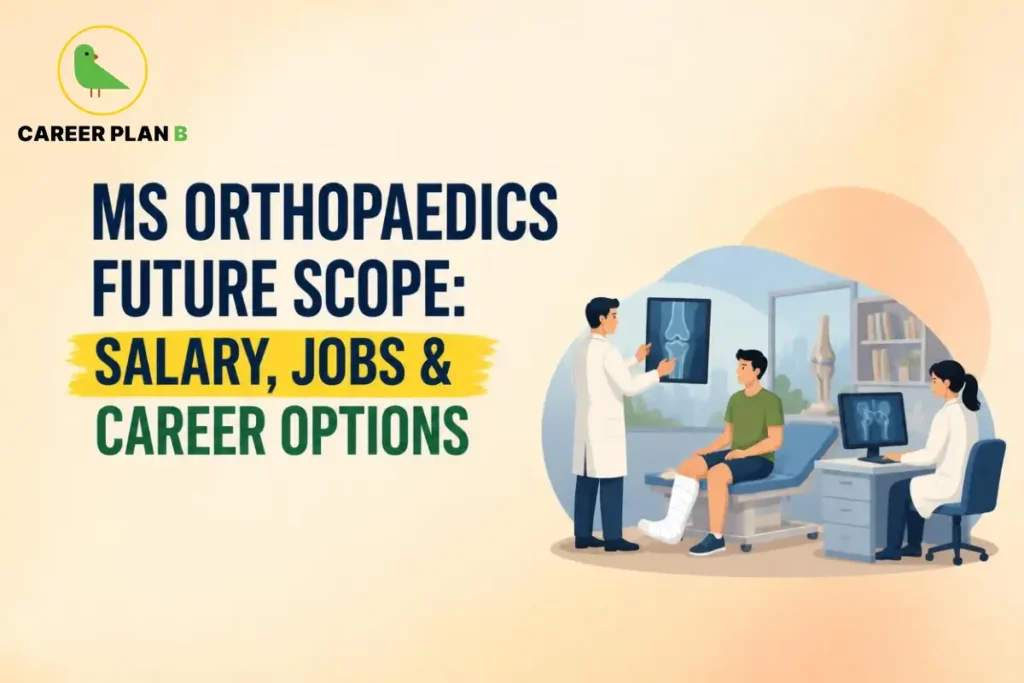
MS Orthopaedics future scope offers several career paths, from government hospital appointments and private practice to trauma care, medical teaching and specialised surgery. An MS degree gives doctors the foundation to treat bone, joint and musculoskeletal conditions. Experience, surgical skills, location and further training shape their career growth and earning potential. Understanding these options helps graduates choose a path that matches their clinical interests and long-term goals.
What Are the Career Options After MS Orthopaedics?
The career after MS Orthopaedics can follow a clinical, academic or independent practice route. Doctors can explore these major opportunities:
- Orthopaedic Surgeon: Diagnose and treat fractures, joint disorders, sports injuries and musculoskeletal conditions.
- Trauma Surgeon: Manage emergency injuries, complex fractures and accident-related orthopaedic cases.
- Hospital Consultant: Work with government hospitals, private hospitals and multispecialty healthcare centres.
- Medical Faculty: Teach medical students, supervise clinical training and participate in research.
- Subspecialist: Develop expertise in joint replacement, spine surgery, sports medicine or paediatric orthopaedics.
- Private Practitioner: Establish a clinic or work as a visiting consultant at multiple hospitals.
The National Medical Commission’s MS Orthopaedics curriculum outlines the clinical and surgical competencies expected from postgraduate orthopaedics training. Graduates can use this foundation to plan their next professional step.
What Is the MS Orthopaedics Salary in India?
The MS Orthopaedics Salary in India depends on experience, employer, city, hospital workload and practice model. Government recruitment notices provide useful salary benchmarks. Private hospitals negotiate compensation under their own employment structures, so one figure cannot represent every orthopaedic surgeon.
Government and Hospital Salary Benchmarks
The following official records provide a verified reference for public-sector employment.
| Job or salary category | Verified salary information |
|---|---|
| Senior Resident in a Delhi government hospital | Guru Teg Bahadur Hospital’s 2026 office order specifies ₹67,700 basic pay per month, plus NPA and admissible allowances, under Pay Level 11 for the listed Senior Resident extension. |
| Government Specialist Grade III (Orthopaedics) | A UPSC recruitment advertisement specifies Pay Level 11 under the 7th Central Pay Commission, plus NPA, for the advertised specialist post. |
| Private hospital consultant | Compensation depends on the employer’s contract, experience, duties, incentives and clinical workload. |
| Independent orthopaedic surgeon | Earnings depend on patient volume, consultation fees, surgical arrangements, expenses and the strength of the practice. |
Sources: Guru Teg Bahadur Hospital’s 2026 office order and the UPSC recruitment advertisement.
These figures are official public-sector examples, not a national average or guaranteed starting salary for every graduate. The basic pay figure excludes NPA and other applicable allowances. The UPSC advertisement also illustrates a recruitment pay structure; candidates must check the latest notice for current vacancies and eligibility.
What Is the MS Orthopaedics Salary Per Month for Fresh Graduates?
A fresh MS Orthopaedics graduate may apply for senior residency, junior consultant or other eligible specialist roles. The salary depends on the position and institution. The Delhi government hospital example above provides a reference point for eligible Senior Resident employment.
Private hospital salaries require individual verification. Review the written offer for fixed monthly pay, annual CTC, variable incentives, on-call duties, surgical fees and other allowances before comparing opportunities.
What Is the MS Orthopaedics Stipend?
The MS Orthopaedics stipend during postgraduate training differs from the salary a doctor earns after graduation. Medical colleges and state authorities set their applicable stipend arrangements under the relevant rules. Doctors should check the latest official prospectus, fee and stipend notices, or institutional orders.
Senior residency is a separate employment stage. Its pay may follow a different structure from the stipend paid to an MS student.
For Personalized Guidance
Which MS Orthopaedics Government Jobs Can You Pursue?
MS Orthopaedics Government Jobs offer opportunities in public hospitals, medical colleges, government health services and specialist recruitment.
Common roles include:
- Senior Resident in a government medical college or hospital.
- Specialist Grade III or equivalent orthopaedic specialist post.
- Orthopaedics faculty positions, subject to the applicable eligibility criteria.
- Specialist appointments under government health departments and public healthcare institutions.
The UPSC recruitment portal publishes central government recruitment notices. State public service commissions and individual government hospitals also advertise medical positions.
Candidates must check postgraduate qualification recognition, required clinical experience, registration, age limits and other selection conditions. Some specialist posts require post-qualification experience, so an MS degree alone may not meet every vacancy’s eligibility criteria.
What Are the Best MS Orthopaedics Hospital Jobs?
MS Orthopaedics Hospital Jobs suit doctors who want clinical experience, access to surgical facilities and opportunities to work with multidisciplinary teams.
Private hospitals may recruit orthopaedic surgeons for general orthopaedics, fracture management, joint replacement, sports injuries and spine-related services. Teaching hospitals may combine patient care with postgraduate supervision and research.
Doctors should assess an offer beyond its salary. Operating-room access, patient volume, senior mentorship, emergency duties, referral networks and opportunities to perform supervised procedures can influence long-term career growth.
Is MS Orthopaedics Private Practice a Good Choice?
MS Orthopaedics Private Practice can offer greater professional independence and control over consultation schedules. Doctors can establish their own clinics, join existing practices or work as visiting consultants at hospitals.
Independent practice requires more than surgical expertise. Doctors need suitable infrastructure, staff, patient referral networks, ethical billing practices and effective patient communication. Clinic rent, equipment, staffing and other operating expenses affect take-home income.
A period of hospital experience can help doctors build clinical confidence and professional relationships before they invest in a clinic. Private practice suits doctors who enjoy clinical decision-making and the responsibilities of managing a healthcare business.
Which Further Studies After MS Orthopaedics Can Improve Career Growth?
Further Studies After MS Orthopaedics can help doctors develop advanced skills and focus on a specific patient group or procedure.
Popular training areas include:
- Joint replacement and arthroplasty.
- Spine surgery.
- Sports medicine and arthroscopy.
- Paediatric orthopaedics.
- Hand and microsurgery.
- Trauma and acute care surgery.
The National Board of Examinations in Medical Sciences (NBEMS) lists post-MD/MS fellowship programmes in areas such as arthroplasty, hand and microsurgery, spine surgery, sports medicine and paediatric orthopaedics.
Doctors should review the eligibility criteria, course duration, clinical exposure and recognition of each programme before applying. Subspecialty training can strengthen expertise and support access to specialised positions, but it does not guarantee higher earnings.
Doctors who are still comparing postgraduate training options can also explore Career Plan B’s guides to private MS Orthopaedics colleges in Uttar Pradesh and private MS Orthopaedics colleges in Haryana.
Can You Find MS Orthopaedics Jobs Abroad?
MS Orthopaedics Jobs Abroad may appeal to doctors seeking international clinical experience, advanced training or long-term employment. Each country follows its own licensing and specialist recognition process.
In the United Kingdom, doctors must meet the relevant General Medical Council registration requirements. Australia assesses international specialists through its Medical Board of Australia specialist pathways. In the United States, international medical graduates must review ECFMG certification requirements and the applicable US licensing and postgraduate training routes.
An Indian MS degree does not automatically grant specialist practice rights overseas. Qualification assessment, examinations, supervised training, language proficiency and registration requirements vary by country. Doctors should confirm the current rules with the destination country’s official regulator before making career or relocation plans.
What Is the Future Scope of MS Orthopaedics?
The MS Orthopaedics future scope covers a broad range of clinical needs, including trauma, sports injuries, joint replacement, spine conditions and paediatric musculoskeletal disorders. Doctors can build long-term careers in hospitals, specialist centres, teaching institutions or private practice.
Career growth depends on clinical outcomes, surgical experience, continued learning, patient trust and professional ethics. Doctors who develop strong core skills and select suitable advanced training can pursue focused clinical roles or leadership positions over time.
How Career Plan B Helps
Career Plan B supports doctors through Personalized Career Counselling, PsycheIntel and Career Assessment Tests, Admission and Academic Profile Guidance, and Career Roadmapping.
These services can help professionals assess their strengths, compare career paths, identify suitable training options and plan practical next steps that align with their long-term goals.
Get In Touch With Us
Frequently Asked Questions
Q1. What is the career after MS Orthopaedics in India?
Doctors can pursue government or private hospital jobs, trauma care, medical teaching, subspecialty training and private practice.
Q2. What is the MS Orthopaedics Salary Per Month in India?
Salary varies by employer, experience and practice setup. A 2026 Delhi government hospital order lists ₹67,700 basic monthly pay plus NPA and applicable allowances for the specified Senior Resident position.
Q3. Which MS Orthopaedics Government Jobs are available to fresh graduates?
Eligible graduates can check Senior Resident vacancies and other specialist posts. Some government specialist positions require additional experience.
Q4. Which Further Studies After MS Orthopaedics offer specialised training?
Doctors can explore fellowships in arthroplasty, spine surgery, sports medicine, paediatric orthopaedics, trauma care, and hand and microsurgery.
Q5. Can Indian doctors apply for MS Orthopaedics Jobs Abroad?
Yes. Doctors must meet the destination country’s licensing, qualification recognition and specialist registration requirements before practising.
Q6. How can doctors find orthopedic surgeon job openings?
Doctors can monitor official government recruitment portals, medical college websites, hospital career pages and professional medical networks for verified vacancies.
Conclusion
The MS Orthopaedics future scope extends from hospital employment and government service to advanced surgical training and private practice. The right path depends on your clinical interests, salary expectations and long-term goals. Compare opportunities carefully, verify official requirements and choose training that supports your ambitions. Explore your next career step with Career Plan B.