Deepti · October 27, 2026
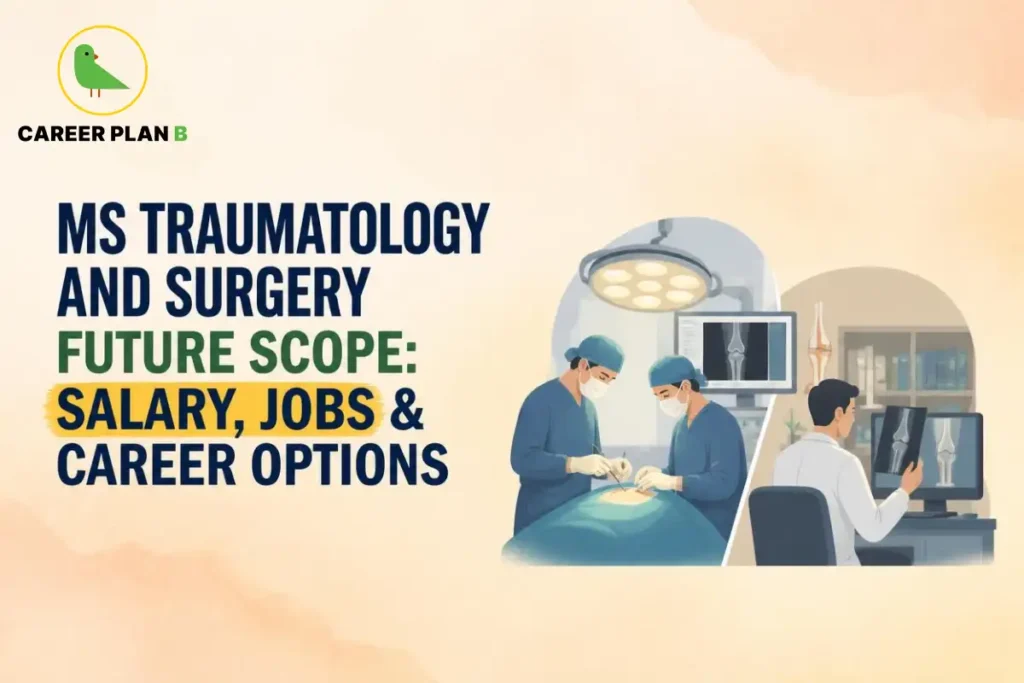
The MS Traumatology and Surgery Future Scope in India includes opportunities in government hospitals, private healthcare, trauma care centres, medical education and advanced surgical training. Your career path can lead to clinical practice, specialist appointments, research or private practice. Salary depends on experience, employer, location and job responsibilities. Understanding the recognised qualification, available roles and further study options can help you plan your career with realistic expectations.
What Is MS Traumatology and Surgery?
MS Traumatology and Surgery is a postgraduate medical qualification focused on surgical care for traumatic injuries and related conditions. The National Medical Commission (NMC) lists M.S. (Traumatology and Surgery) among recognised postgraduate surgical qualifications in its Post-Graduate Medical Education Regulations, 2023.
Graduates can explore clinical, academic and advanced-training opportunities that match their qualifications and experience. Employers may set different eligibility requirements for surgical posts, emergency department positions and medical college appointments.
Career After MS Traumatology and Surgery: Job Options
The MS Traumatology and Surgery career path depends on the type of clinical work you prefer. Graduates can explore several employment settings.
1. MS Traumatology and Surgery Government Jobs
Government hospitals, medical colleges and public healthcare institutions can offer specialist and residency positions. Relevant opportunities may include:
- Senior Resident positions that accept the qualification.
- Specialist or consultant posts that match the advertised eligibility criteria.
- Teaching positions in Traumatology and Surgery, subject to faculty regulations and experience requirements.
- Clinical research roles in eligible public medical institutions.
The NMC’s Medical Institutions (Qualifications of Faculty) Regulations, 2025 lists M.S./DNB (Traumatology and Surgery) as an academic qualification for faculty in the specialty. Candidates must also meet the applicable appointment and experience requirements.
Check recruitment notices from the Employees’ State Insurance Corporation (ESIC), All India Institute of Medical Sciences (AIIMS) and individual government medical colleges for vacancies and pay scales.
2. MS Traumatology and Surgery Hospital Jobs
Private hospitals and multispecialty institutions may recruit qualified doctors for trauma-related surgical services, inpatient care and emergency surgical support.
Potential roles include trauma surgeon, hospital-based surgical specialist and consultant positions that match the candidate’s training. Employers assess clinical experience, surgical skills, registration and the hospital’s requirements before offering appointments.
Doctors who work in high-volume hospitals can gain exposure to complex injuries, multidisciplinary care and advanced surgical procedures. This experience can help them develop their clinical skills and pursue senior responsibilities.
3. Trauma Care Centres and Emergency Departments
Trauma care centres manage patients with serious injuries from road accidents, falls and other emergencies. Doctors in these settings work with anaesthesiologists, orthopaedic surgeons, neurosurgeons, nurses and emergency teams.
Career opportunities may include trauma assessment, surgical management, emergency procedures and postoperative care. The exact responsibilities depend on the centre’s structure and the doctor’s approved scope of practice.
An important distinction matters here: an emergency department may require a specific qualification in Emergency Medicine for certain physician posts. An MS in Traumatology and Surgery does not automatically qualify a graduate for every emergency medicine position.
4. MS Traumatology and Surgery Private Practice
MS Traumatology and Surgery private practice offers another route for doctors who want greater control over their work and professional relationships.
You can explore consultation services, hospital affiliations, visiting specialist arrangements or partnerships with established healthcare facilities. Major surgical procedures require appropriate hospital infrastructure, operating facilities and clinical support.
Independent practice also involves patient referrals, staff expenses, equipment access, registration requirements and professional liability. Doctors should evaluate these costs before starting a practice.
5. Teaching and Research
Medical colleges and research institutions may offer opportunities in teaching, academic work and clinical research. Eligible candidates can develop a career through faculty appointments, publications, clinical studies and participation in medical education.
The NMC’s faculty qualification regulations provide the relevant academic framework. Candidates must check the required teaching experience, designation-specific qualifications and other conditions before applying.
For Personalized Guidance
MS Traumatology and Surgery Salary in India
The MS Traumatology and Surgery Salary in India depends on the employer, clinical experience, city, hospital workload, job designation and private practice arrangements.
India does not have a single official national salary figure specifically for this qualification. Government recruitment advertisements offer useful pay benchmarks, while private hospitals determine compensation through their own recruitment terms.
The following figures come from an official ESIC recruitment advertisement published in 2026.
| Employment benchmark | Published monthly remuneration |
|---|---|
| Senior Resident post | ₹67,700 basic pay, plus applicable allowances |
| Full-Time Specialist, entry level requiring three years of post-PG experience | ₹1,53,275 consolidated remuneration |
| Full-Time Specialist, senior level requiring five years of post-PG experience | ₹1,76,541 consolidated remuneration |
Important: These figures apply to specified ESIC recruitment positions. They are not guaranteed salaries for every MS Traumatology and Surgery graduate. Candidates must verify whether a particular vacancy accepts their qualification and experience.
What Affects MS Traumatology and Surgery Salary Per Month?
Several factors influence monthly earnings:
- Experience: Senior doctors may qualify for higher-paying specialist positions.
- Location: Employers in different cities and regions offer different pay packages and benefits.
- Employer: Government hospitals, private hospitals and corporate healthcare institutions follow different compensation structures.
- Clinical responsibilities: Surgical workload, emergency duties and consultant responsibilities can affect remuneration.
- Practice setup: Independent practice depends on consultation fees, patient volume, expenses and hospital arrangements rather than a fixed salary.
Private-sector earnings vary widely. Review the current job offer, duty hours, benefits and contractual terms before comparing two positions.
Explore the Top Private MD Emergency Medicine Colleges in Uttarakhand 2026 to compare fees, cutoff ranks and admission options.
MS Traumatology and Surgery Stipend
The MS Traumatology and Surgery stipend refers to the amount a resident receives during postgraduate training. It differs from the salary a qualified doctor earns after completing the degree.
The stipend depends on the institution, state policy, training year and applicable rules. Candidates should check the official medical college prospectus or appointment terms for the relevant academic session.
Do not assume that every institution offers the same stipend or that a postgraduate training stipend reflects a doctor’s future earning potential.
MS Traumatology and Surgery Career Growth
The MS Traumatology and Surgery Career Growth path depends on clinical ability, experience, professional development and available positions.
A doctor may begin in a suitable hospital or residency post, develop greater surgical experience, pursue advanced training and apply for senior specialist or eligible academic positions.
Doctors who enjoy complex injury management may prefer trauma care centres and tertiary hospitals. Those who enjoy teaching may pursue academic roles. Doctors with an entrepreneurial outlook may explore hospital affiliations and private practice.
Career growth does not follow one fixed timeline. Training opportunities, recruitment rules and individual performance shape each doctor’s progress.
Further Studies After MS Traumatology and Surgery
Further Studies After MS Traumatology and Surgery can help graduates build advanced skills and focus on a specific area of surgical care.
One recognised training route appears in the National Board of Examinations in Medical Sciences’ Fellowship Entrance Test 2024 information bulletin. The bulletin lists FNB Trauma & Acute Care Surgery and includes MS Traumatology and Surgery among its eligible prior qualifications.
Candidates should check the latest NBEMS fellowship bulletin for current eligibility, programme availability and admission requirements before applying.
The NMC also issued a notice allowing provisional NEET-SS 2024 eligibility for M.Ch. Neurosurgery, Vascular Surgery, and Plastic and Reconstructive Surgery, subject to regulatory approval and publication. This was a session-specific notice, so candidates must verify the current rules before relying on those super-speciality routes. See the official NMC notice.
MS Traumatology and Surgery Jobs Abroad
Doctors can explore MS Traumatology and Surgery Jobs Abroad in hospitals, trauma centres, research institutions and academic settings. Each country applies its own licensing and specialist-recognition requirements.
International employers may assess your medical degree, registration, clinical experience, language proficiency and additional examinations. An Indian postgraduate qualification does not automatically grant permission to practise abroad.
For example, doctors considering the United Kingdom should review the General Medical Council’s registration and licensing guidance. Candidates should follow the official medical regulator in their intended destination before spending money on applications or additional training.
How Career Plan B Helps
Career Plan B supports doctors and students through Personalized Career Counselling, PsycheIntel and Career Assessment Tests, Admission and Academic Profile Guidance, and Career Roadmapping.
These services help you assess your strengths, compare suitable career pathways and plan further training around your interests.
The right guidance can help you make informed decisions about your next professional step.
Get In Touch With Us
Frequently Asked Questions
Q1. What is the career after MS Traumatology and Surgery in India?
Graduates can explore eligible government and private hospital posts, trauma care, academic roles, research, fellowships and private practice.
Q2. What is the average salary for a trauma surgeon in India?
No single official national average exists for this exact qualification. The salary depends on experience, employer, location and responsibilities.
Q3. Are MS Traumatology and Surgery graduates eligible for government jobs?
Yes, they can apply for government vacancies that accept their qualification and experience. The recruitment notice determines eligibility.
Q4. Can I start MS Traumatology and Surgery private practice?
Yes, you can explore private practice and hospital affiliations while meeting applicable registration, facility and professional requirements.
Q5. Which further studies can I pursue after MS Traumatology and Surgery?
You can investigate FNB Trauma & Acute Care Surgery and other advanced-training options for which you meet the current entry requirements.
Q6.Can I get MS Traumatology and Surgery jobs abroad?
You can apply for relevant international roles after meeting the destination country’s licensing, registration and qualification-recognition requirements.
Conclusion
The MS Traumatology and Surgery Future Scope includes hospital practice, government employment, trauma care, teaching and advanced surgical training. Your career will depend on your skills, experience and the roles you qualify for.
Which path matches your long-term goals? Review the official eligibility requirements, compare opportunities and connect with Career Plan B to plan your next career move.