Team6 · July 17, 2026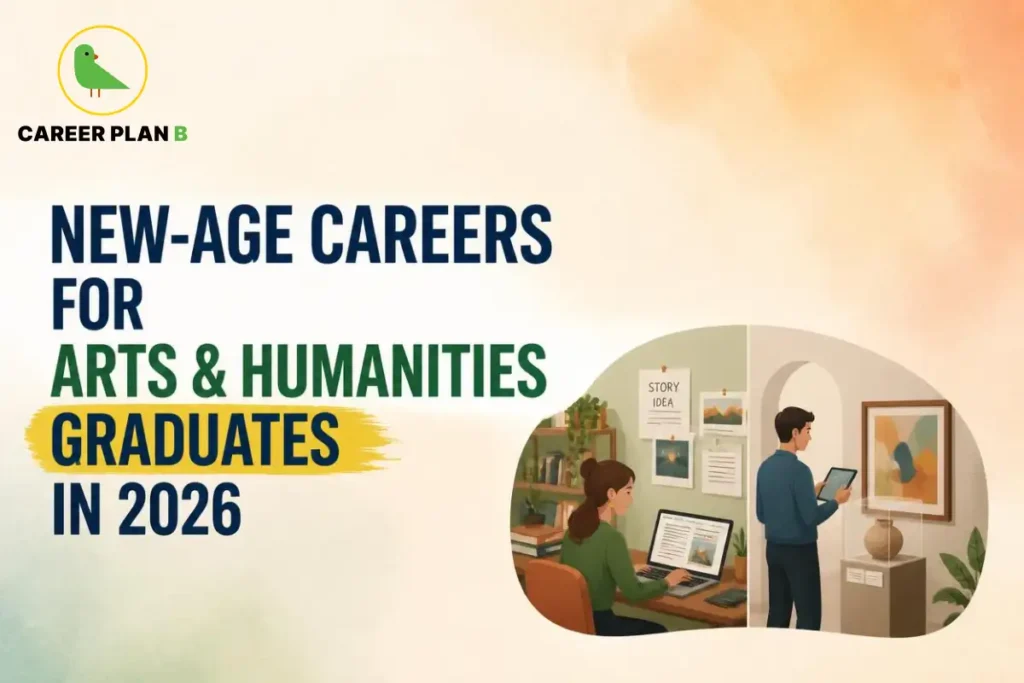
Introduction
Arts and humanities graduates are no longer limited to traditional careers in teaching, administration, or clerical work. As India’s creative and digital economy expands, a wide range of new-age career opportunities has emerged across content creation, user experience, digital marketing, public policy, cultural management, language technology, publishing, heritage conservation, and media. Employers increasingly value the communication, research, critical thinking, and problem-solving skills that humanities graduates bring to these evolving industries.
This guide explores the best new-age careers for Arts and Humanities graduates in India for 2026. You will learn about the fastest-growing sectors, essential skills, recognised learning pathways, career opportunities, and practical steps to successfully transition into these high-demand professions.
Why 2026 Is a Strong Year for New-Age Careers for Arts & Humanities Graduates ?
The Union Budget 2026-27 formally recognised the “Orange Economy,” where value comes from creativity and culture. The Animation, Visual Effects, Gaming, and Comics sector alone is projected to need nearly two million professionals by 2030. [Press Information Bureau, Ministry of Information and Broadcasting]
This shift treats storytelling, design sense, and cultural knowledge as economic assets, not just academic pursuits. Humanities graduates bring exactly these strengths to the table.
Animation, Visual Effects, Gaming, and Comics (AVGC-XR)
The AVGC-XR sector needs writers, designers, and storytellers as much as it needs coders. The Indian Institute of Creative Technologies in Mumbai now operates as a National Centre of Excellence for this sector. [ Press Information Bureau, Ministry of Information and Broadcasting]
The Union Budget 2026-27 also allocated ₹250 crore for AVGC Content Creator Labs across 15,000 secondary schools and 500 colleges. Humanities graduates with strong narrative and visual sensibilities can find roles in scriptwriting, character design, and game narrative.
Language, Translation, and AI Content Roles
India’s linguistic diversity has become a genuine career asset. The Bhashini mission, under the Ministry of Electronics and Information Technology, builds AI-driven translation tools across 22 scheduled languages. [ Bhashini, National Language Translation Mission]
This mission needs human linguists to train, refine, and validate AI translation models. Roles also exist in content localisation and subtitling. Language and literature graduates are naturally suited to this emerging field.
Tourism, Heritage, and Cultural Roles
Tourism contributes over 5% to India’s GDP and supports more than 13% of total employment. [ India Tourism Data Compendium, Ministry of Tourism]
The Ministry of Tourism runs a Tourist Guide Training programme with premier institutions. It aims to certify thousands of new guides at heritage sites. History, archaeology, and cultural studies graduates can also find roles through the Archaeological Survey of India in heritage site management.
Media, Journalism, and Digital Content
India’s media and entertainment sector reached roughly ₹2.5 trillion in value and continues to expand under the Orange Economy push. This growth spans journalism, digital publishing, and content strategy roles across print, broadcast, and streaming platforms.
Humanities graduates with strong writing and research skills are well placed for these roles. Demand is growing for original, India-rooted content. Roles range from research-driven long-form journalism to fast-paced digital newsroom writing, podcast scripting, and content strategy for OTT platforms. A humanities background in history, political science, or literature often gives graduates the contextual depth these roles need.
Skills and Certifications That Help
Several structured programmes can strengthen a humanities graduate’s profile. IICT Mumbai already runs 18 courses relevant to the AVGC-XR sector. The Ministry of Tourism’s guide training programme builds destination knowledge and communication skills. Bhashini-linked research projects, run through MeitY, also offer opportunities for language graduates to contribute to AI model development.
Step-by-Step Roadmap to Get Started
- Identify which sector matches your core interest, whether storytelling, language, or heritage.
- Explore AVGC-XR courses through IICT Mumbai or state-level Content Creator Labs.
- Build a writing or design portfolio showcasing narrative or cultural work.
- Apply for Ministry of Tourism guide training or Bhashini-linked research opportunities where relevant.
- Track official mission updates through PIB for new skilling programmes and openings.
Have Any Doubts?
Benefits, Challenges, and What the Data Says
These sectors offer growing, government-backed demand for skills once considered purely academic. Mission-level projections, like the AVGC sector’s two million professional target, come directly from official sources.
However, no official government source publishes role-wise salary data for these creative and cultural careers. Figures for scriptwriters, translators, or tour guides circulating online come from private job portals, not verified datasets. Treat such numbers as indicative only.
Common challenges include inconsistent income in early freelance-heavy roles. Building a strong portfolio helps in landing stable work. Structured training programmes can help ease this transition.
How Career Plan B Helps
Choosing a career path New-Age Careers for Arts & Humanities Graduates can feel uncertain for some student. Career Plan B simplifies this through:
- Personalised Career Counselling: matching your creative, linguistic, or cultural strengths to sectors like AVGC, language AI, or tourism
- Psycheintel Career Assessment Tests: identifying whether your aptitude suits storytelling, research, or people-facing cultural roles
- Skill and Certification Guidance: helping you choose relevant government-backed courses to strengthen your profile
- Structured Career Roadmapping: a clear step-by-step plan from your current academic stage to a stable creative or cultural career
For Latest Information
Frequently Asked Questions
Q1.What new-age careers suit arts and humanities graduates in 2026?
AVGC-XR roles, language and translation careers, tourism and heritage management, and digital content roles are all expanding.
Q2. Is a technical background needed for AVGC careers?
Not always. Writers, designers, and storytellers are in demand alongside coders and animators in this sector.
Q3. How can language graduates use Bhashini for their career?
Bhashini needs linguists to train and validate AI translation models, alongside content localisation and documentation roles.
Q4. Are there official training programmes for tourism careers?
Yes. The Ministry of Tourism runs a Tourist Guide Training programme with premier institutions to certify new guides.
Q5. Are official salary figures available for these creative careers?
No official dataset publishes role-wise salary figures. Treat figures from private job portals as indicative only.
Q6. Where can I track new opportunities in these sectors?
Follow updates through the Press Information Bureau and the respective ministry websites for skilling announcements.
Conclusion
The New-Age Careers for Arts & Humanities Graduates in 2026 go well beyond the traditional classroom or clerical route. The Orange Economy, language AI missions, and heritage sector are actively investing in storytelling and cultural skills.
Choosing the right sector early, and building a focused portfolio, can turn these humanities strengths into a stable, growing career.
Connect with Career Plan B today to map your path into these emerging creative and cultural sectors.