Team Career Plan B · July 20, 2026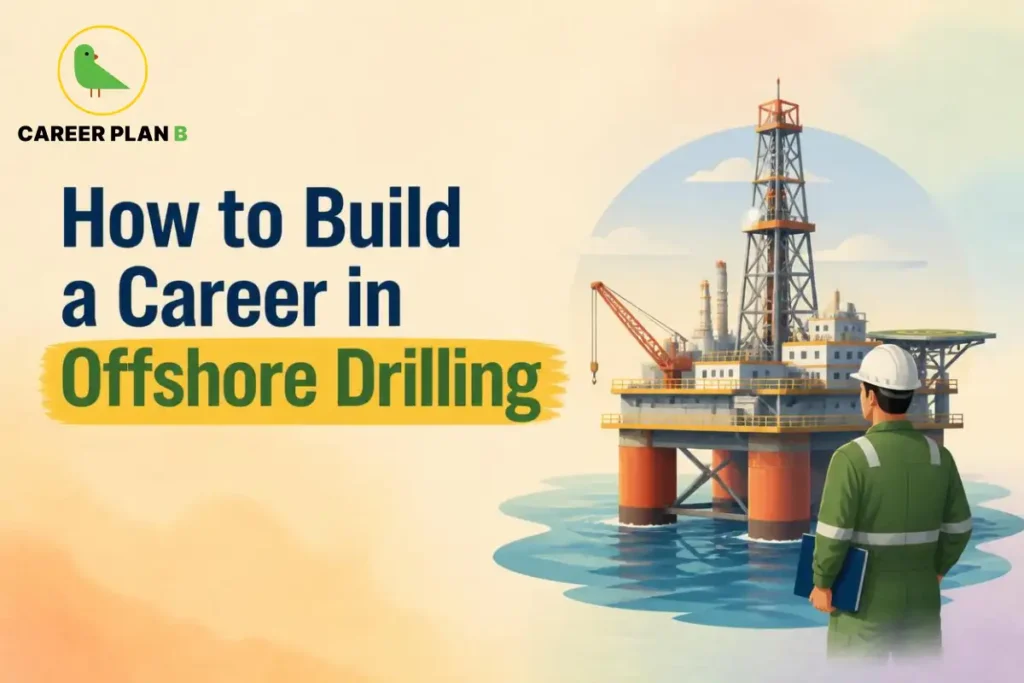
Introduction
Offshore drilling rigs are among the most technically demanding, high-pressure workplaces on Earth, literally and figuratively. A single offshore well can cost hundreds of millions of dollars to drill, and the engineers overseeing that process carry enormous responsibility for safety, precision, and cost control. Students drawn to this field often don’t realize it isn’t one single job; it’s a structured career path with specific entry routes, mandatory certifications, and distinct specializations. If you’re serious about how to build a career in offshore drilling, understanding this full pathway upfront will save you years of confusion later. In this blog, we’ll walk through what offshore drilling careers actually involve, the right educational foundation, certifications you’ll need, career progression, and what salary and future scope look like.
What Does an Offshore Drilling Career Actually Involve?
Offshore drilling careers span several sub-fields: drilling engineering (planning and executing well construction), well engineering (overall well design and integrity), mud engineering (managing drilling fluids critical to well control), and rig operations (day-to-day rig floor management). This work happens across different platform types: offshore rigs, drillships, semi-submersibles, and jack-up rigs, each suited to different water depths and drilling conditions. It’s worth distinguishing this from reservoir or production engineering, which focuses on managing oil and gas flow after a well is already producing; drilling careers are specifically about the upstream, hands-on process of constructing the well itself.
Step 1: Build the Right Educational Foundation
Most petroleum engineering courses in India begin with a B.Tech. in Petroleum Engineering. Leading institutes include IIT (ISM) Dhanbad, India’s oldest and most established institute for petroleum and mining engineering education, along with Pandit Deendayal Energy University and UPES. Admission into IIT (ISM) Dhanbad and similar IITs requires clearing JEE Advanced, while some private universities offer separate entrance routes. For those targeting PSU recruitment later, GATE scores also become relevant post-graduation.
Step 2: Gain Practical Rig Exposure Early
Classroom learning alone won’t fully prepare you for rig work. Seeking internships with organizations like ONGC, Oil India Limited, or private drilling contractors during your degree gives you genuinely valuable hands-on exposure to actual rig floor operations. This early exposure matters significantly for entry-level hiring; companies strongly prefer candidates who’ve already experienced the practical realities of rig environments, not just the theoretical curriculum.
Step 3: Get Mandatory Offshore Safety Certifications
No amount of technical knowledge substitutes for proper safety training on an offshore rig. Offshore safety certifications, including BOSIET (Basic Offshore Safety Induction and Emergency Training) and HUET (Helicopter Underwater Escape Training), are mandatory before you can work on most offshore installations, alongside rig-specific safety training required by individual employers. In India, offshore drilling operations fall under the regulatory oversight of the Directorate General of Hydrocarbons (DGH), the official technical regulatory body under the Ministry of Petroleum and Natural Gas.
Step 4: Understand the Career Progression Path
The offshore drilling engineer career scope typically follows a defined progression: starting as a junior drilling engineer or rig trainee, advancing to senior drilling engineer, and eventually to roles like rig superintendent or drilling manager, depending on experience and specialization. Along the way, many engineers specialize further into well engineering, mud engineering, or directional drilling, each offering distinct technical focus areas and career trajectories within the broader drilling discipline.
Step 5: Target the Right Employers
Drilling engineer job opportunities in India span both government and private sectors. Major PSU employers include ONGC and Oil India Limited, offering structured career paths with strong long-term stability. Private and international opportunities exist through global drilling contractors and oilfield service companies, often offering higher pay for specialized roles, particularly with international offshore experience.
Have Any Doubts?
Salary and Future Scope
Offshore drilling salary in India varies significantly based on employer and experience. Entry-level engineers at PSUs typically start with stable, moderate pay and strong benefits, while experienced drilling engineers, especially those with international rig experience, can command considerably higher packages through private or multinational drilling contractors. The future scope of offshore drilling deserves an honest, balanced look. Global oil and gas demand remains significant in the near and medium term, supporting continued hiring in this field. That said, the long-term energy transition toward renewables does introduce some uncertainty over multi-decade horizons, a factor worth considering without assuming the field will disappear anytime soon.
How Career Plan B Helps
Building a career in offshore drilling requires understanding both the technical path and the personal trade-offs involved in this demanding field. Career Plan B offers personalized career counselling, PsycheIntel and career assessment tests, and academic profile guidance to help you assess your fit for this career, backed by a clear roadmap to help you plan your next steps.
For Latest Information
Frequently Asked Questions
- How do I build a career in offshore drilling?
Complete a B.Tech in Petroleum Engineering from a recognized institute, gain rig internship experience, obtain mandatory offshore safety certifications, and target PSU or private drilling companies for entry-level roles.
- What qualifications are needed for offshore drilling jobs?
A B.Tech in petroleum engineering is the standard qualification, along with mandatory safety certifications like BOSIET and HUET before working on offshore rigs.
- Which companies hire offshore drilling engineers in India?
Major employers include PSUs like ONGC and Oil India Limited, along with private and international drilling contractors and oilfield service companies.
- What is the salary range for offshore drilling engineers in India?
Entry-level PSU salaries are stable but moderate, while experienced engineers, particularly with international rig experience, can earn significantly higher packages through private companies.
- Is offshore drilling a physically demanding career?
Yes, it involves hazardous rig environments, rotational schedules with weeks away from home, and rigorous safety protocols due to the high-risk nature of the work.
- Is offshore drilling a good long-term career choice given the energy transition?
It remains a strong near and medium-term career choice, though the long-term outlook carries some uncertainty as global energy investment gradually shifts toward renewables.
Conclusion
How to build a career in offshore drilling comes down to a clear, structured path: the right educational foundation, hands-on rig exposure, mandatory safety certifications, and a solid understanding of how career progression works in this field. It’s demanding, technically rigorous work, but for students genuinely drawn to high-stakes engineering, it offers a rewarding and well-compensated career. Go in with a clear plan for each step, and be honest with yourself about the physical and lifestyle demands this path involves, so you can build a career that fits both your skills and your goals.