Team Career Plan B · July 20, 2026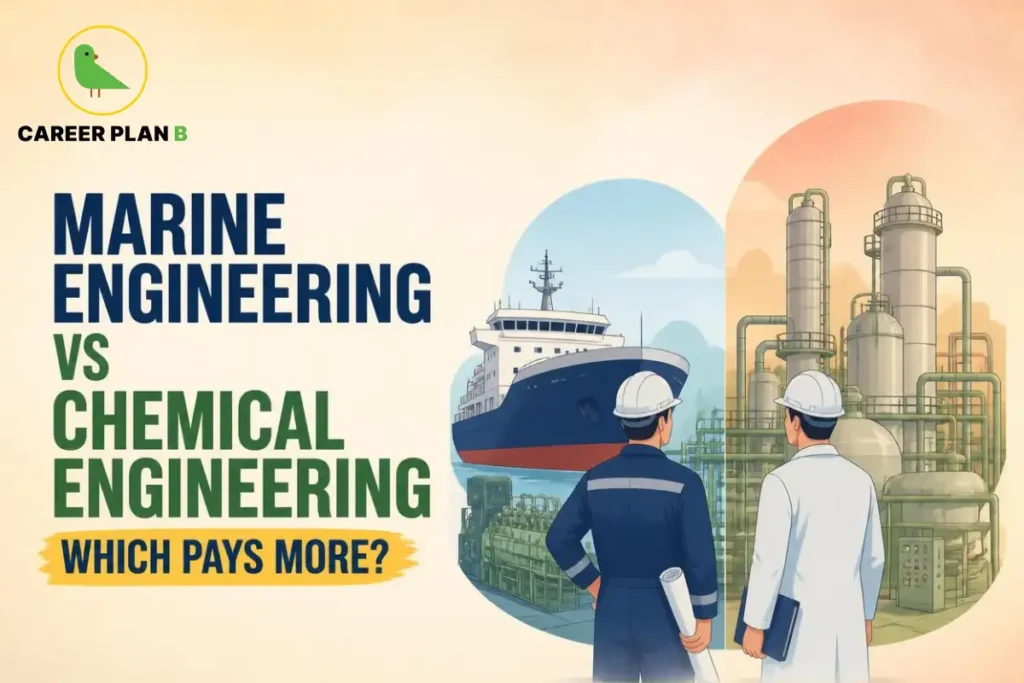
Introduction
One field powers the ships that carry the world’s goods across oceans. The other creates the fuels, plastics, medicines, and materials packed inside those very goods. Both are essential to how the modern world functions, just in completely different ways, which is exactly why marine engineering vs chemical engineering confuses so many students trying to compare them. Both fields are core, industrially rooted engineering branches with strong ties to essential global industries: shipping in one case and process manufacturing in the other. That similarity in importance leads students to assume similar pay trajectories. In reality, the two fields pay very differently depending on career stage, and understanding this difference matters more than most people realize before choosing. In this blog, we’ll break down what each field actually involves, compare salaries in detail, look at future growth, and help you figure out which path fits your goals better.
What Is Marine Engineering?
Marine engineering covers the design, operation, and maintenance of a ship’s machinery, engines, generators, pumps, and electrical systems. A marine engineer career scope typically begins with sea time as a trainee, progressing through 4th engineer, 3rd engineer, 2nd engineer, and eventually chief engineer, usually over 8-10 years, with a Certificate of Competency (CoC) exam required at each rank. In India, marine engineering training and certification are regulated by the Directorate General of Shipping (DG Shipping), the official government body overseeing maritime education and seafarer licensing.
What Is Chemical Engineering?
Chemical engineering deals with designing and operating processes that transform raw materials into useful products, fuels, plastics, pharmaceuticals, fertilizers, and speciality materials. It’s a foundational branch for several major industries. Chemical engineer job opportunities span refineries, chemical and petrochemical plants, pharmaceutical companies, and PSUs such as IOCL and GAIL, along with research and development roles focused on process innovation and materials science. Technical education in this field is regulated by the All India Council for Technical Education (AICTE), the official government body overseeing technical education standards in India.
Marine Engineering vs Chemical Engineering: Key Differences
| Factor | Marine Engineering | Chemical Engineering |
|---|---|---|
| Work Environment | Ships (engine room) | Refineries, chemical/pharma plants |
| Study Duration | 4 years (B.E./B.Tech. Marine) | 4 years (B.E./B.Tech. Chemical) |
| Entry Route | IMU CET, DG Shipping-approved institutes | JEE, state entrance exams, GATE (for PSUs) |
| Physical Demands | High (long sea duty, isolation) | Moderate (plant/lab work, hazardous material exposure) |
| Travel | Extensive, international | Limited, mostly regional |
| Industry Dependency | Global trade volume | Energy, pharma, and manufacturing demand |
Which Pays More? Marine vs Chemical Engineering Salaries
Marine engineering salary in India is strong from entry level, boosted significantly by sea allowances and favourable tax treatment on income earned during international voyages. A 4th engineer often out-earns freshers in most other engineering branches in the first few years.
Chemical engineering salary in India varies by sector. PSU roles at companies like IOCL and GAIL offer stable, moderate pay with strong long-term benefits, while private refineries, petrochemical companies, and pharmaceutical firms can offer significantly higher packages, especially for specialized process engineers or those in plant management roles. In direct comparison, marine engineering usually wins clearly on early-career pay. Chemical engineering, however, can catch up and even exceed marine pay at senior or specialized levels particularly in plant management, process design leadership, or pharma R&D roles.
Future Scope: Which Branch Has Better Growth?
Is Chemical Engineering a Safe Long-Term Career in India?
Yes, and increasingly so. Chemical engineering’s future scope looks strong, driven by continued demand in pharmaceuticals and speciality chemicals and the growing push toward sustainable and green chemistry practices across manufacturing sectors. Petrochemical demand also remains steady, supporting consistent long-term hiring.
Will Automation Affect Marine Engineering Jobs?
Global trade continues to grow, and over 90% of world trade still moves by sea. However, increasing automation on modern vessels is gradually reducing crew requirements per ship, which may affect entry-level hiring volumes over time, even as demand for skilled, certified engineers continues.
Have Any Doubts?
Lifestyle and Work Environment
- Marine engineers spend months at sea, away from family and with limited connectivity, in exchange for tax-free sea income and long shore leaves.
- Chemical engineers typically work at plants or refineries with more regular hours and predictable schedules, though the work can involve exposure to hazardous materials and requires strict safety protocol adherence.
Which Engineering Branch Is Better for You?
- Enjoy structured rank progression and life at sea? → Marine engineering
- Interested in process design, materials, or pharmaceuticals? → Chemical engineering
- Prioritize strong early-career pay? → Marine engineering
- Prioritize long-term growth in specialized process or R&D roles? → Chemical engineering
There’s no single answer to which engineering branch is better; it depends on whether you value early income and travel or long-term growth in a plant-based, specialized industry.
How Career Plan B Helps
Choosing between marine and chemical engineering means weighing very different work environments, risk profiles, and long-term growth patterns. Career Plan B offers personalized career counselling, PsycheIntel and career assessment tests, and academic profile guidance to help you identify which path fits you, along with a clear career roadmap to help you move forward with confidence.
For Latest Information
Frequently Asked Questions
- Which pays more, marine or chemical engineering?
Marine engineering usually pays more in the early years due to sea allowances. Chemical engineering can catch up to and exceed marine pay at senior or specialized levels.
- Is chemical engineering a good career in India in 2026?
Yes, driven by continued demand in pharmaceuticals, speciality chemicals, and sustainable manufacturing practices.
- Is marine engineering more physically demanding than chemical engineering?
Yes, marine engineering involves long sea postings and hands-on machinery work, while chemical engineering is largely plant or lab-based, though it carries its own hazardous material risks.
- Which field has more government job opportunities?
Chemical engineering offers strong PSU opportunities through companies like IOCL and GAIL, while marine engineering opportunities are primarily through shipping companies rather than direct government employment.
- Can a chemical engineer earn as much as a marine engineer over a career?
Yes, especially in specialized plant management, process design, or pharmaceutical R&D roles, though marine engineers typically earn more in the initial years.
- Which branch has more long-term career flexibility?
Chemical engineering generally offers more industry variety pharma, petrochemicals, and speciality chemicals compared to marine engineering’s more structured, sea-based career path.
Conclusion
The marine engineering vs chemical engineering debate comes down to timing and priorities rather than one field being universally better. Marine engineering wins clearly on early-career pay, driven by sea allowances and tax benefits. Chemical engineering offers more diverse growth paths and can match or exceed marine pay at senior, specialized levels.
Think carefully about what matters more to you: strong early income and travel, or long-term growth within process industries and R&D. If you’re still unsure, a conversation with a career counsellor can help you weigh your specific strengths against both paths The right career isn’t just about which one pays more on day one; it’s about which one keeps paying off over the next twenty years.