Team6 · November 2, 2026
Introduction
India supplies medicines to over 200 countries. It is the world’s largest provider of generic drugs, accounting for approximately 20% of global generic medicine exports by volume. Behind every tablet, capsule, injectable, and vaccine that leaves an Indian pharmaceutical plant stands a pharmaceutical engineer.
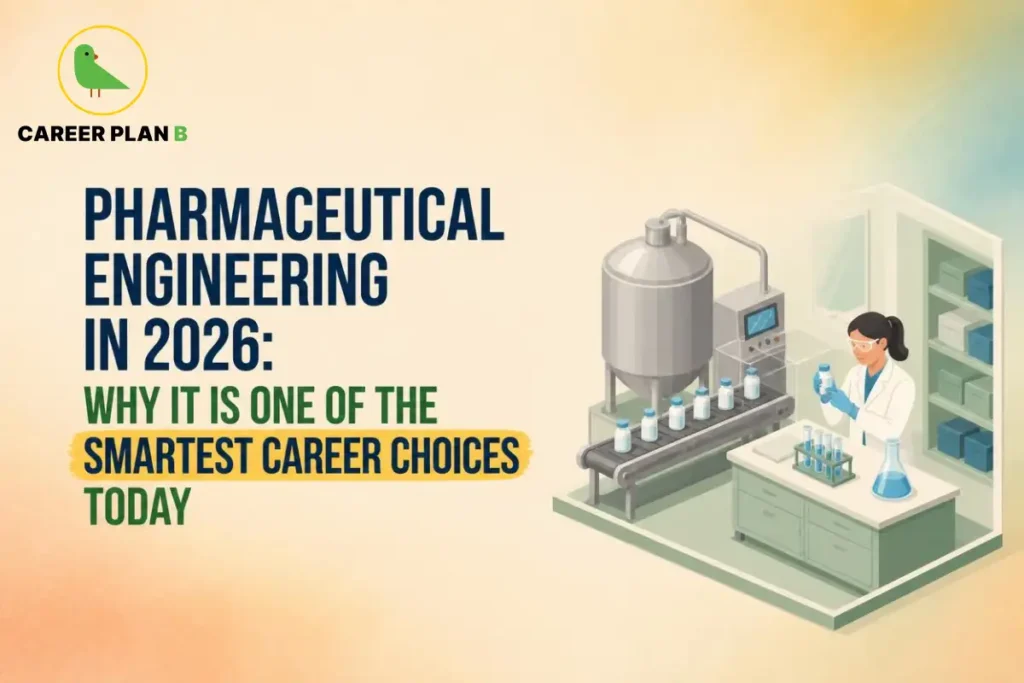
Pharmaceutical engineering in 2026 is not just a smart career choice; it is one of the most strategically timed ones a science student can make. India’s pharmaceutical industry is undergoing a massive transformation, driven by increased domestic healthcare spending, record export growth, post-COVID infrastructure investment, and a global shift toward biosimilars and biologics manufacturing.
Yet despite all this momentum, pharmaceutical engineering remains one of the lesser-known engineering disciplines among students, often overshadowed by computer science, mechanical, or electrical engineering in college brochures and career conversations.
This blog sets the record straight. It explores what pharmaceutical engineering in 2026 truly offers in terms of career scope, job roles, industry trends, and salary expectations and why this is genuinely one of the most future-proof engineering paths available to Indian students today.
What Is Pharmaceutical Engineering?
Pharmaceutical engineering is a specialised discipline that applies engineering principles, process design, automation, quality systems, and scale-up technology to the development and large-scale manufacturing of medicines, vaccines, medical devices, and healthcare products.
It is distinct from both pharmacy and chemical engineering, though it borrows significantly from both. A pharmacist focuses on drug dispensing and patient care. A chemical engineer works broadly across industrial processes. A pharmaceutical engineer sits squarely in between designing the manufacturing systems, ensuring regulatory compliance, and optimising the production of medicines at scale.
Core Subjects in Pharmaceutical Engineering:
- Pharmaceutical Process Engineering and Scale-Up
- Drug Formulation Technology and Dosage Design
- Good Manufacturing Practices (GMP) and Regulatory Compliance
- Validation Engineering and Quality Systems
- Bioprocess Engineering and Biologics Manufacturing
- Pharmaceutical Plant Design and Equipment Engineering
- Automation and Process Analytical Technology (PAT)
This blend of engineering rigour and pharmaceutical science makes pharmaceutical manufacturing careers both technically demanding and enormously rewarding.
India’s Pharmaceutical Industry in 2026: A Snapshot
To understand why pharmaceutical engineering in 2026 is such a compelling career choice, you first need to appreciate the scale and momentum of India’s pharmaceutical sector.
India is currently the third-largest pharmaceutical industry in the world by volume and fourteenth by value. The sector is projected to grow from approximately USD 50 billion in 2023 to USD 130 billion by 2030, a trajectory that demands a massive parallel expansion in manufacturing capacity, skilled engineering talent, and regulatory expertise.
Key Government Initiatives Driving Growth:
- Production Linked Incentive (PLI) Scheme for Pharmaceuticals: The Indian government launched a PLI scheme specifically for the pharmaceutical sector to boost domestic manufacturing of high-value medicines, complex generics, and APIs (Active Pharmaceutical Ingredients).
- Promotion of Bulk Drug Parks: The government is establishing dedicated bulk drug manufacturing parks to reduce India’s dependence on imported APIs primarily from China. This initiative directly creates demand for drug manufacturing engineering expertise at scale.
- Ayushman Bharat and Healthcare Expansion: India’s expanding public healthcare infrastructure under Ayushman Bharat is increasing domestic demand for affordable medicines, driving further growth in pharmaceutical manufacturing.
- National Medical Devices Policy 2023: India is building a domestic medical devices manufacturing ecosystem, creating adjacent opportunities for pharmaceutical engineers in device design and regulatory affairs.
These government-backed initiatives represent billions of rupees in investment and a direct, sustained demand for qualified pharmaceutical engineers across India.
Why Choose Pharmaceutical Engineering in 2026?
There has never been a better time to enter this field. Here is why pharmaceutical engineering in 2026 stands out as a particularly strategic career choice:
1. Post-COVID Manufacturing Infrastructure Boom
The COVID-19 pandemic exposed critical gaps in global pharmaceutical supply chains and manufacturing capacity. In response, India, already the world’s vaccine manufacturer, has invested heavily in upgrading and expanding its pharmaceutical production infrastructure. This investment has created sustained demand for pharmaceutical engineers in plant design, process validation, and GMP compliance.
2. Biologics and Biosimilars Revolution
The next decade of pharmaceutical growth belongs to complex, living-cell-derived medicines, including monoclonal antibodies, gene therapies, and biosimilar vaccines. India is positioning itself as a global hub for biosimilar manufacturing, and bioprocess engineering expertise is at the heart of this transition. Pharmaceutical engineers with biologics knowledge are among the most sought-after professionals in the industry today.
3. Regulatory Expansion and Global Market Access
Indian pharma companies are increasingly seeking US FDA, EMA (European Medicines Agency), and WHO approvals for their manufacturing facilities opening doors to premium global markets. Each approval process requires pharmaceutical engineers who understand international GMP standards, validation protocols, and regulatory documentation, making regulatory affairs one of the fastest-growing pharma engineering job roles in India.
4. API and Specialty Pharma Growth
India’s push to develop domestic API manufacturing capacity, reducing dependence on Chinese imports, is creating significant new demand for process engineers who can design, optimise, and scale up complex chemical synthesis and purification processes for pharmaceutical-grade compounds.
5. Automation and Industry 4.0 in Pharma
Modern pharmaceutical manufacturing is increasingly automated using advanced process control systems, continuous manufacturing technologies, real-time quality monitoring, and AI-driven process optimisation. Pharmaceutical engineers who combine traditional GMP knowledge with automation and data analytics skills are in exceptionally high demand.
Core Job Roles in Pharmaceutical Engineering
The pharmaceutical engineering scope covers a wide range of specialised roles across the drug development and manufacturing lifecycle:
| Job Role | Primary Responsibility |
|---|---|
| Process Engineer | Designing and optimising drug manufacturing processes |
| Validation Engineer | Ensuring equipment, processes, and systems meet regulatory standards |
| Quality Assurance Engineer | Maintaining GMP compliance and quality systems |
| Regulatory Affairs Specialist | Managing drug approval documentation and submissions |
| Formulation Development Engineer | Designing dosage forms: tablets, injectables, biologics |
| Plant Engineering Manager | Overseeing pharmaceutical plant design and operations |
| Automation and PAT Engineer | Implementing process analytical technology and automation |
| R&D Process Engineer | Scaling up laboratory processes to commercial production |
Salary Expectations in India:
- Entry Level (0–3 years): ₹3.5 – ₹6 LPA
- Mid Level (3–8 years): ₹7 – ₹15 LPA
- Senior Level (8+ years): ₹16 – ₹30 LPA
- Regulatory Affairs and Quality roles in MNC pharma companies often command premium packages at all experience levels
Top Sectors and Employers Hiring Pharmaceutical Engineers
A pharmaceutical engineering career in India offers access to some of the country’s most respected and globally recognised employers.
Top Private Sector Companies:
- Sun Pharmaceutical Industries: India’s largest pharma company
- Cipla Limited known for affordable generics and respiratory medicines
- Dr. Reddy’s Laboratories strong in APIs and complex generics
- Lupin Pharmaceuticals’ significant presence in the US generic market
- Biocon Limited India’s leading biologics and biosimilars company
- Serum Institute of India, the world’s largest vaccine manufacturer by volume
- Divi’s Laboratories, a leading API manufacturer
Government Research Institutions:
- Central Drugs Standard Control Organisation (CDSCO): India’s national regulatory authority for pharmaceuticals and medical devices.
- The Council of Scientific and Industrial Research (CSIR) has multiple laboratories that conduct pharmaceutical process research.
- The Indian Council of Medical Research (ICMR) is involved in drug research and clinical trials.
Global Opportunities:
Pharmaceutical engineers from India are in demand globally, particularly in the USA, Germany, Ireland, Singapore, and the UAE in roles spanning drug manufacturing, regulatory affairs, quality systems, and biomanufacturing. The U.S. Bureau of Labour Statistics highlights strong and consistent demand for biomedical and pharmaceutical manufacturing engineers.
Have Any Doubts?
Chemical Engineering vs Pharmaceutical Engineering
Students often wonder about chemical engineering vs pharmaceutical engineering when choosing their specialisation. Here is a clear distinction:
Chemical engineering is broader; it covers oil and gas, food processing, speciality chemicals, environmental engineering, and pharmaceuticals. It gives you industrial versatility across multiple sectors.
Pharmaceutical engineering is focused; it goes deep into drug manufacturing, GMP compliance, validation, and bioprocess technology. It gives you specialised expertise in one of the world’s most regulated and high-value industries.
Choose Chemical Engineering if:
- You want cross-industry flexibility: energy, chemicals, food, pharma
- You are interested in large-scale process industries beyond healthcare
- You want strong PSU opportunities in oil and gas sectors
Choose pharmaceutical engineering if:
- You are specifically drawn to healthcare, medicine manufacturing, and life sciences
- You want deep regulatory and GMP expertise valued globally
- You see yourself building a career in India’s growing pharma or biotech sector
Skills Required to Succeed in Pharmaceutical Engineering
Building a successful pharmaceutical manufacturing career requires a strong combination of technical knowledge, regulatory understanding, and professional competencies.
Technical Skills:
- Understanding of GMP, GDP, and GLP guidelines as per Schedule M of the Drugs and Cosmetics Act regulatory framework overseen by CDSCO.
- Proficiency in process simulation tools ASPEN, SuperPro Designer
- Knowledge of validation protocols IQ, OQ, PQ
- Bioprocess and fermentation engineering for biologics manufacturing
- Pharmaceutical plant design and cleanroom engineering
Professional and Soft Skills:
- Meticulous attention to detail errors in pharma manufacturing can have life-or-death consequences
- Strong documentation and technical writing skills
- Cross-functional collaboration with pharmacists, chemists, and regulatory teams
- Project management and change control management
Emerging Competencies:
- Continuous manufacturing technology
- AI-driven process analytical technology (PAT)
- Digital twin applications in pharmaceutical plant design
- Knowledge of US FDA, EMA, and WHO GMP requirements for global market access
How Career Plan B Helps
Understanding why you choose pharmaceutical engineering is the first step; figuring out whether it genuinely aligns with your strengths, interests, and career goals is the next. Career Plan B offers personalised career counselling for science and engineering students, PsycheIntel career assessment tests to evaluate your aptitude for pharmaceutical and process engineering, and structured career roadmapping that helps you identify the right specialisation, target institutions, and build a clear, confident path toward a successful pharmaceutical engineering career in India. Whether you are deciding between pharmacy, chemical engineering, and pharmaceutical engineering or planning your GATE preparation and higher studies strategy Career Plan B provides the expert guidance you need to make an informed, future-proof decision.
For Latest Information
Frequently Asked Questions (FAQs)
1. What is the scope of pharmaceutical engineering in India in 2026?
The pharmaceutical engineering scope in India is exceptionally strong in 2026. Government PLI schemes, bulk drug park investments, biosimilar manufacturing expansion, and India’s growing global pharma export market are all driving sustained demand for pharmaceutical engineers across production, quality, regulatory affairs, and R&D roles.
2. Is pharmaceutical engineering better than pharmacy?
They serve different purposes. Pharmacy focuses on drug dispensing, patient counselling, and clinical practice. Pharmaceutical engineering focuses on the manufacturing, process design, and regulatory systems behind drug production. For students who enjoy engineering, large-scale systems, and manufacturing, pharmaceutical engineering offers broader industrial career opportunities than a B.Pharm. degree.
3. Which are the best colleges for pharmaceutical engineering in India?
Top institutions include IIT Bombay (Chemical Engineering with pharma electives), Jadavpur University, Institute of Chemical Technology (ICT) Mumbai, Manipal Institute of Technology, and JSS College of Pharmacy. Admissions to centrally funded institutions are through JEE Advanced and the JoSAA official portal at josaa.nic.in.
4. What higher studies options are available after pharmaceutical engineering?
Graduates can pursue an M.Tech. in Pharmaceutical Engineering or Chemical Engineering via GATE; an M.S. or Ph.D. abroad in pharmaceutical sciences or bioprocess engineering; an MBA in Pharmaceutical Management; or regulatory affairs certifications for global market roles.
5. Can pharmaceutical engineers work in regulatory affairs?
Absolutely. Regulatory affairs is one of the fastest-growing and highest-paying career paths for pharmaceutical engineers. Professionals in this field manage drug approval submissions, GMP audits, and compliance documentation for both Indian and international regulatory agencies, including CDSCO, US FDA, and EMA.
Conclusion
Pharmaceutical engineering in 2026 stands at a remarkable intersection of opportunity, impact, and growth. India’s pharmaceutical industry is expanding at an unprecedented pace driven by government investment, global demand for generics and biologics, and a domestic healthcare revolution that shows no signs of slowing.
For students who are passionate about healthcare, manufacturing, and engineering problem-solving, this field offers a career that is not just financially rewarding but genuinely meaningful. Every process you design, every validation protocol you execute, and every manufacturing system you optimise contributes directly to medicines reaching patients who need them.
The question is not whether pharmaceutical manufacturing careers have a future; they absolutely do. The question is whether you are ready to build yours in this remarkable industry.
Ready to explore whether pharmaceutical engineering is the right career for you? Visit Career Plan B and take a personalised career assessment to find your ideal path in engineering and life sciences.