Careerplanb · July 30, 2026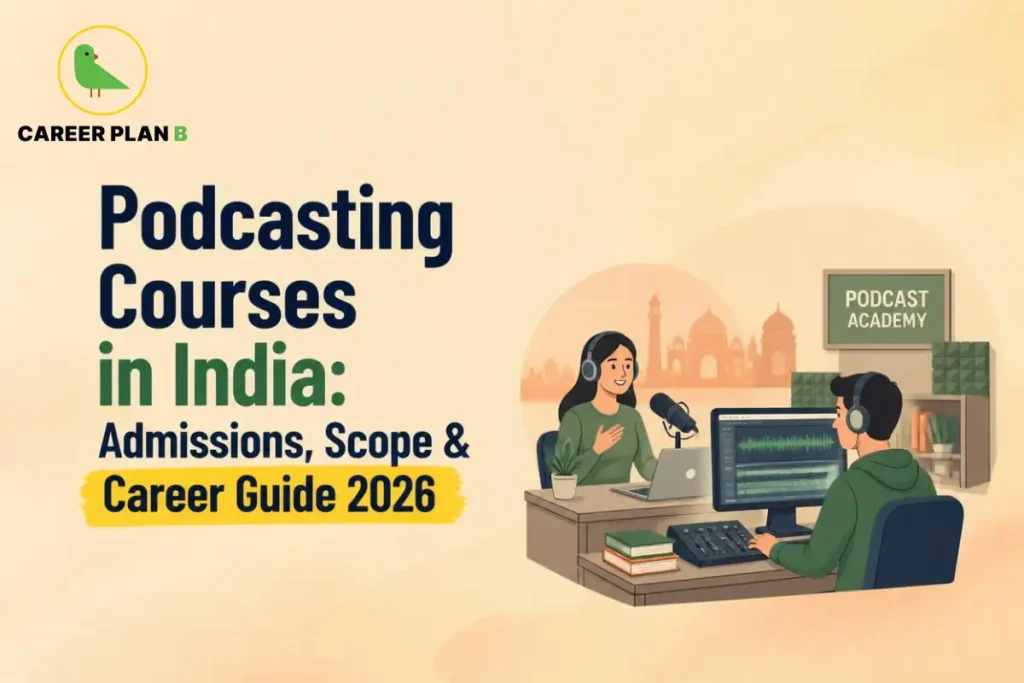
Introduction
Fifty-seven million Indians hit “play” on a podcast regularly, more than double the number from just a few years ago. Yet almost nobody talks about who’s actually building those shows behind the scenes. That gap is exactly why Podcasting Courses have moved from a weekend hobby into a genuinely structured career path.
So, does formal training actually matter in a field built on personality and storytelling? This guide walks through real Podcasting Courses, honest salary figures, and the career scope nobody explains clearly enough. Keep reading, because your favourite podcast probably started exactly where you’re standing now.
Why Is Podcasting Genuinely Growing as a Career in India?
Listener numbers alone tell a compelling story. Beyond that, brands, media companies, and independent creators are all investing heavily in audio content. Consequently, demand for skilled hosts, producers, and audio editors continues climbing across both corporate and independent spaces.
Furthermore, podcasts now sit within a broader digital media boom, alongside content creation and mobile journalism. Therefore, students entering this space often build overlapping skills that extend into video and social content as well.
Is Podcasting Just a Side Hustle, or a Genuine Career?
It has become a genuine career for many. Influencer-driven audio shows have turned into legitimate full-time professions, not just hobby projects. Additionally, corporate podcasting, used for branding and internal communication, has created stable, salaried roles beyond independent creator work.
For Personalized Guidance
What Does a Podcast Production Course Actually Teach?
A structured course covers far more than simply talking into a microphone. Instead, strong programmes build a complete production skill set from concept to publishing.
| Skill Area | What It Covers | Why It Matters |
|---|---|---|
| Content Planning | Episode structuring, scripting, and guest research | Keeps episodes focused and genuinely engaging |
| Audio Recording | Microphone technique, room acoustics, and equipment use | Determines baseline sound quality |
| Editing & Mixing | Cutting, noise removal, and audio levelling | Separates amateur from professional-sounding shows |
| Distribution & Growth | Publishing platforms, SEO, and audience building | Ensures episodes actually reach listeners |
Notably, several institutes now offer this training alongside broader digital media courses, including content creation and mobile journalism. Therefore, students often graduate with genuinely transferable skills across multiple digital formats, not just audio alone.
How Long Does a Typical Podcasting Course Take?
Most diploma-style programmes run between a few weeks and six months, depending on depth and institute. Meanwhile, some universities now integrate podcasting modules within broader mass communication degrees, offering a more gradual, comprehensive learning path.
What Admission Options Actually Exist for Podcasting Courses?
Unlike engineering or medicine, podcasting courses do not follow one standardised national entrance exam. Instead, admission generally depends on the specific institute and course format you choose.
- Standalone diploma courses – typically require Class 12 completion, with admission based on application review rather than a competitive exam
- Online certification programmes – often open enrolment, requiring no formal entrance test at all
- Integrated mass communication degrees – admission through CUET or institute-specific tests, with podcasting offered as a specialised module
Consequently, students can genuinely choose a pathway that matches their timeline and budget, whether that means a focused short course or a broader communication degree with podcasting built in.
Suggested blog :- Top Freelance Careers in Design, Media & Music (2026)
Career in Podcasting: What Roles Can You Actually Pursue?
This field offers several distinct career directions, not just hosting your own show. Depending on your strengths, different roles genuinely suit different personalities.
- Podcast host – leading conversations and driving audience engagement through personality and storytelling
- Podcast producer – managing planning, guest coordination, and overall episode quality
- Audio editor – handling technical editing, mixing, and sound design for polished episodes
- Podcast strategist – focusing on growth, distribution, and monetisation strategy for shows or networks
- Corporate podcast manager – running branded audio content for companies and organisations
Do You Need to Be a Great Talker to Succeed in Podcasting?
Not necessarily. Hosting genuinely rewards strong communication skill, but production, editing, and strategy roles suit people who prefer working behind the scenes. Therefore, introverted, technically-minded students can build equally strong careers without ever appearing on the microphone themselves.
What Salary Can You Actually Expect in Podcasting?
Compensation varies considerably based on role, experience, and whether you work independently or within an organisation. Current estimates suggest podcasting professionals in India typically earn between five and nine lakh rupees annually, depending on experience and location.
Can Independent Podcasters Actually Earn a Stable Income?
Yes, though income tends to grow gradually rather than immediately. Independent podcasters typically build revenue through sponsorships, brand partnerships, and platform monetisation as their audience grows. Consequently, most successful independent shows take consistent effort over many months before reaching stable income levels.
How Should You Actually Choose the Right Podcasting Course?
Course quality varies significantly across providers. Therefore, evaluate your options carefully before committing time and money.
- Check for hands-on production experience, since actually recording and editing episodes matters more than theory alone
- Look for guest speaker or industry exposure, since real industry insight genuinely accelerates learning
- Compare equipment and software training, ensuring the course covers genuinely current recording and editing tools
- Research placement or mentorship support, particularly for courses attached to larger media institutes
A Word of Caution Before You Enrol
Always verify a course provider’s genuine track record through student reviews and actual published work by alumni. Additionally, prioritise programmes offering real production practice over purely theoretical modules, since practical skill matters most in this hands-on field.
How Career Plan B Helps
Deciding whether Podcasting Courses genuinely fit your interests and strengths takes more than enthusiasm for listening to shows.This is where Career Plan B can help by offering:
- Personalised Career Counselling: Provides expert guidance based on individual interests, skills, and career goals, helping you judge whether podcasting genuinely fits your strengths.
- Psychometric & Career Assessment Tests: Identifies strengths, personality traits, and suitable career opportunities, useful for confirming genuine aptitude for hosting, production, or strategy roles.
- Career Roadmapping: Creates a clear step-by-step plan to achieve academic and professional goals, including which podcasting specialisation to pursue.
- Admission & Academic Profile Guidance: Helps in selecting the right courses and colleges and improving academic profiles, so your podcasting course choice is genuinely outcome-driven.
Get In Touch With Us
Frequently Asked Questions
1. Do I need a formal course to start a career in podcasting?
Not strictly, though structured courses genuinely accelerate skill-building in production, editing, and content strategy compared to learning entirely on your own.
2. What is the difference between a podcast host and a podcast producer?
A host leads the conversation and drives audience engagement, while a producer manages planning, guest coordination, and overall episode quality behind the scenes.
3. How much can podcasting professionals earn in India?
Current estimates suggest annual earnings typically range between five and nine lakh rupees, depending on experience, role, and whether you work independently or in-house.
4. Is there a specific entrance exam for podcasting courses?
No single standardised exam exists. Admission depends on the specific institute, ranging from open enrolment for short courses to CUET-based admission for integrated media degrees.
5. Can introverted people succeed in a podcasting career?
Yes, production, editing, and strategy roles suit people who prefer working behind the scenes, so hosting is not the only path into this field.
Conclusion
Podcasting has genuinely moved beyond a casual hobby into a structured, in-demand career path in India. With over fifty-seven million listeners and growing brand investment in audio content, this field offers real opportunities for hosts, producers, editors, and strategists alike.
If you are still weighing whether this creative field suits you, thoughtful guidance can bring real clarity before you commit time and resources. The right course, chosen carefully, can turn a genuine interest in audio storytelling into a sustainable career. Talk to a Career Plan B counsellor today to see if podcasting is the right career path for you.